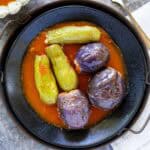
Description
This traditional Palestinian stuffed eggplant recipe features small eggplants that are carefully hollowed, filled with a seasoned rice and meat mixture, and slowly cooked until tender.
Ingredients
Units
- 12 eggplants, 8 zucchinis.
- 3/4 pound ground meat (beef or lamb)
- 1 cup rice (uncooked, washed and rinsed) Cal Rose or Egyptian rice
- 1 teaspoon allspice (most for the stuffing and with the tomato juice)
- 1/4 teaspoon of cardamom powder
- 2 tablespoons ghee or olive oil
- Salt and pepper
- 4-5 fresh ripped tomatoes
Instructions
Prepare Eggplants and Zucchini for Stuffing:
- Wash thoroughly under cold running water, then rinse and pat dry before trimming and coring.
- Using a small knife, trim the stem of eggplant and stem and the bottom of each zucchini.
- Using a zucchini corer (mankra), carefully hollow out the center of each.
- Start by gently rotating the corer around the inside to loosen the flesh, then gradually remove the interior while leaving a sturdy outer shell.
- Be careful not to pierce the bottom.
- Repeat until all eggplants and zucchinis are hollowed out and ready for stuffing.
Prepare the Filling
- Wash the rice thoroughly under cold water until the water runs clear, then rinse and drain well before using.
- Combine the rice, ground meat, spices, and ghee in a large bowl.
- Mix well until all the ingredients are evenly incorporated.
Stuff Eggplant and Zucchini
- Using your fingers, pick a small portion of the rice-meat mixture and gently fill each vegetable.
- Do not pack the filling tightly, as the rice will expand during cooking. Leave about ½ inch (1 cm) of space at the top of each eggplant.
- Tip: A simple way to test this is by inserting your pinky finger—you should have room for about half the length of your pinky.
- Continue the process until all eggplants and zucchinis are filled.
Make Tomato Juice
- Peel the tomatoes and place them in a blender with ½ cup of water.
- Tip: Place the tomatoes in a bowl and cover them with hot water, let them sit for a few minutes until the skins begin to loosen. The skins will peel off easily.
- Blend until completely smooth.
- Mix in salt and all spice to the tomato juice.
Cooking Mahshi
- Arrange the stuffed eggplant and zucchini in a large pot and cover with tomato juice until almost submerged.
- Place a plate upside down over the stuffed eggplants and zucchini. Once it starts boiling, lower the heat, cover with the lid and let it simmer on low heat for 30-40 minutes.
- Test the vegetables with a fork. If the eggplants and zucchini are tender and easily pierced, they are likely done.
- Tip: To make sure the rice is fully cooked, carefully remove one stuffed eggplant from the pot and check the filling. The rice should be soft and fully cooked through, with no hard or crunchy grains remaining.
- Carefully remove the plate using kitchen tongs.
- Let the pot rest for 10–15 minutes covered before serving, allowing the flavors to settle and the stuffed vegetables to hold their shape.
Notes
- Choose small eggplants and zucchini: Smaller vegetables are easier to stuff, cook more evenly, and have fewer seeds.
- Don't overstuff the eggplants: Leave about ½ inch of space at the top of each to allow the rice to expand as it cooks.
- Don't skip the cardamom. A touch of cardamom powder pairs beautifully with eggplant and adds a subtle depth of flavor that makes this dish extra special.
- Avoid piercing the bottom: When coring the eggplant, be careful not to break through the bottom, as this can cause the filling to leak into the tomato sauce.
- Use ripe, fresh tomatoes: Vine-ripened tomatoes create a rich, naturally sweet sauce that enhances the flavor of the mahshi.
- Keep the cored eggplants in water: Soaking the eggplants in water while you work helps prevent discoloration and keeps them fresh.
- Prepare ahead of time: Hollow and stuff the eggplants a day in advance and store them in the refrigerator until ready to cook.
- Use a plate while cooking: Placing a heatproof plate over the stuffed vegetables helps keep them in place and prevents them from opening as the rice expands.