
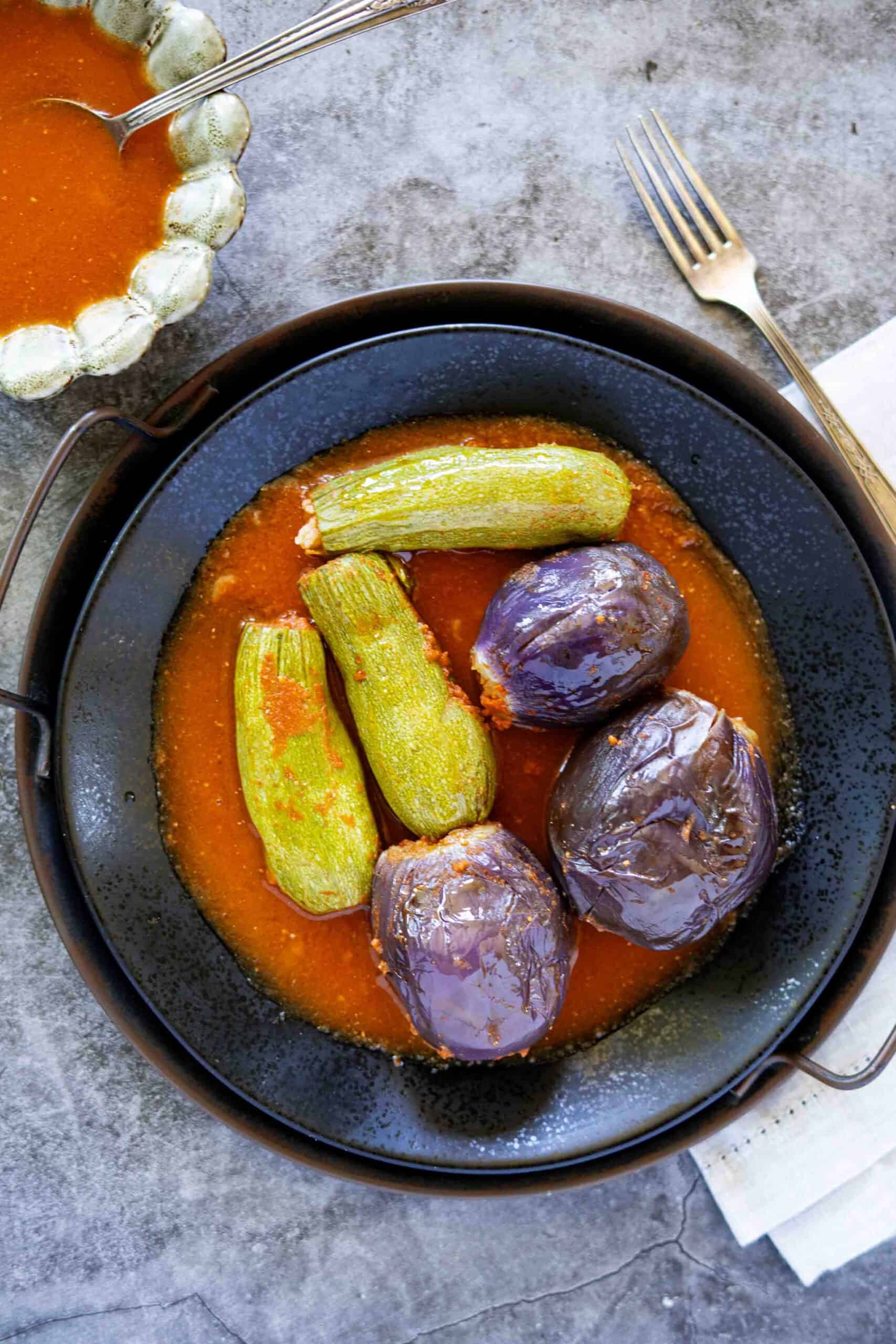
This traditional Palestinian stuffed eggplant recipe features small eggplants that are carefully hollowed, filled with a seasoned rice and meat mixture, and slowly cooked until tender.
The result is a delicious Middle Eastern dish with layers of flavor from fragrant spices, fresh tomato sauce, and the natural sweetness of eggplant.
My mother loved making mahshi on Sundays, when our whole family could gather around the table and enjoy a comforting homemade meal together. For her, mahshi was more than just a dish—it was a tradition that brought everyone together.
She would usually prepare the stuffing and core the vegetables the day before, making Sunday cooking easier and allowing the flavors to come together beautifully. On Sunday, she would slowly cook the pot of mahshi until the vegetables were tender, the rice was perfectly seasoned, and the kitchen was filled with the irresistible aromas of traditional Palestinian cooking
Among all the different types of mahshi (stuffed vegetables), Mahshi Batinjan (Palestinian stuffed eggplant) has always been one of my favorites. The tender eggplant, flavorful rice filling, and warm spices create a dish that feels like home—a true taste of Palestinian family gatherings and cherished memories.
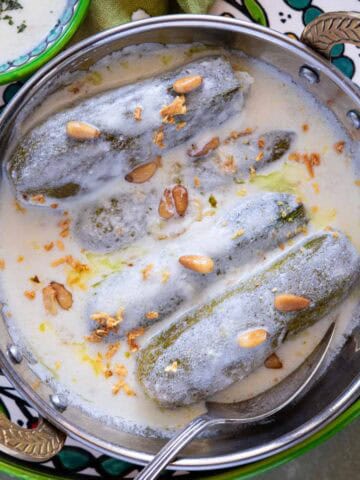
If you like mahshi, try stuffed zucchini in yogurt sauce (kousa bil laban), sheikh el mahshi, stuffed cabbage (malfouf) or warak dawali.
Jump to:
What is Mahshi Batinjan?
Mahshi Batinjan (also spelled Mahshi Batinjan, Mahshi Batinjaan, or Batinjan Mahshi) is a traditional Palestinian dish made with hollowed eggplants stuffed with a mixture of rice, ground meat, spices, and vegetables.
The name comes from two Arabic words:
- Mahshi (محشي) = stuffed
- Batinjan (باذنجان) = eggplant
Unlike some stuffed eggplant dishes that are baked with tomato sauce or filled with cooked meat, this Palestinian version is slowly cooked in a pot with the rice filling absorbing the flavors of the eggplant and tomatoes.
Equipment
This post may contain affiliate links
- Pot - To cook stuffed eggplant.
- Corer or Apple Corer - A tool used to remove the inside of eggplant and create space for the filling.
- Blender - For blending tomatoes
Ingredients
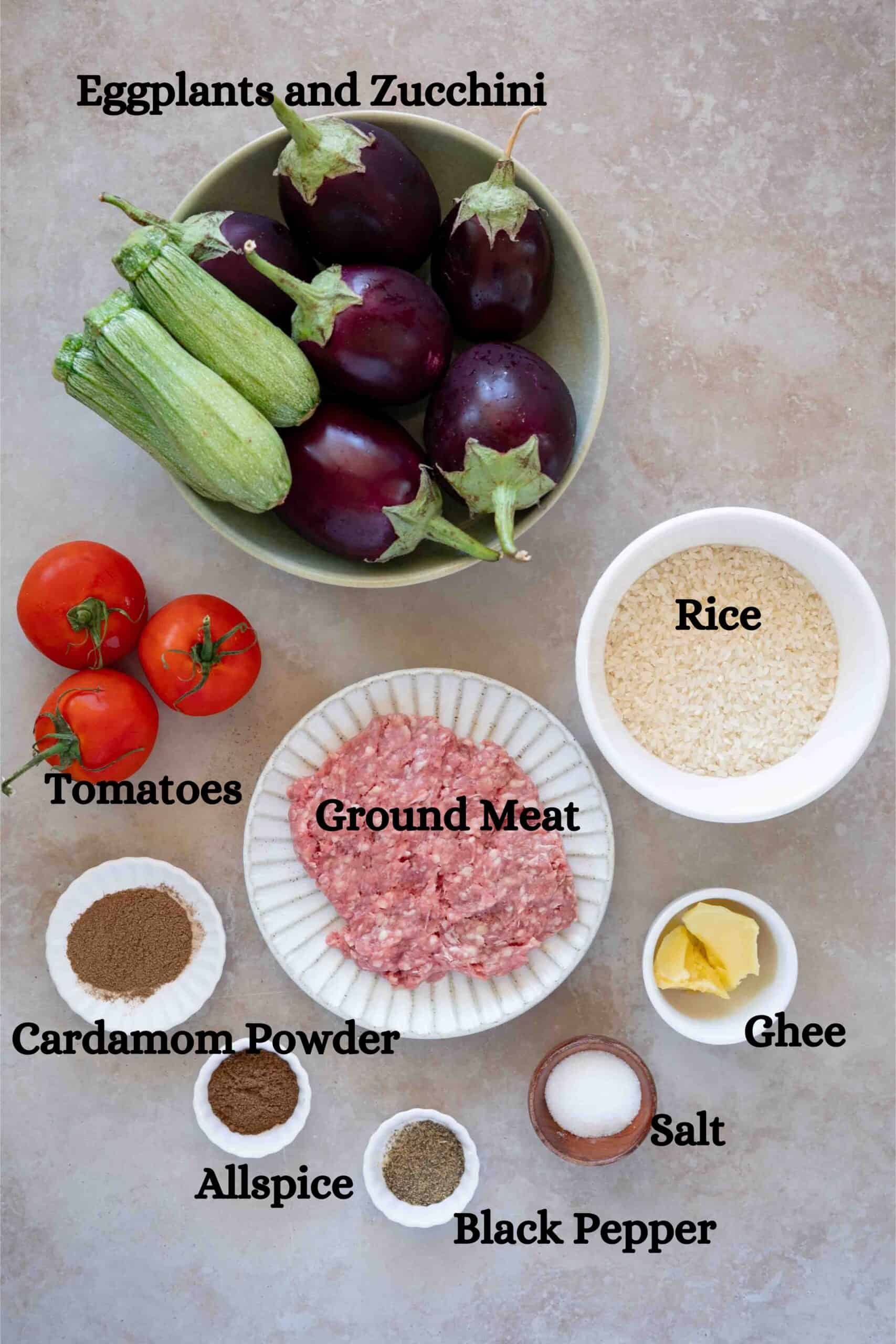
- Eggplant - Pick small-sized eggplants for this recipe. Italian eggplants or the small, rounded varieties (sometimes called Indian eggplants) work best because they are tender, have fewer seeds, and are the perfect size for stuffing. These can usually be found at Middle Eastern or Indian grocery stores. Look for eggplants that are firm, smooth, and have shiny skin.
- Ground Meat - Traditional mahshi is often made with finely minced meat, but ground meat is a convenient and widely available alternative. You can use ground beef, ground lamb, or a combination of both. A half beef, half lamb mixture is especially popular and adds wonderful flavor to the stuffing.
- Rice - I prefer using Calrose rice or Egyptian rice for mahshi recipes. These short-grain varieties cook beautifully and create the soft, tender texture traditionally found in stuffed vegetables.
- Ghee - Ghee adds rich flavor to both the stuffing and the garlic topping. If you don't have ghee, you can substitute butter or olive oil.
- Spices: Allspice and black pepper provide the classic warm flavors found in traditional Palestinian stuffed zucchini recipes. These simple spices allow the natural flavors of the meat, rice, and yogurt to shine.
- Cardamom Powder - Don’t skip the cardamom powder! It pairs beautifully with eggplant and adds a subtle, warm flavor that makes this dish extra special.
- Tomatoes - This dish is cooked in a flavorful tomato sauce, and I prefer using fresh, ripe tomatoes whenever possible.
- Salt -
Instructions
Full ingredients, measurements, and instructions are in the recipe card at the bottom of this post.
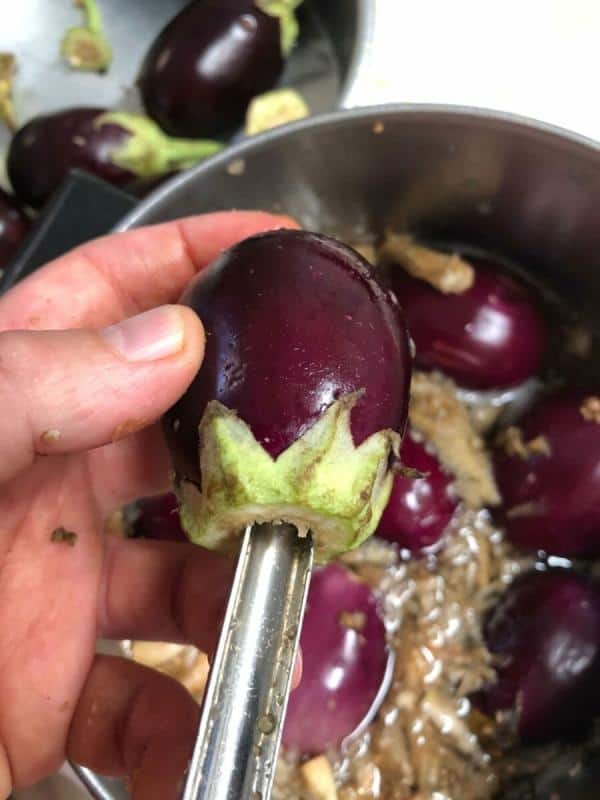
Step 1 | Using a corer (manakra), carefully hollow out the center of each eggplant.
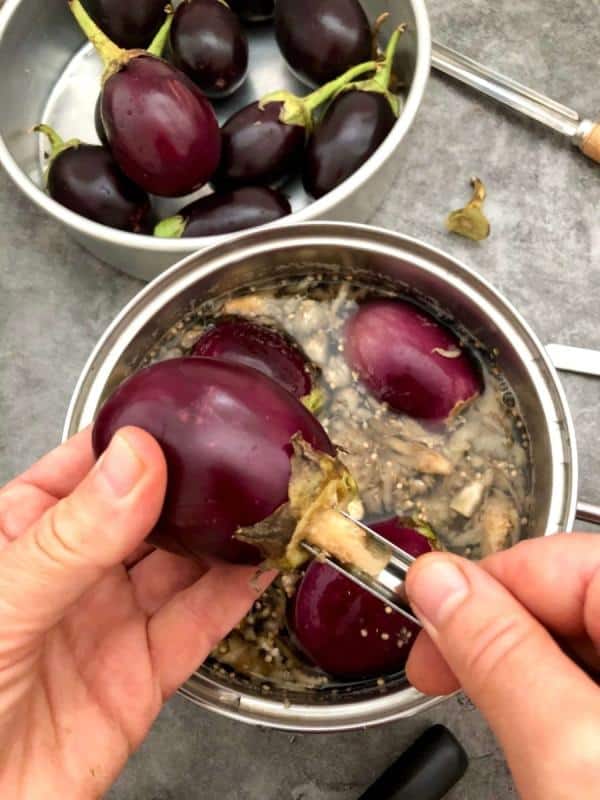
Step 2 | Start by gently rotating the corer around the inside to loosen the flesh, then gradually remove the interior while leaving a sturdy outer shell. Be careful not to pierce the bottom.
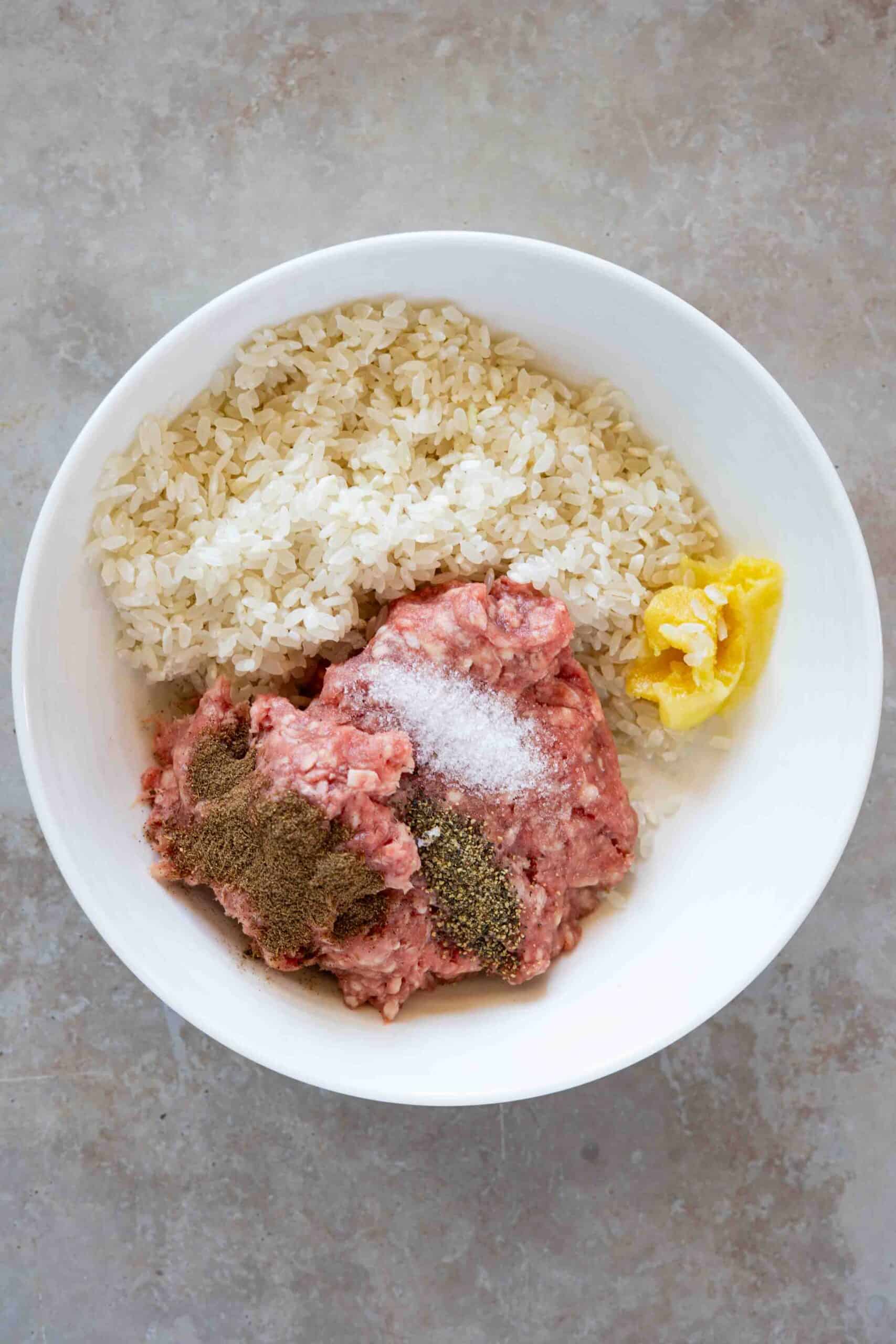
Step 3 | Prepare the filling by combining the rice, ground meat, spices, and ghee in a large bowl.
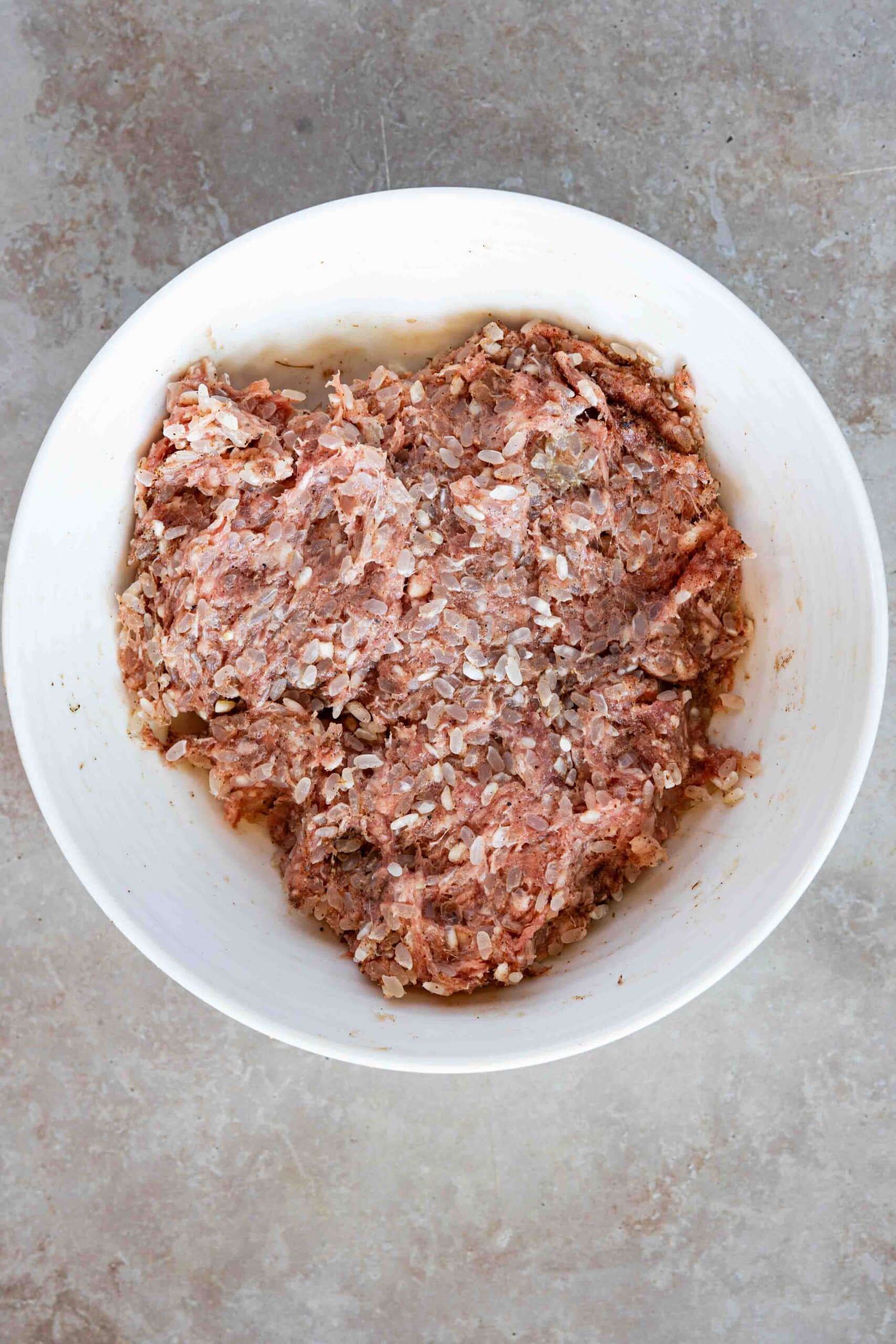
Step 4 | Mix well until all the ingredients are evenly incorporated.
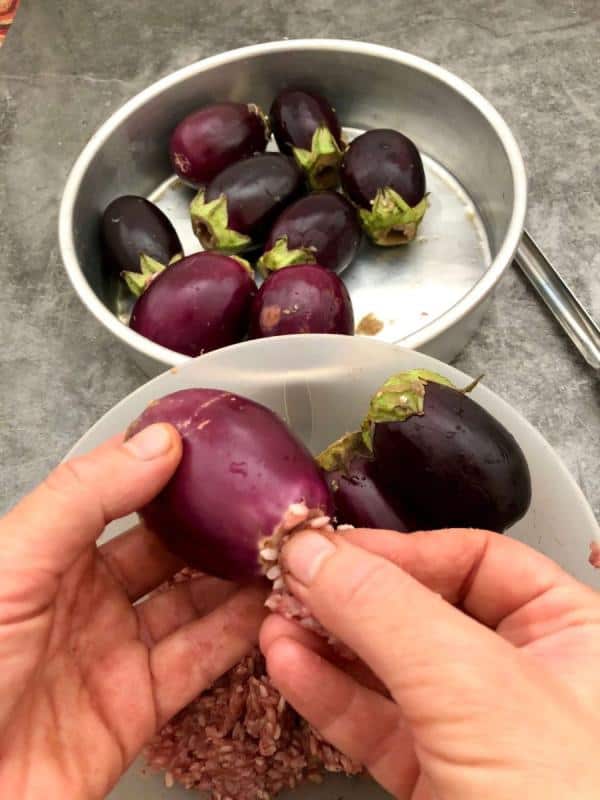
Step 4 | Using your fingers, gently fill each eggplant with the rice and meat mixture. Do not pack the filling tightly, as the rice will expand during cooking. Leave about ½ inch (1 cm) of space at the top of each eggplant.
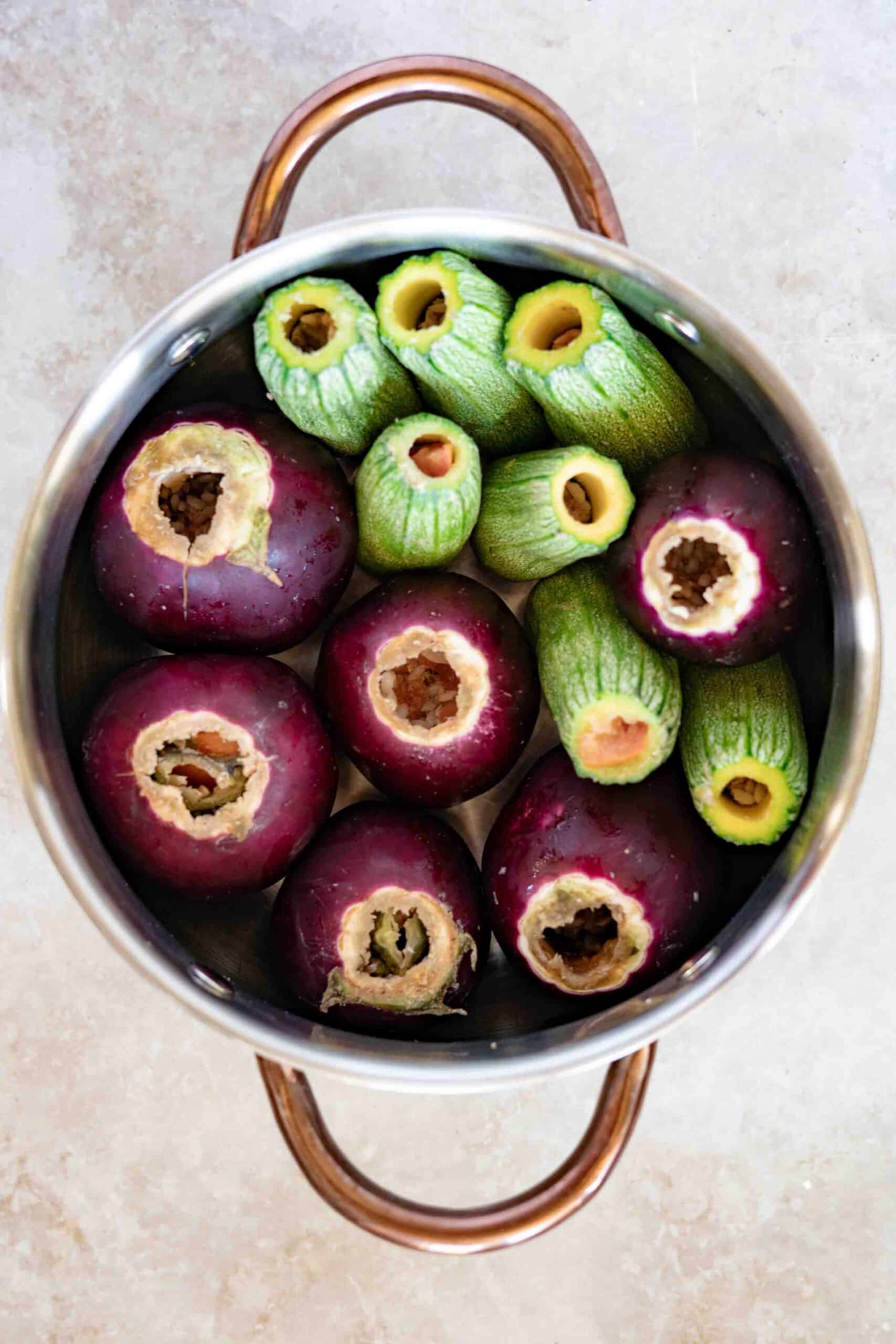
Step 5 | Continue the process until eggplant and zucchini are filled.
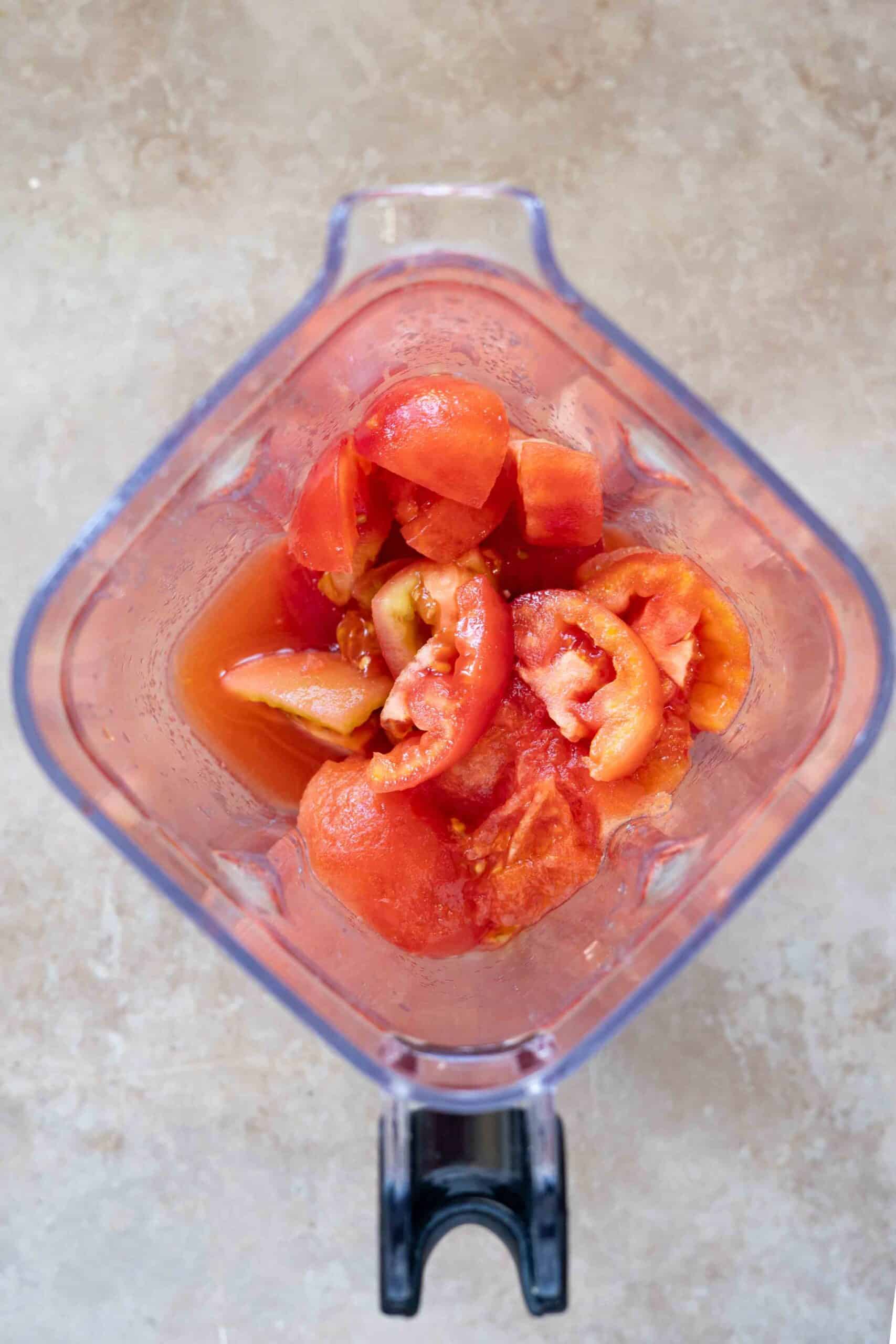
Step 6 | Peel the tomatoes and place them in a blender with ½ cup of water.

Step 7 | Blend until completely smooth.
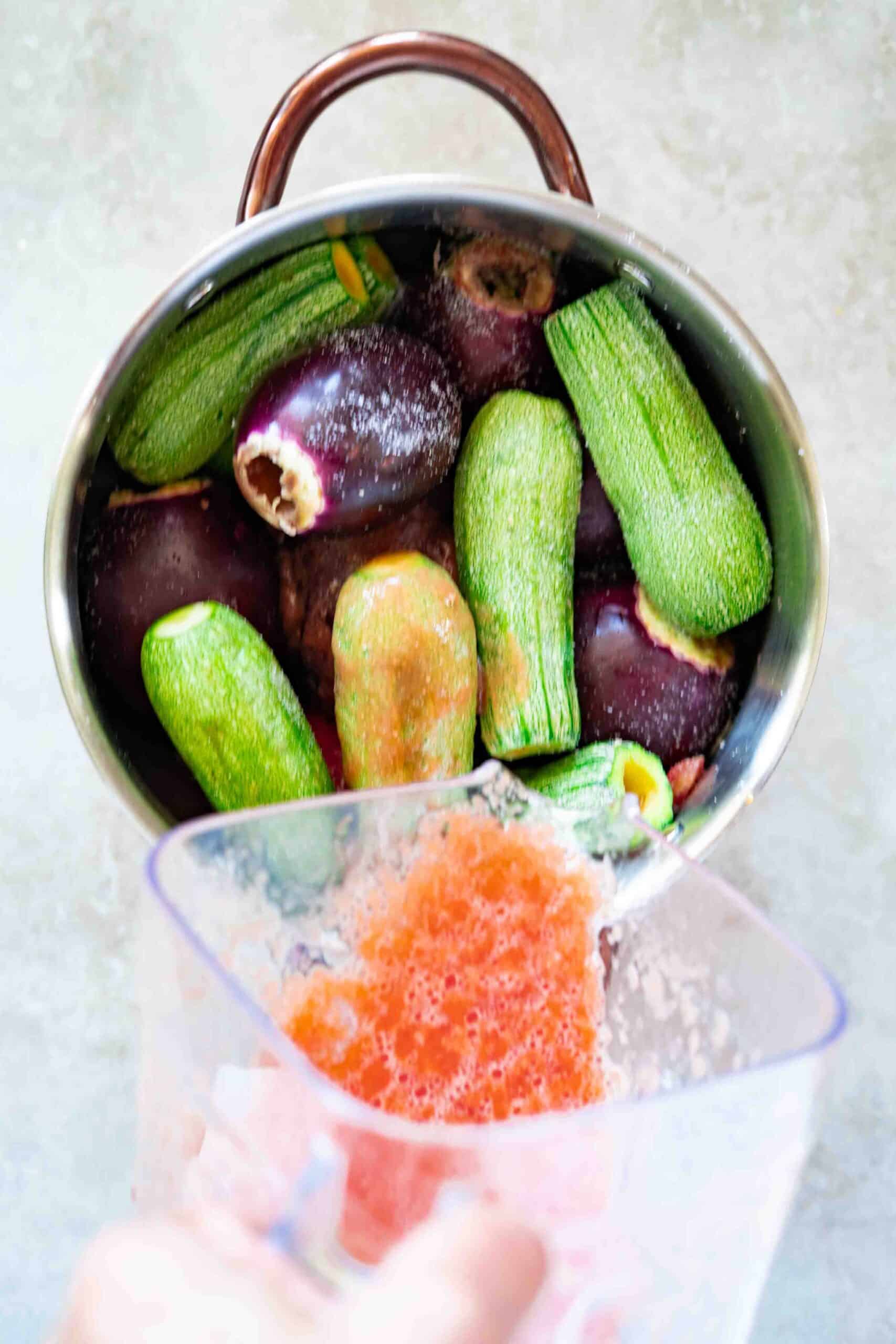
Step 8 | Pour in the fresh tomato juice over the stuffed vegetables.
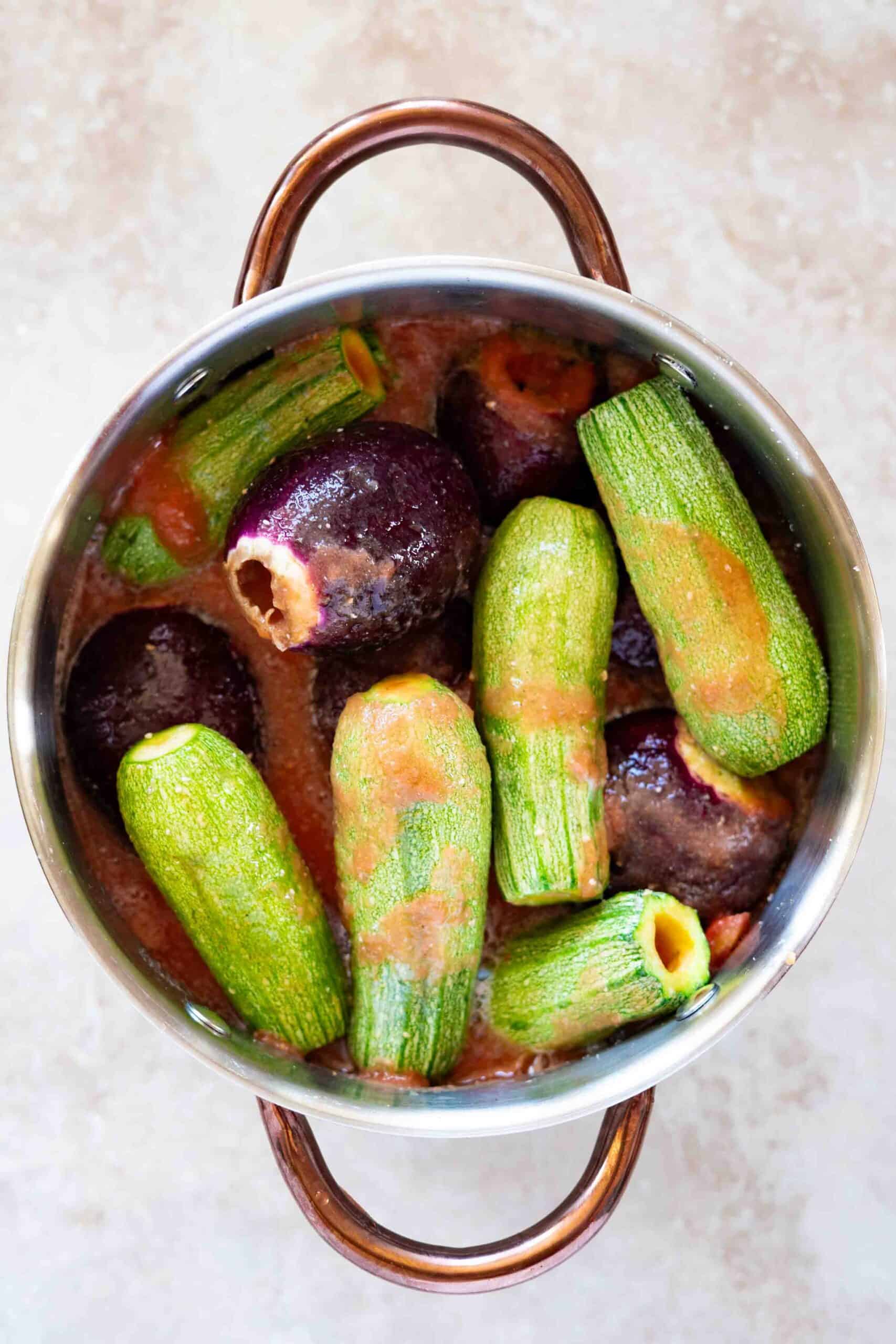
Step 9 | Adding enough to almost cover the stuffed vegetables.
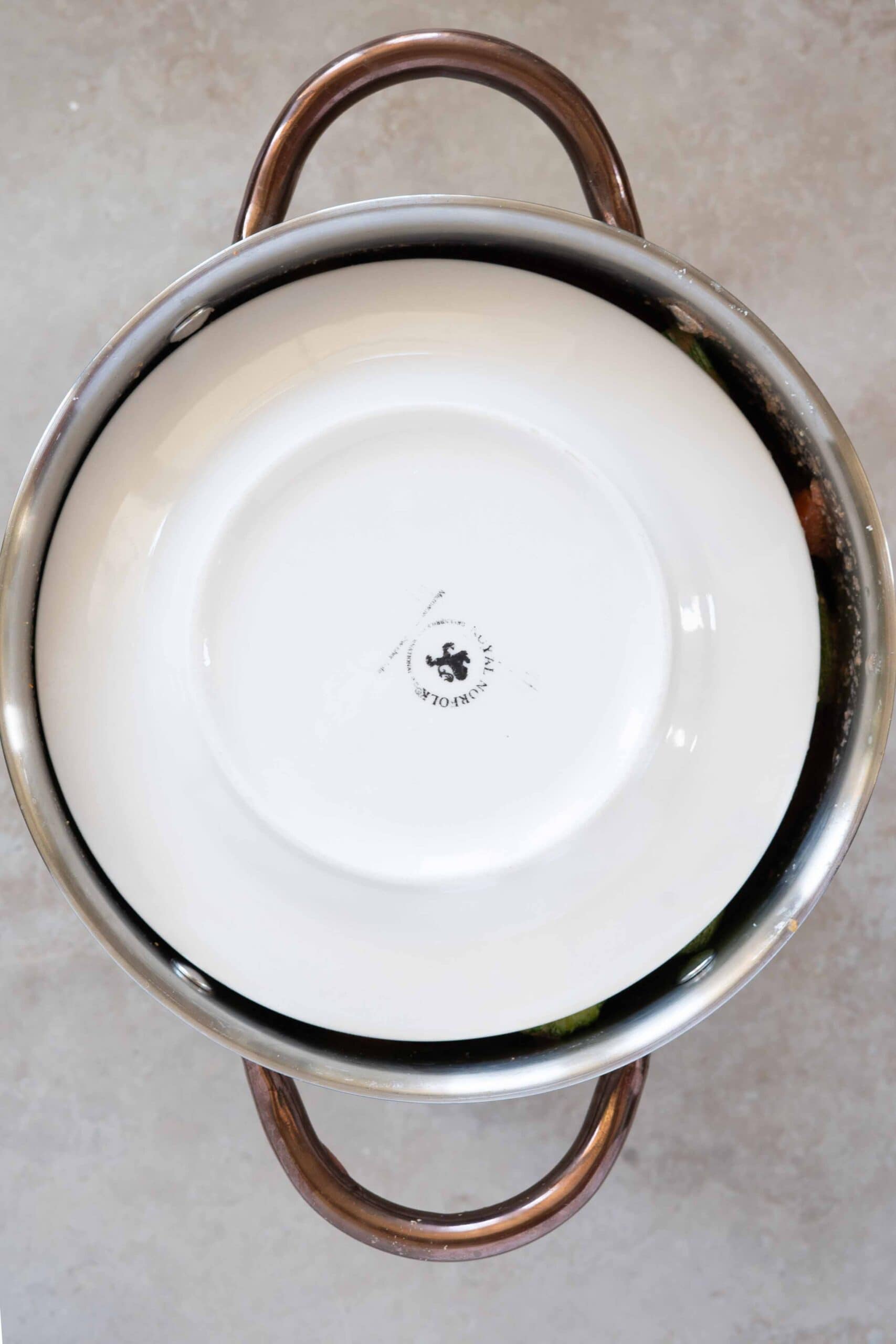
Step 10 | Place a plate upside down over the stuffed eggplants and zucchini. Cover with the lid.
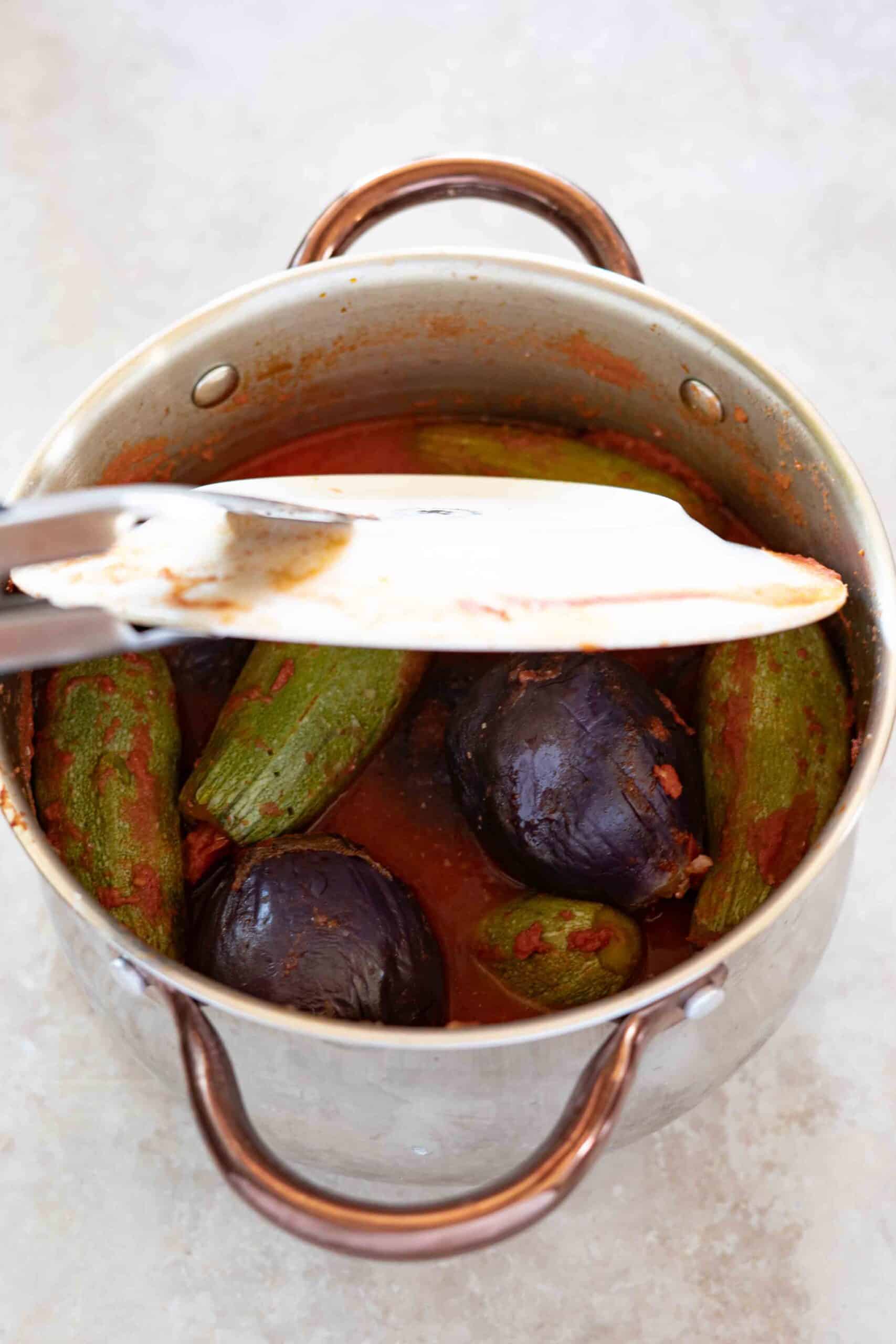
Step 11 | Let is simmer on low heat for 30 minutes. Carefully remove the plate using kitchen tongs.
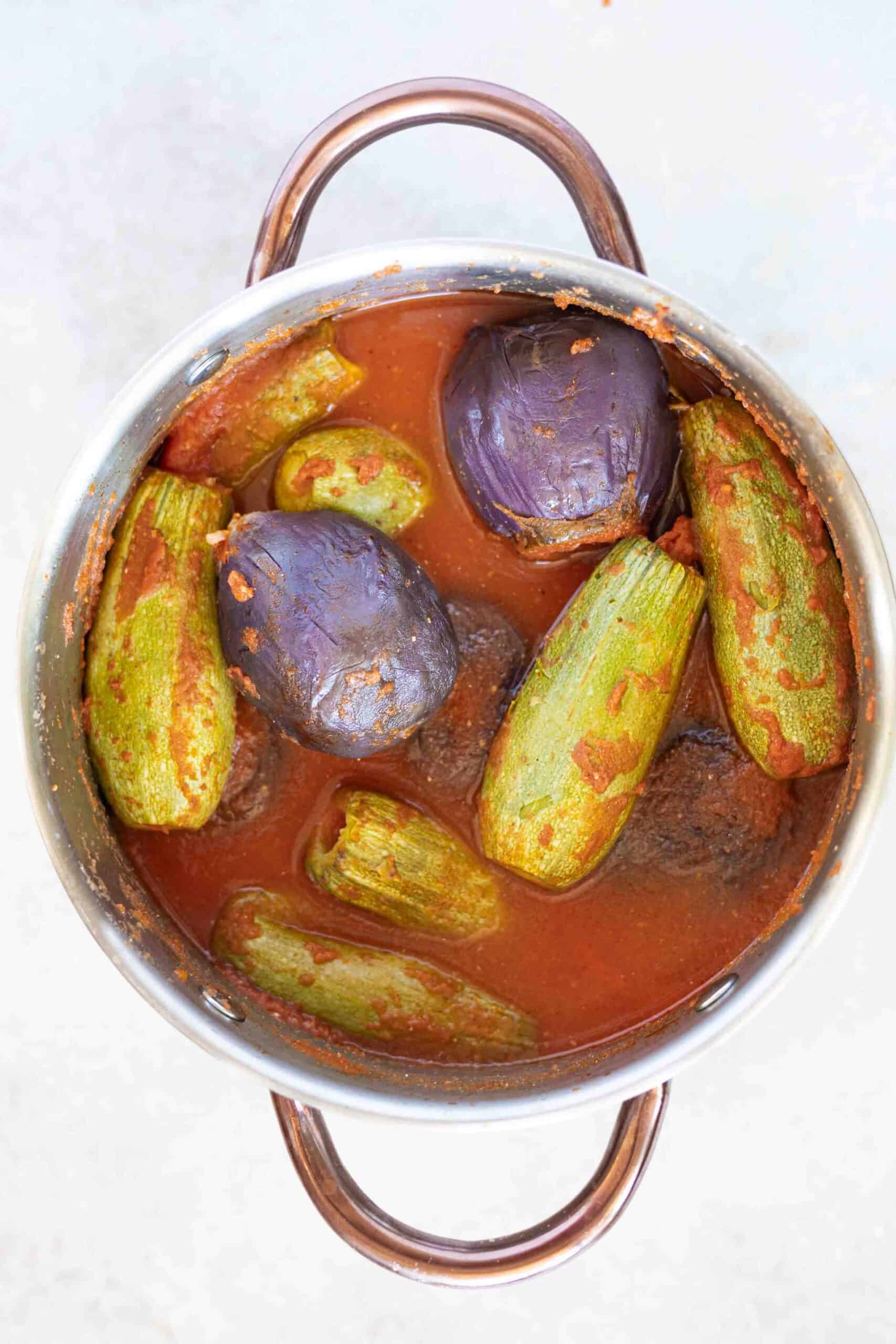
Let the pot rest for 10–15 minutes before serving, allowing the flavors to settle and the stuffed vegetables to hold their shape.
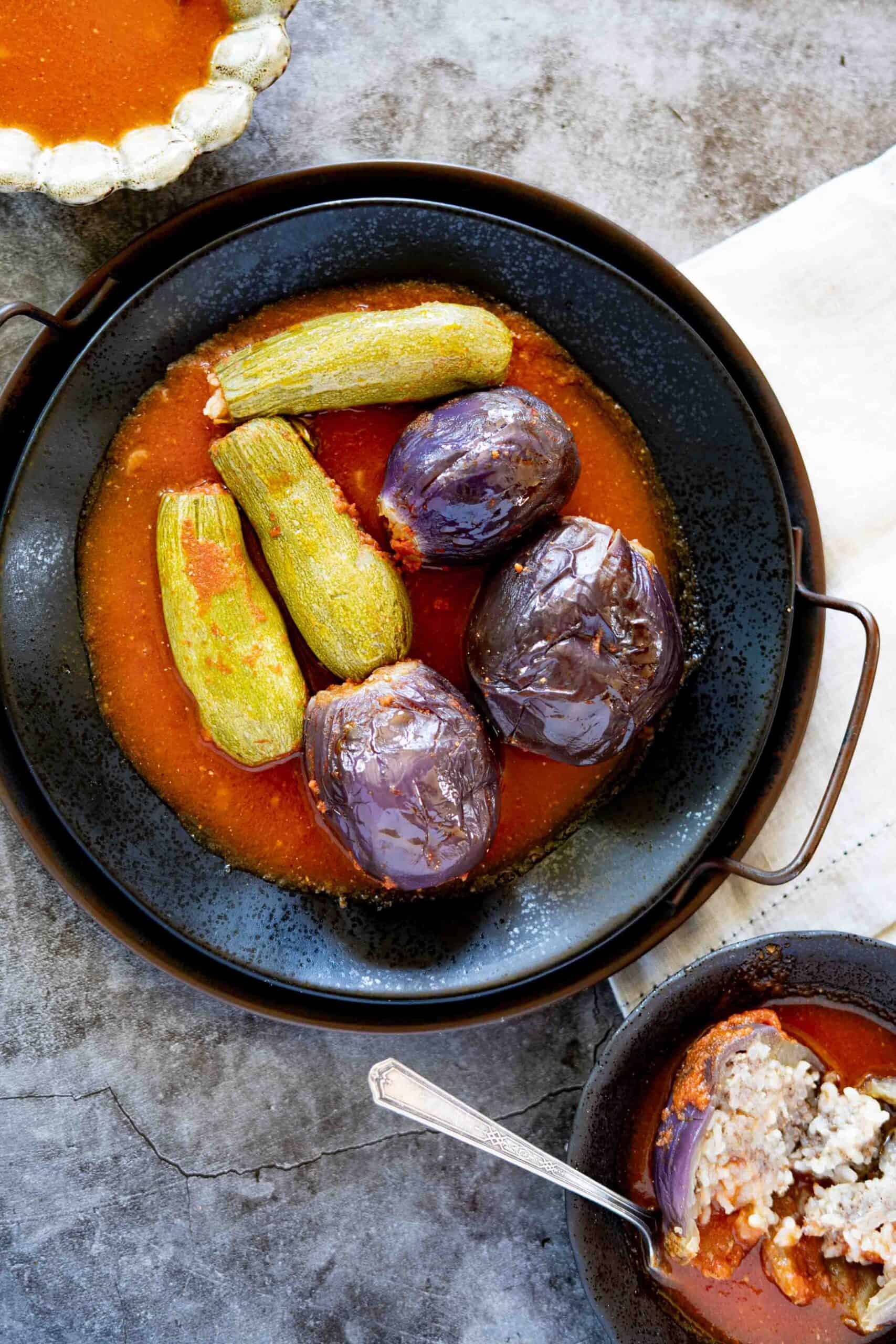
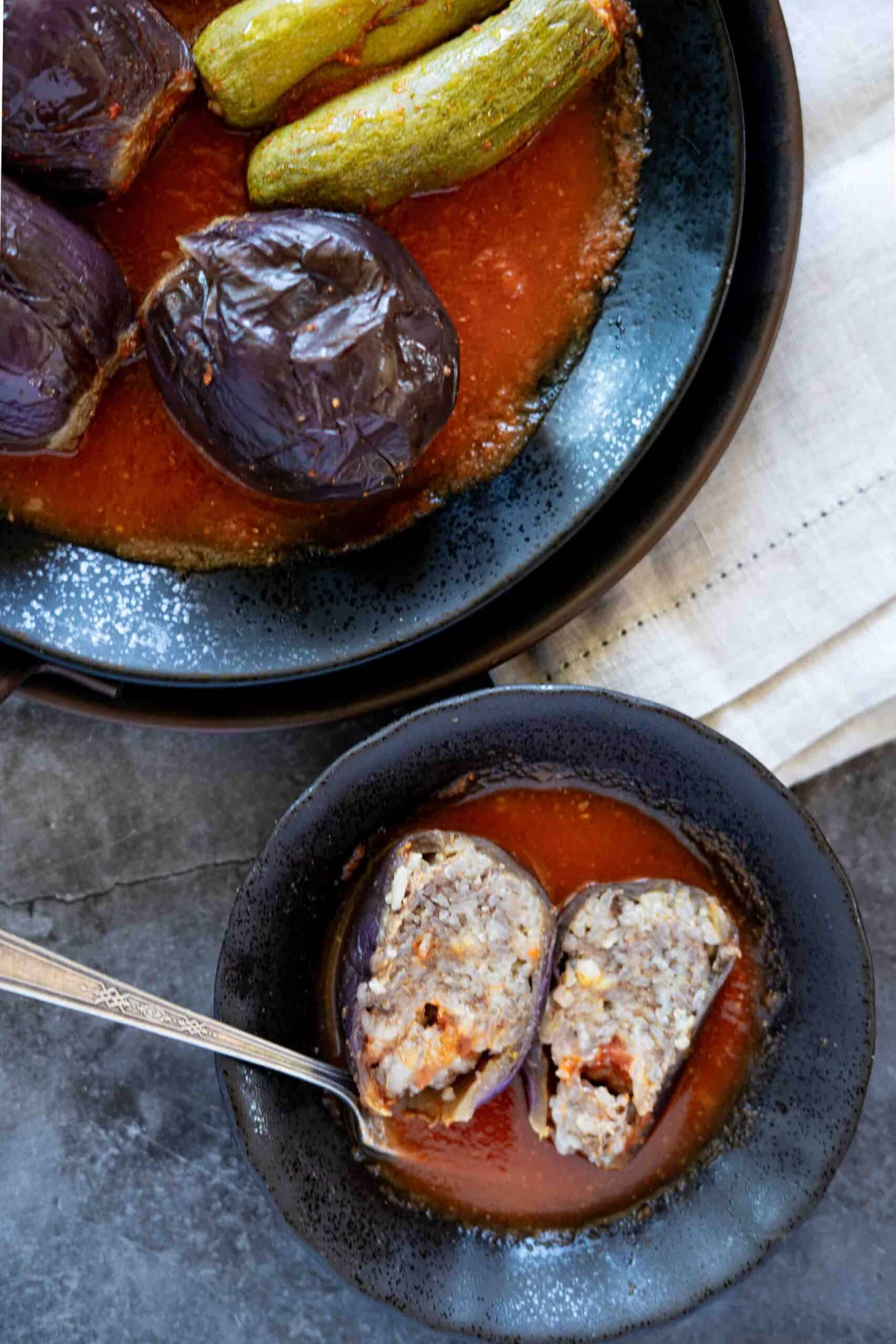
What To Serve With Mahshi Batinjan?
- A plain yogurt or cucumber yogurt salad,
- A fresh Arabic salad, arugula avocado salad, or radish green salad.
- A side of hummus, mutabal or ba’dounsiyeh (parsley dip)
- Warm flat bread or taboon bread.
Storage and Reheating
- Stuffed eggplants can be stored in an airtight container for up to 3-4 days in the fridge.
- You can reheat mahshi batinjan in a small pan on the stovetop or in the microwave, add 1-2 tablespoons of water if it's too thick before heating.
- Allow the stuffed eggplants to cool completely, then transfer them to an airtight container and freeze for up to 3 months. When ready to serve, thaw overnight in the refrigerator and reheat gently on the stovetop or in the oven until heated through.
Expert Tips
- Choose small eggplants and zucchini: Smaller vegetables are easier to stuff, cook more evenly, and have fewer seeds.
- Don't overstuff the eggplants: Leave about ½ inch of space at the top of each to allow the rice to expand as it cooks.
- Don't skip the cardamom. A touch of cardamom powder pairs beautifully with eggplant and adds a subtle depth of flavor that makes this dish extra special.
- Avoid piercing the bottom: When coring the eggplant, be careful not to break through the bottom, as this can cause the filling to leak into the tomato sauce.
- Use ripe, fresh tomatoes: Vine-ripened tomatoes create a rich, naturally sweet sauce that enhances the flavor of the mahshi.
- Keep the cored eggplants in water: Soaking the eggplants in water while you work helps prevent discoloration and keeps them fresh.
- Prepare ahead of time: Hollow and stuff the eggplants a day in advance and store them in the refrigerator until ready to cook.
- Use a plate while cooking: Placing a heatproof plate over the stuffed vegetables helps keep them in place and prevents them from opening as the rice expands.
Frequently Asked Questions
Small, firm eggplants work best because they are easier to hollow and hold their shape during cooking.
Yes. Many mahshi recipes can be prepared without meat by using a filling of rice, finely chopped tomatoes, onions, chickpeas, and spices. This vegetarian version is just as flavorful and makes a delicious plant-based alternative to the traditional recipe.
Placing a heatproof plate over the stuffed vegetables helps keep them in place and prevents them from opening or floating as the rice expands during cooking.
Yes, you can make Mahshi using only eggplants. Adding zucchini is completely optional and is often done because many families enjoy a variety of stuffed vegetables in the same pot. The zucchini adds a different texture and flavor, and it also helps stretch the filling if you're cooking for a larger group.
Click here to subscribe to my newsletter and receive free and new recipes right into your inbox!
If you made Palestinian stuffed eggplant (mahshi batinjan) I would love it if you could give me a 5-star rating and leave a comment below.
I also would like to hear about your experience making it, snap a picture and tag me on Instagram, Facebook, or Pinterest.
More Delicious Recipes




Mahshi Batinjan (Palestinian Stuffed Eggplant)
- Prep Time: 60 minutes
- Cook Time: 30 minutes
- Total Time: 90 minutes
- Yield: 4
- Category: Main Dish
- Method: Stove
- Cuisine: Palestinian/Middle Eastern
- Diet: Gluten Free
Description
This traditional Palestinian stuffed eggplant recipe features small eggplants that are carefully hollowed, filled with a seasoned rice and meat mixture, and slowly cooked until tender.
Ingredients
- 12 eggplants, 8 zucchinis.
- ¾ pound ground meat (beef or lamb)
- 1 cup rice (uncooked, washed and rinsed) Cal Rose or Egyptian rice
- 1 teaspoon allspice (most for the stuffing and with the tomato juice)
- ¼ teaspoon of cardamom powder
- 2 tablespoons ghee or olive oil
- Salt and pepper
- 4-5 fresh ripped tomatoes
Instructions
Prepare Eggplants and Zucchini for Stuffing:
- Wash thoroughly under cold running water, then rinse and pat dry before trimming and coring.
- Using a small knife, trim the stem of eggplant and stem and the bottom of each zucchini.
- Using a zucchini corer (mankra), carefully hollow out the center of each.
- Start by gently rotating the corer around the inside to loosen the flesh, then gradually remove the interior while leaving a sturdy outer shell.
- Be careful not to pierce the bottom.
- Repeat until all eggplants and zucchinis are hollowed out and ready for stuffing.
Prepare the Filling
- Wash the rice thoroughly under cold water until the water runs clear, then rinse and drain well before using.
- Combine the rice, ground meat, spices, and ghee in a large bowl.
- Mix well until all the ingredients are evenly incorporated.
Stuff Eggplant and Zucchini
- Using your fingers, pick a small portion of the rice-meat mixture and gently fill each vegetable.
- Do not pack the filling tightly, as the rice will expand during cooking. Leave about ½ inch (1 cm) of space at the top of each eggplant.
- Tip: A simple way to test this is by inserting your pinky finger—you should have room for about half the length of your pinky.
- Continue the process until all eggplants and zucchinis are filled.
Make Tomato Juice
- Peel the tomatoes and place them in a blender with ½ cup of water.
- Tip: Place the tomatoes in a bowl and cover them with hot water, let them sit for a few minutes until the skins begin to loosen. The skins will peel off easily.
- Blend until completely smooth.
- Mix in salt and all spice to the tomato juice.
Cooking Mahshi
- Arrange the stuffed eggplant and zucchini in a large pot and cover with tomato juice until almost submerged.
- Place a plate upside down over the stuffed eggplants and zucchini. Once it starts boiling, lower the heat, cover with the lid and let it simmer on low heat for 30-40 minutes.
- Test the vegetables with a fork. If the eggplants and zucchini are tender and easily pierced, they are likely done.
- Tip: To make sure the rice is fully cooked, carefully remove one stuffed eggplant from the pot and check the filling. The rice should be soft and fully cooked through, with no hard or crunchy grains remaining.
- Carefully remove the plate using kitchen tongs.
- Let the pot rest for 10–15 minutes covered before serving, allowing the flavors to settle and the stuffed vegetables to hold their shape.
Notes
- Choose small eggplants and zucchini: Smaller vegetables are easier to stuff, cook more evenly, and have fewer seeds.
- Don't overstuff the eggplants: Leave about ½ inch of space at the top of each to allow the rice to expand as it cooks.
- Don't skip the cardamom. A touch of cardamom powder pairs beautifully with eggplant and adds a subtle depth of flavor that makes this dish extra special.
- Avoid piercing the bottom: When coring the eggplant, be careful not to break through the bottom, as this can cause the filling to leak into the tomato sauce.
- Use ripe, fresh tomatoes: Vine-ripened tomatoes create a rich, naturally sweet sauce that enhances the flavor of the mahshi.
- Keep the cored eggplants in water: Soaking the eggplants in water while you work helps prevent discoloration and keeps them fresh.
- Prepare ahead of time: Hollow and stuff the eggplants a day in advance and store them in the refrigerator until ready to cook.
- Use a plate while cooking: Placing a heatproof plate over the stuffed vegetables helps keep them in place and prevents them from opening as the rice expands.




Leave a Reply