
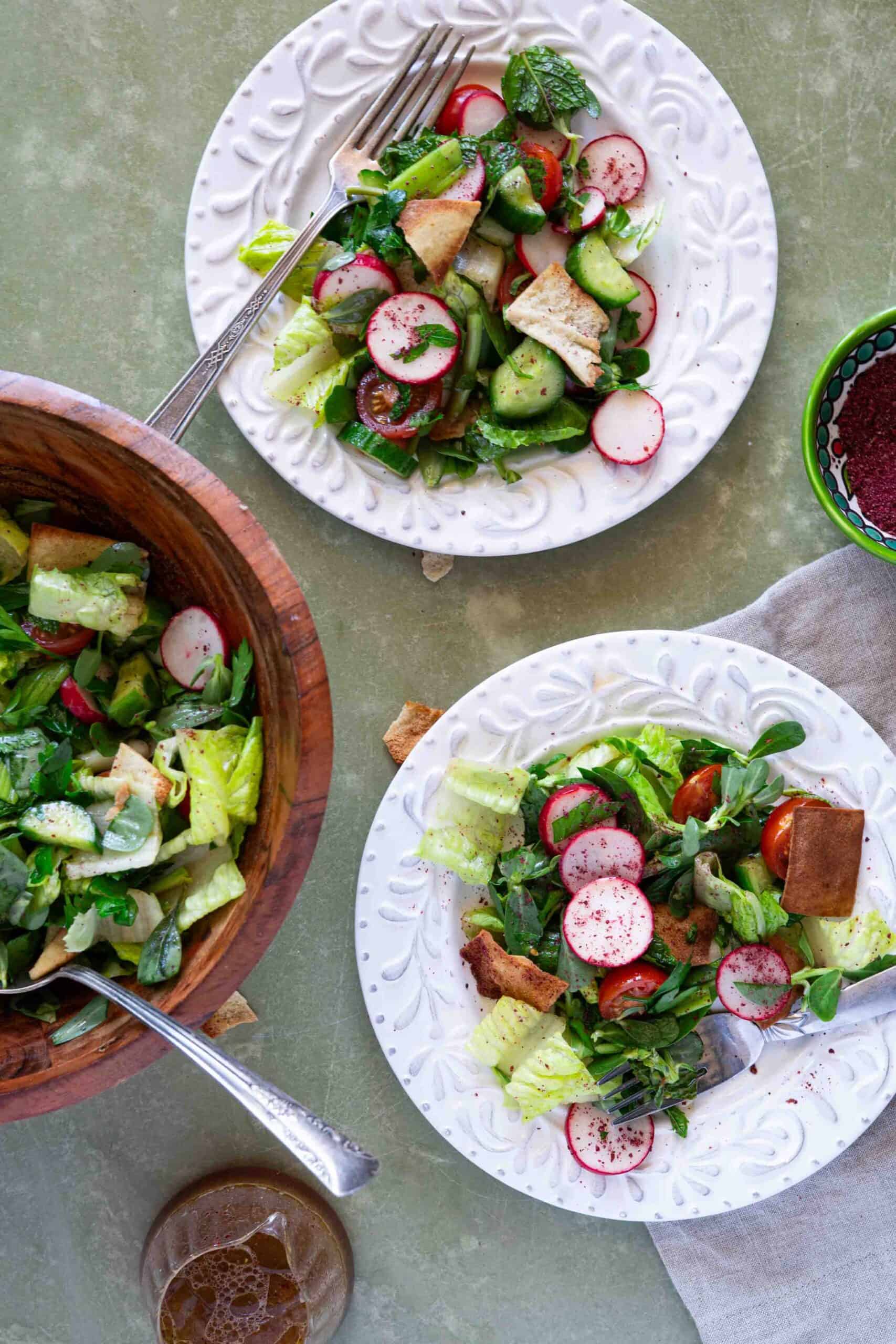
This authentic fattoush salad features crispy toasted flat Arabic bread, fresh vegetables you likely already have in your refrigerator, and a bright, zesty dressing made with lemon juice, olive oil, and tangy sumac.
I love making this salad often because it's quick, fresh, and full of flavor. It can be enjoyed as a light meal on its own, especially if you add some crumbled feta cheese, or served alongside baked chicken for a more protein-rich meal.
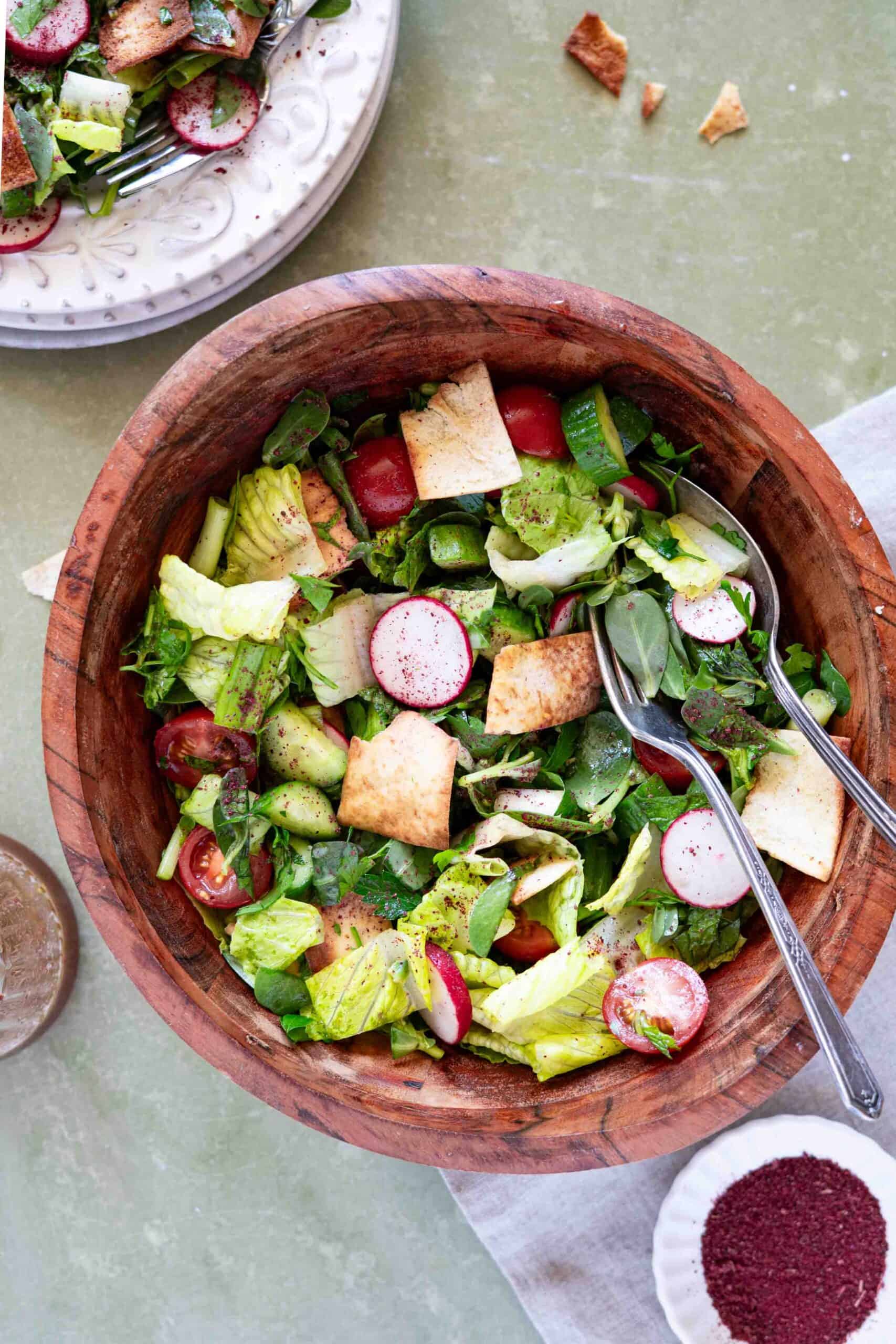
For other traditional salads try tabbouleh, arabic salad, or tahini salad. For more filling salads try vegan freekeh salad, or maftoul salad.
In many Palestinian homes, fattoush is a staple of the Ramadan table and is traditionally served at iftar. Its fresh, vibrant flavors and crunchy toasted Arabic bread make it a refreshing way to break the fast.
Jump to:
What is Fattoush?
Fattoush is a traditional Levantine bread salad that has been enjoyed for generations throughout Palestine, Lebanon, Syria, and Jordan. In Palestinian kitchens, it's a beloved seasonal salad made with fresh vegetables, herbs, toasted or stale pita bread, olive oil, lemon juice, and sumac—a reflection of the region's agricultural heritage and the tradition of minimizing food waste.
Fattoush originated in the southern Levant, where rural families made use of stale or leftover flatbread by breaking it into salads instead of wasting it. The name comes from the Arabic word fatt (فتّ), meaning "to break" or "to crumble," referring to the torn pieces of bread.
The salad is closely tied to the agricultural traditions of the region, combining whatever seasonal vegetables and herbs were growing—typically tomatoes, cucumbers, radishes, lettuce, mint, parsley, and purslane—with a dressing that includes olive oil, fresh lemon juice, and the distinctive spice sumac.
Every country in the Levant has its own version. In Palestine, fattoush often reflects the local harvest and may include ingredients like purslane (baqleh), while some Lebanese versions commonly add pomegranate molasses. These regional differences don't indicate separate origins so much as local adaptations of the same traditional dish.
Why You'll Love This Recipe
- Authentic Palestinian flavors: Made with crisp vegetables, fresh herbs, toasted pita bread, olive oil, lemon juice, and tangy pomegranate and sumac spice.
- Ready in 20 minutes: A quick and easy salad that's perfect for busy weeknights, picnics, or family gatherings.
- Fresh and seasonal: The recipe celebrates the best of seasonal produce and can be adapted with what's available.
- Perfect balance of textures: Crunchy toasted pita, crisp vegetables, and tender herbs make every bite satisfying.
- Healthy and wholesome: Packed with fresh vegetables and heart-healthy olive oil, this salad is naturally vegetarian and nutrient-rich.
- Versatile: Serve it alongside grilled meats, falafel, hummus, or other Palestinian and Middle Eastern dishes, or enjoy it as a satisfying lunch on its own.
Equipment
This post may contain affiliate links.
- Cutting Board - This is for chopping fresh vegetables.
- Knife - For cutting all the vegetables.
- Large Bowl - For mixing and serving all salad ingredients.
Ingredients
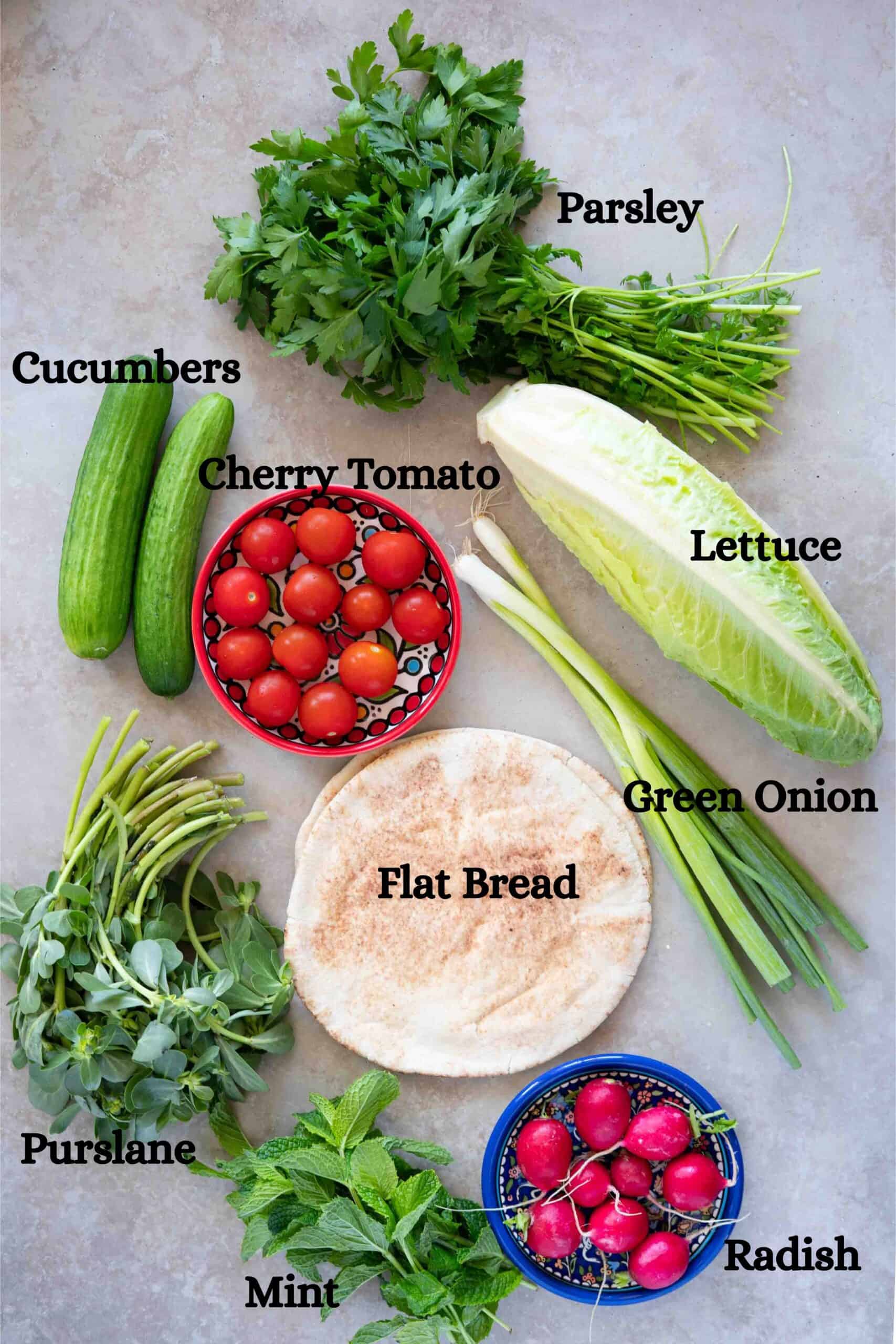
- Romaine Lettuce – The crisp base of this salad, romaine adds a refreshing crunch. You can substitute it with iceberg, green leaf, or little gem lettuce if preferred.
- Purslane – A traditional ingredient often used in Palestinian fattoush, purslane (known as baqleh in Arabic) has a slightly tangy, lemony flavor and a crisp texture. This nutritious leafy green is rich in vitamins and omega-3 fatty acids and can often be found at Middle Eastern grocery stores or farmers' markets during its season.
- Cucumbers – Persian cucumbers are my favorite because they're crisp, naturally sweet, and have thin skin with very small seeds. English cucumbers also work well.
- Tomatoes – Cherry or grape tomatoes are an excellent choice because they're sweet and less watery. If using larger tomatoes, choose ripe but firm varieties to keep the salad from becoming too juicy.
- Green Onions – Green onions add a mild, fresh onion flavor that complements the other vegetables without overpowering them.
- Radishes – Radishes provide a peppery bite and an irresistible crunch, making them a classic ingredient in authentic fattoush.
- Parsley – Flat-leaf (Italian) parsley is preferred for its fresh, robust flavor and tender leaves. It pairs beautifully with the mint and vegetables.
- Mint – Fresh mint is essential for its bright, aromatic flavor. A little goes a long way, adding a refreshing herbal note that makes fattoush so distinctive.
- Arabic Flat Bread – Traditionally, the pita is fried until crispy, often as a delicious way to use day-old bread. I prefer to toast it instead for a lighter version that still delivers plenty of crunch. You can bake it in the oven or crisp it up in an air fryer with excellent results.
Dressing Ingredients
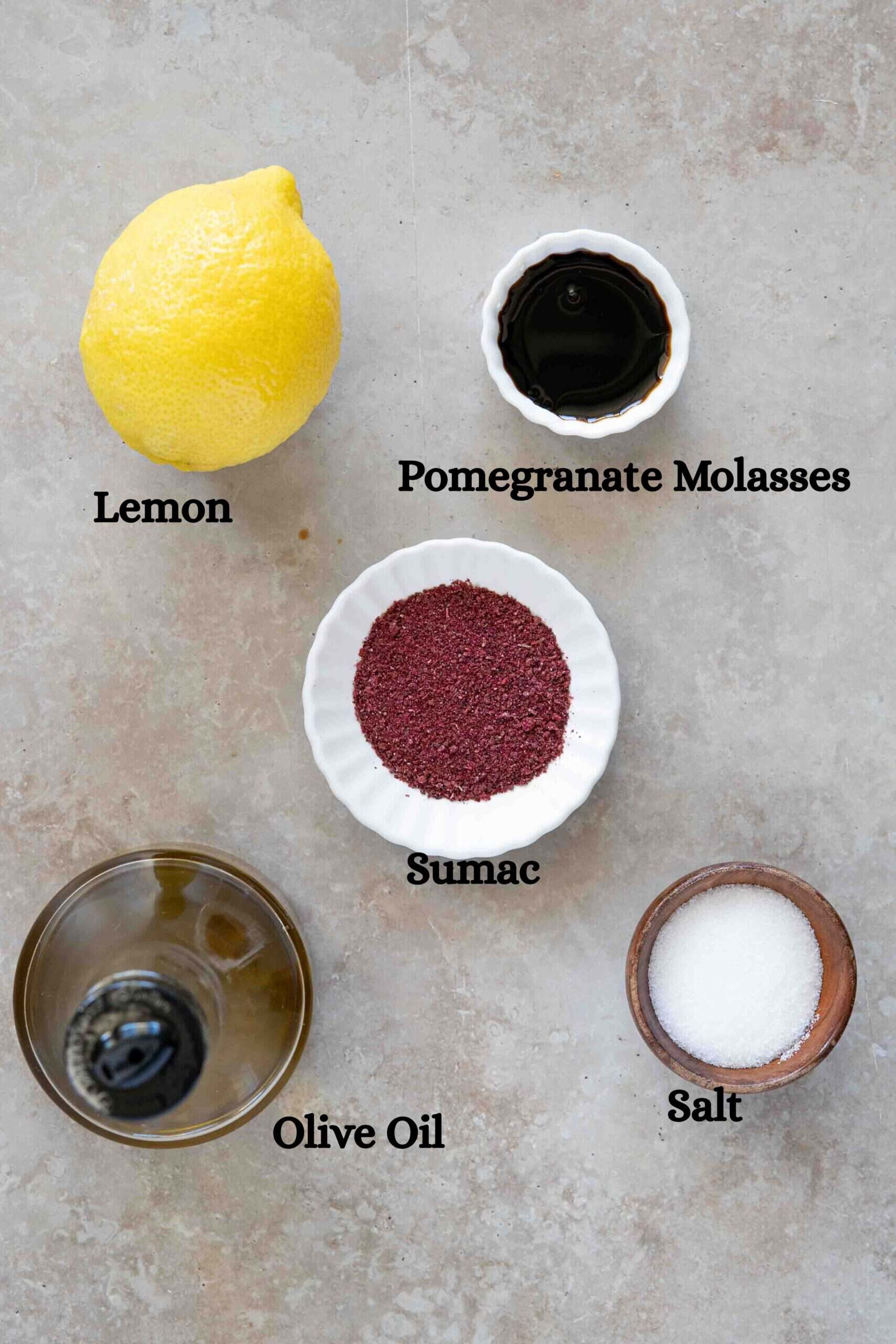
- Fresh Lemon Juice – Freshly squeezed lemon juice gives the dressing its bright, tangy flavor. For the best taste, avoid bottled lemon juice.
- Extra Virgin Olive Oil – A good-quality extra virgin olive oil is highly recommended. Its rich, fruity flavor forms the foundation of the dressing and complements the fresh vegetables beautifully.
- Pomegranate Molasses – This thick, tangy syrup adds depth, a subtle sweetness, and a signature Middle Eastern flavor. While it's optional, it's highly recommended for a more authentic taste.
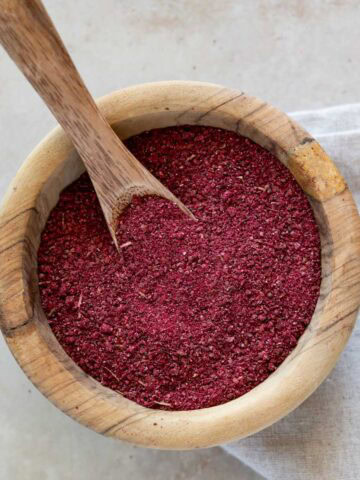
- Sumac – Sumac is a tangy, citrusy spice that gives fattoush its distinctive flavor and beautiful reddish hue. It's one of the defining ingredients of traditional fattoush, but if you can't find it, the dressing will still be delicious with just lemon juice.
- Salt – A pinch of salt enhances the flavors of the vegetables and balances the acidity of the lemon juice and sumac. Adjust to taste.
Instructions
Full ingredients, measurements, and instructions are in the recipe card at the bottom of this post.
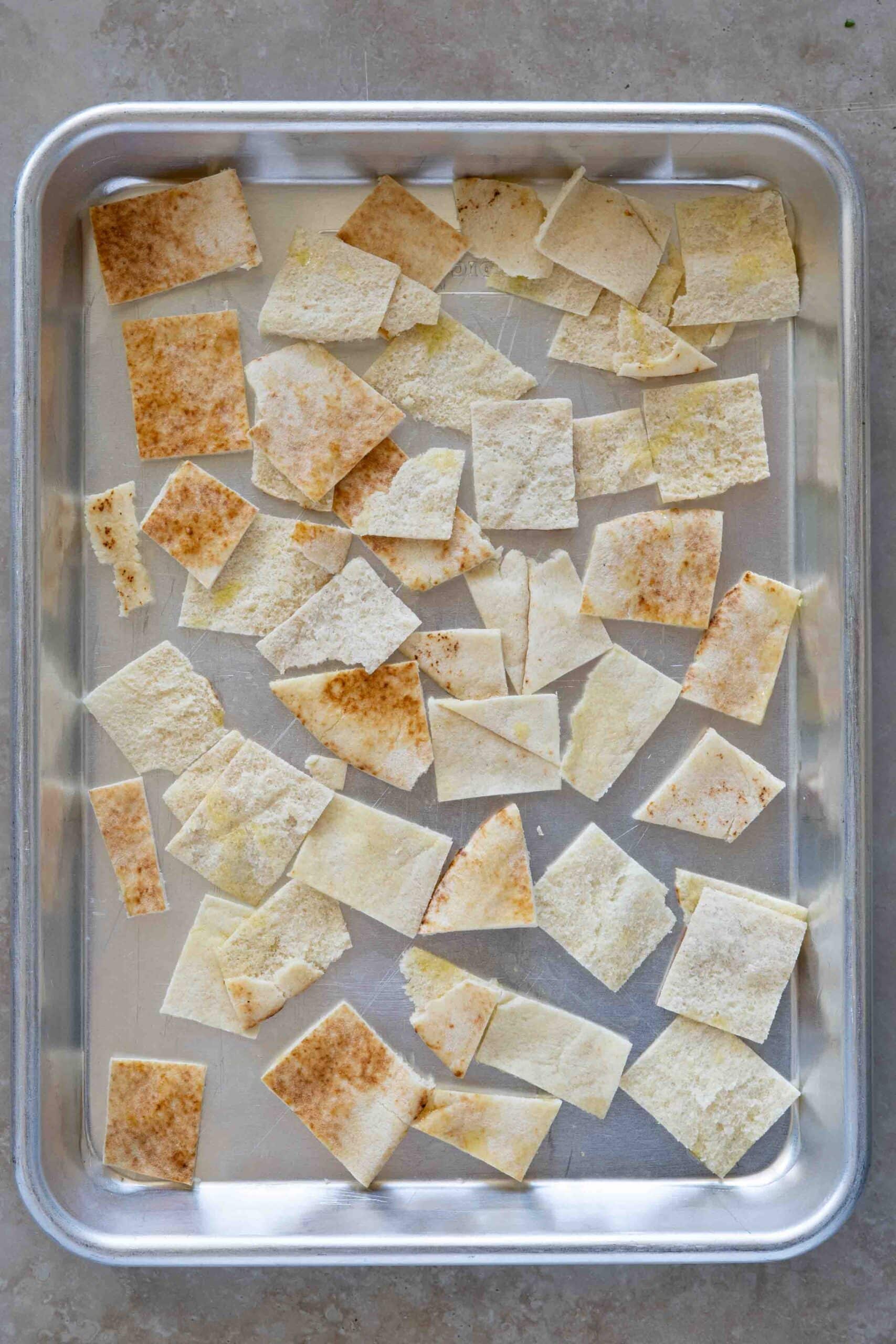
Step 1 | Cut the flat Arabic bread into small squares and spread in a single layer in baking sheet.
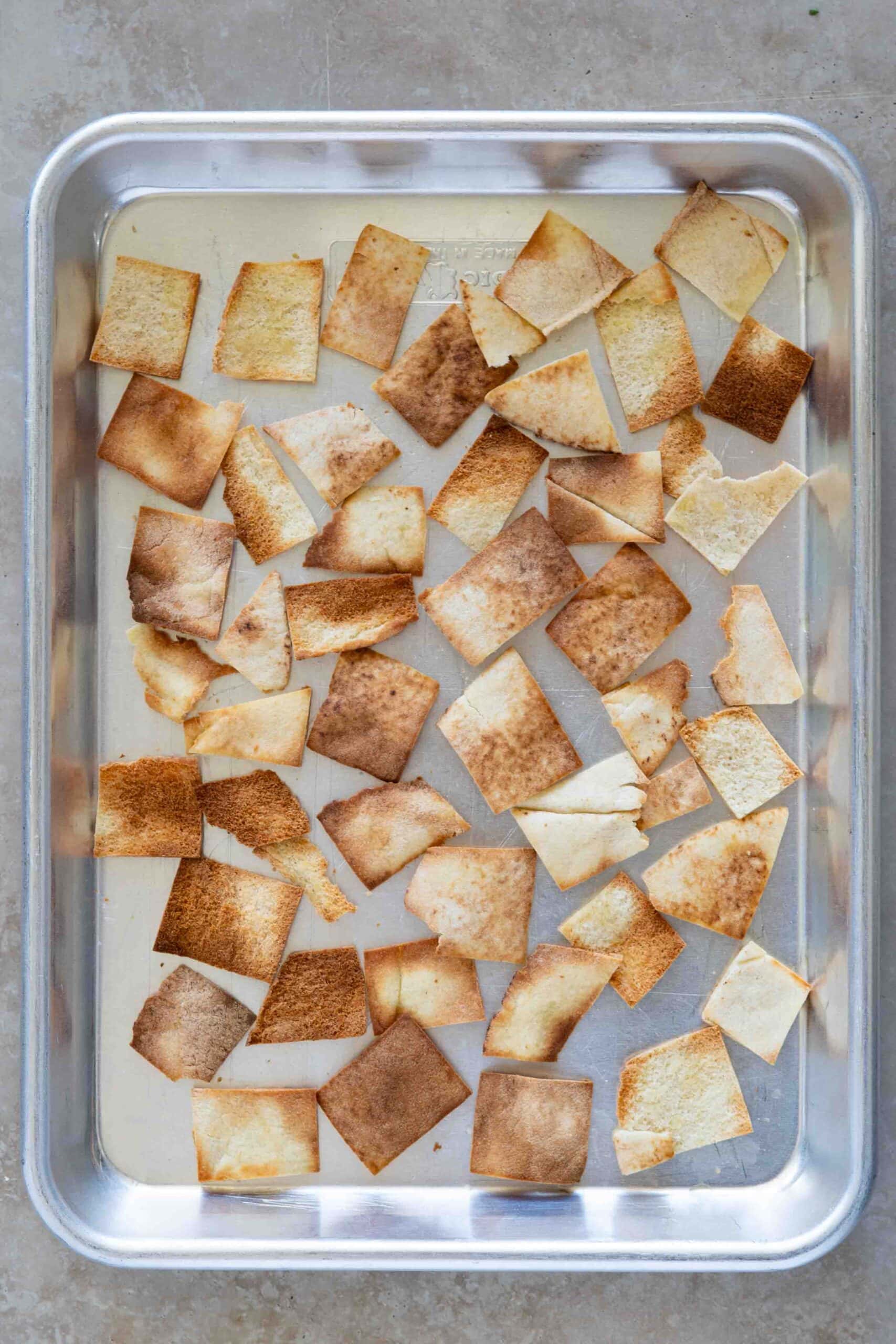
Step 1 | Place the bread under the toaster for 3–5 minutes, or until golden brown and crunchy. Toss the pieces halfway through to ensure all sides are evenly toasted.
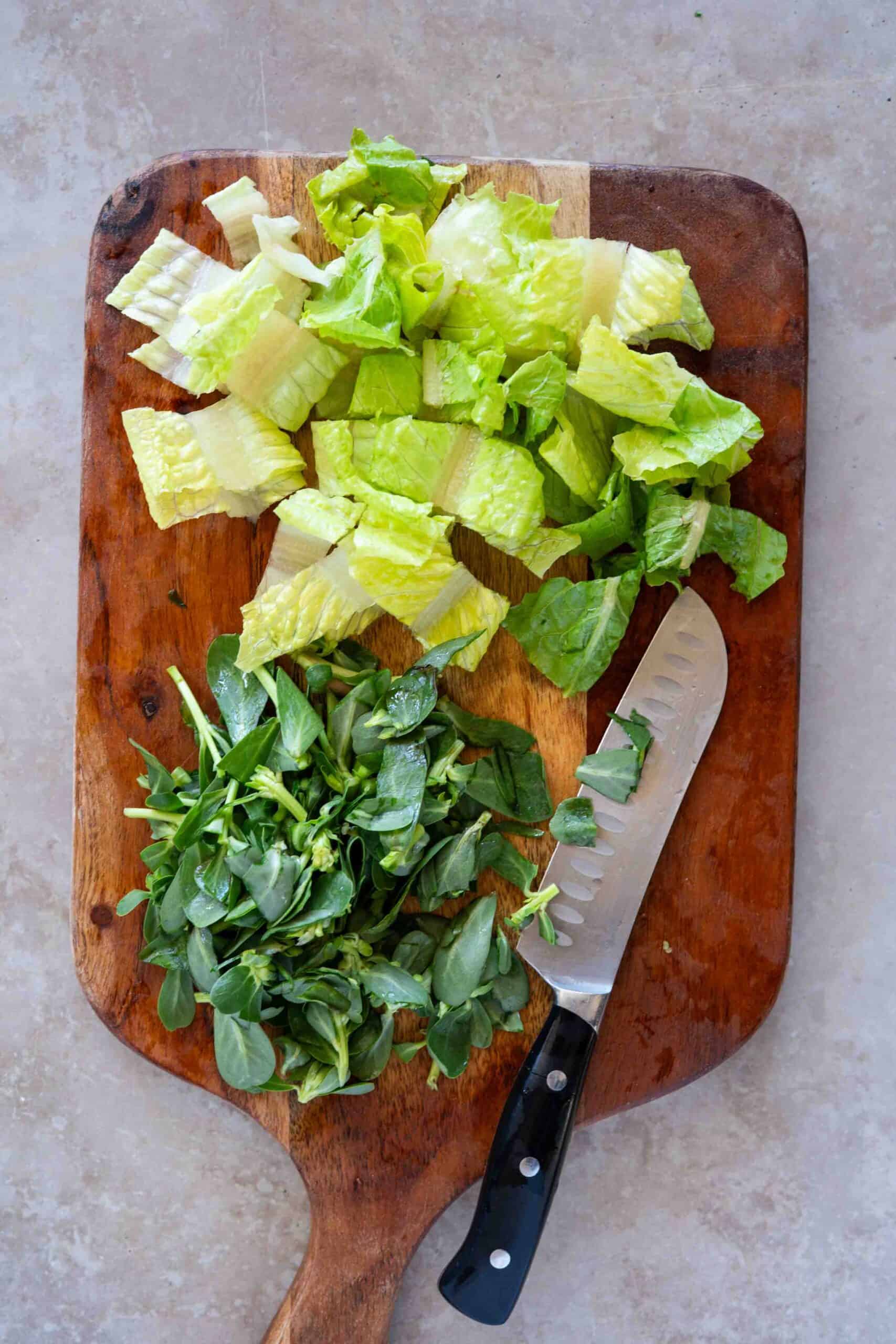
Step 3 | Roughly chop the romaine lettuce and purslane.
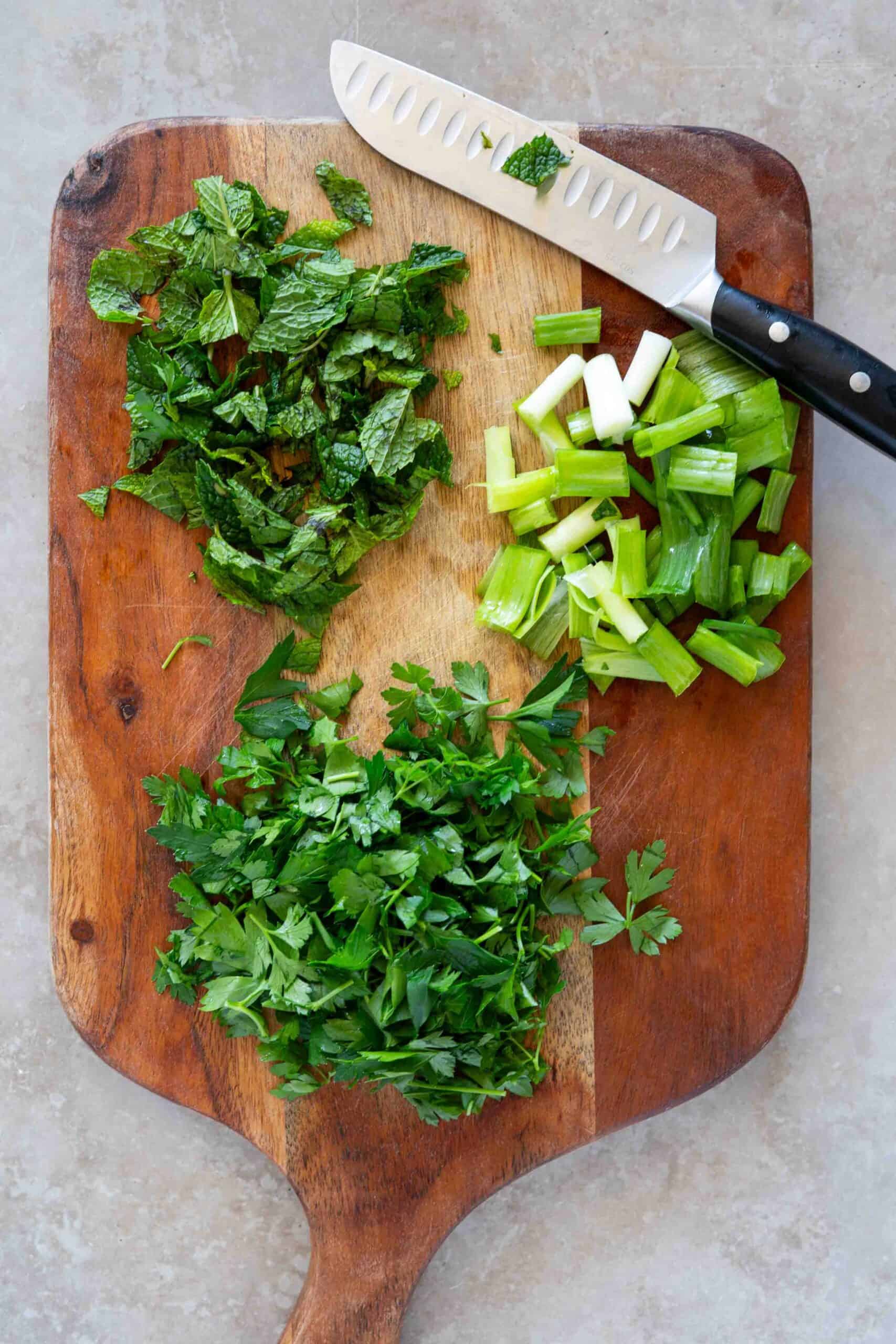
Step 4 | Remove the stems from the parsley and mint, then roughly chop the leaves. Trim and chop the green onions.
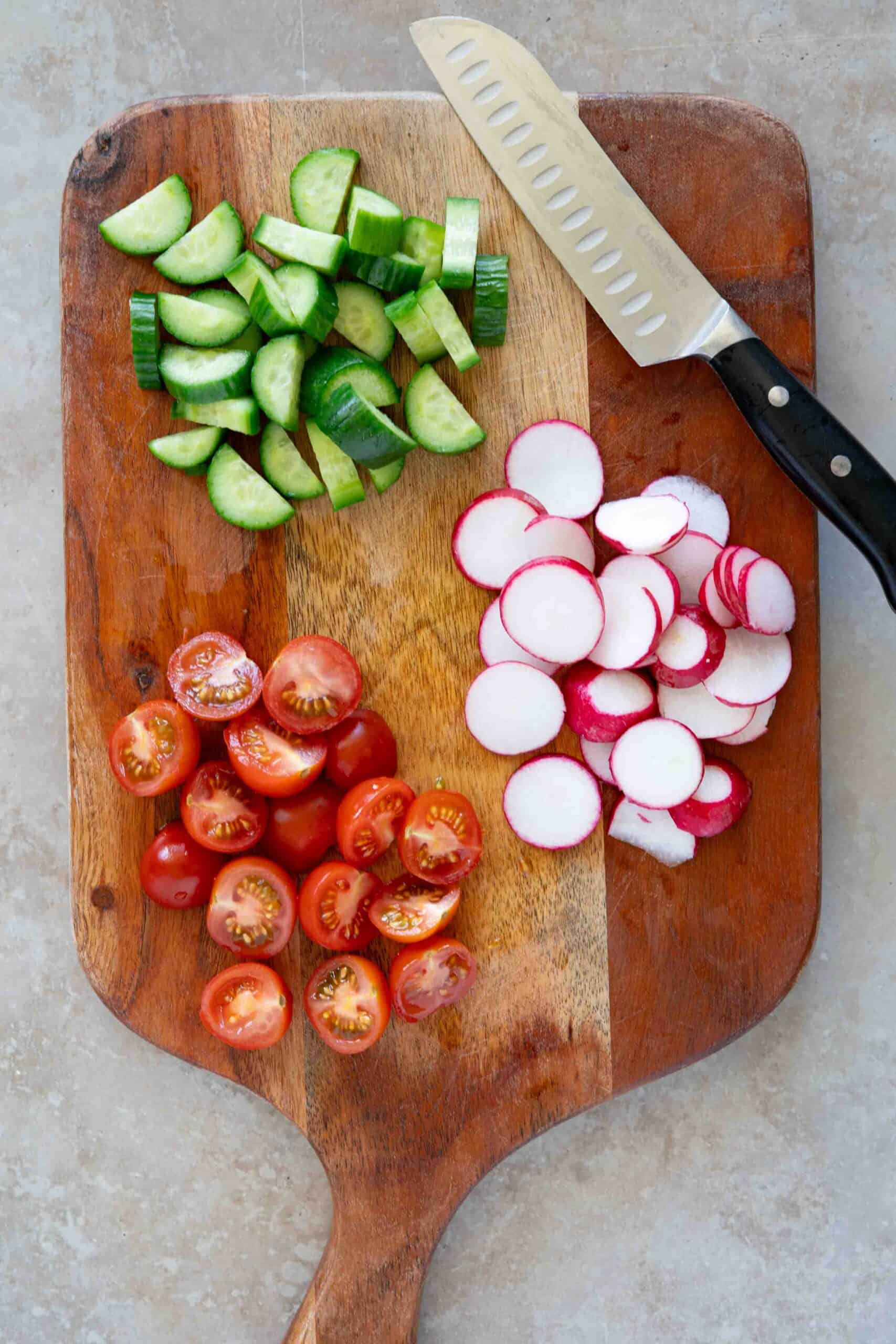
Step 5 | Cut the cucumbers into small squares, halve the cherry tomatoes, and slice the radishes into thin rounds.
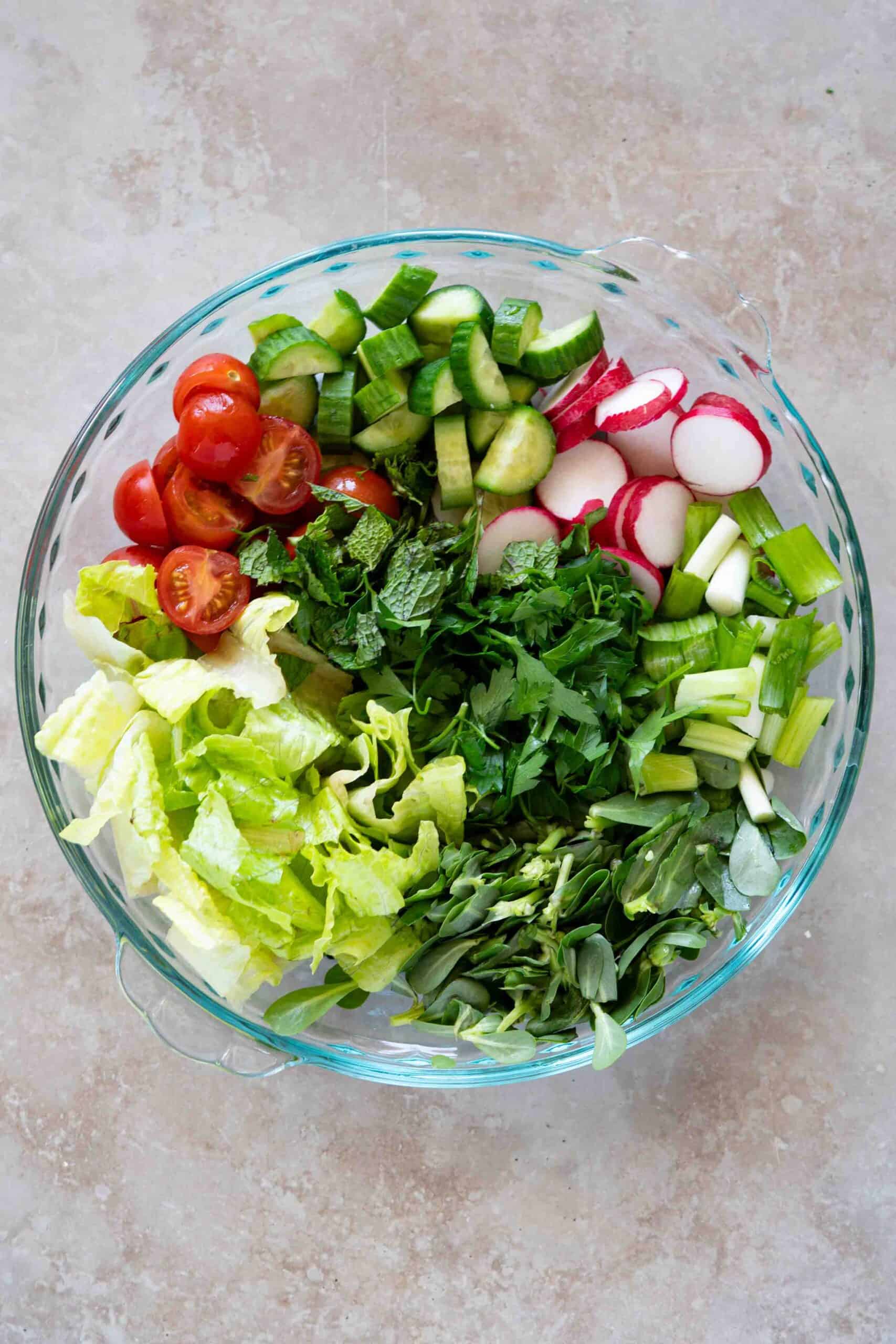
Step 5 | Place all the prepared vegetables in a large bowl.
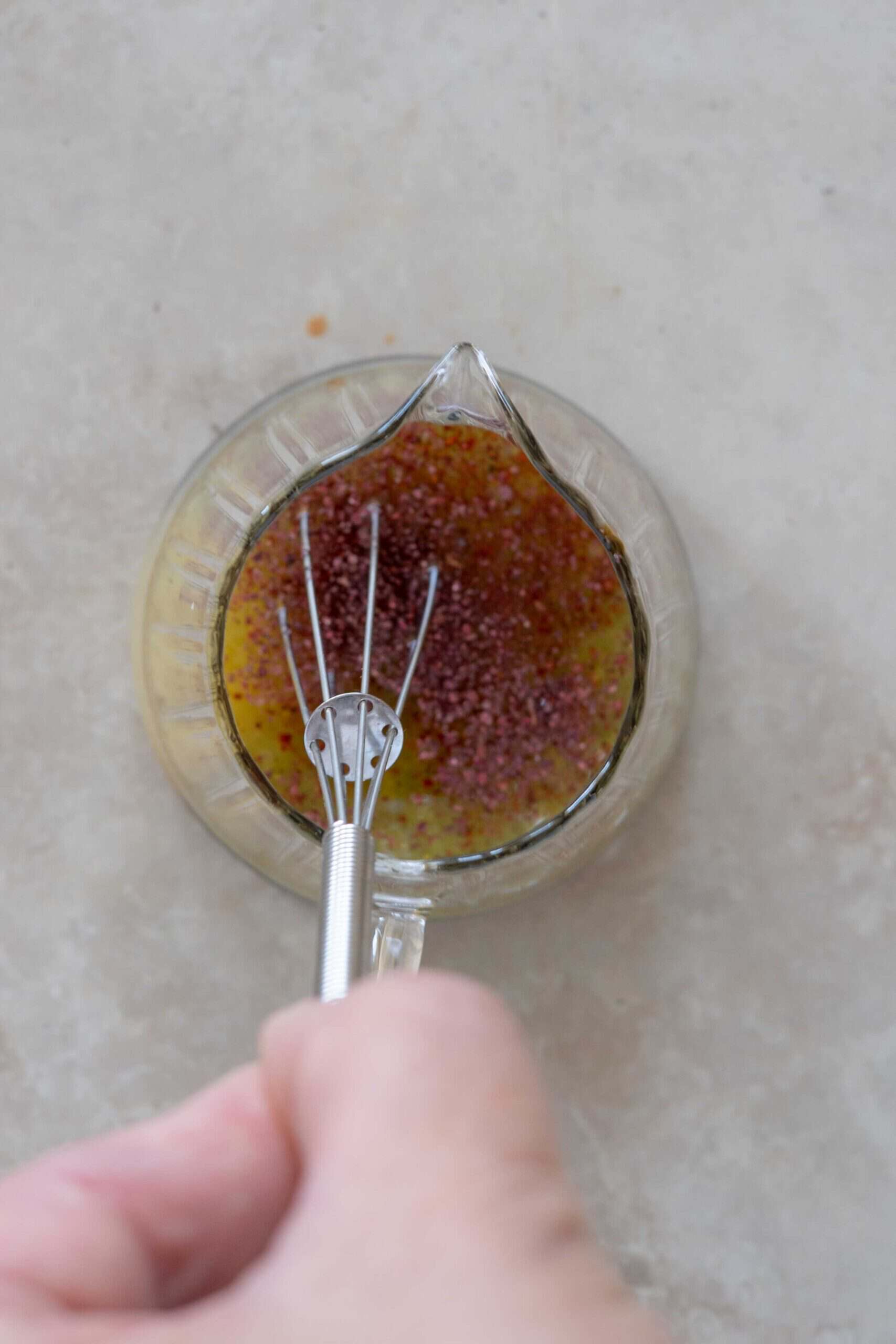
Step 6 | Combining all the dressing ingredients in a small pitcher or a jar. Stir well.
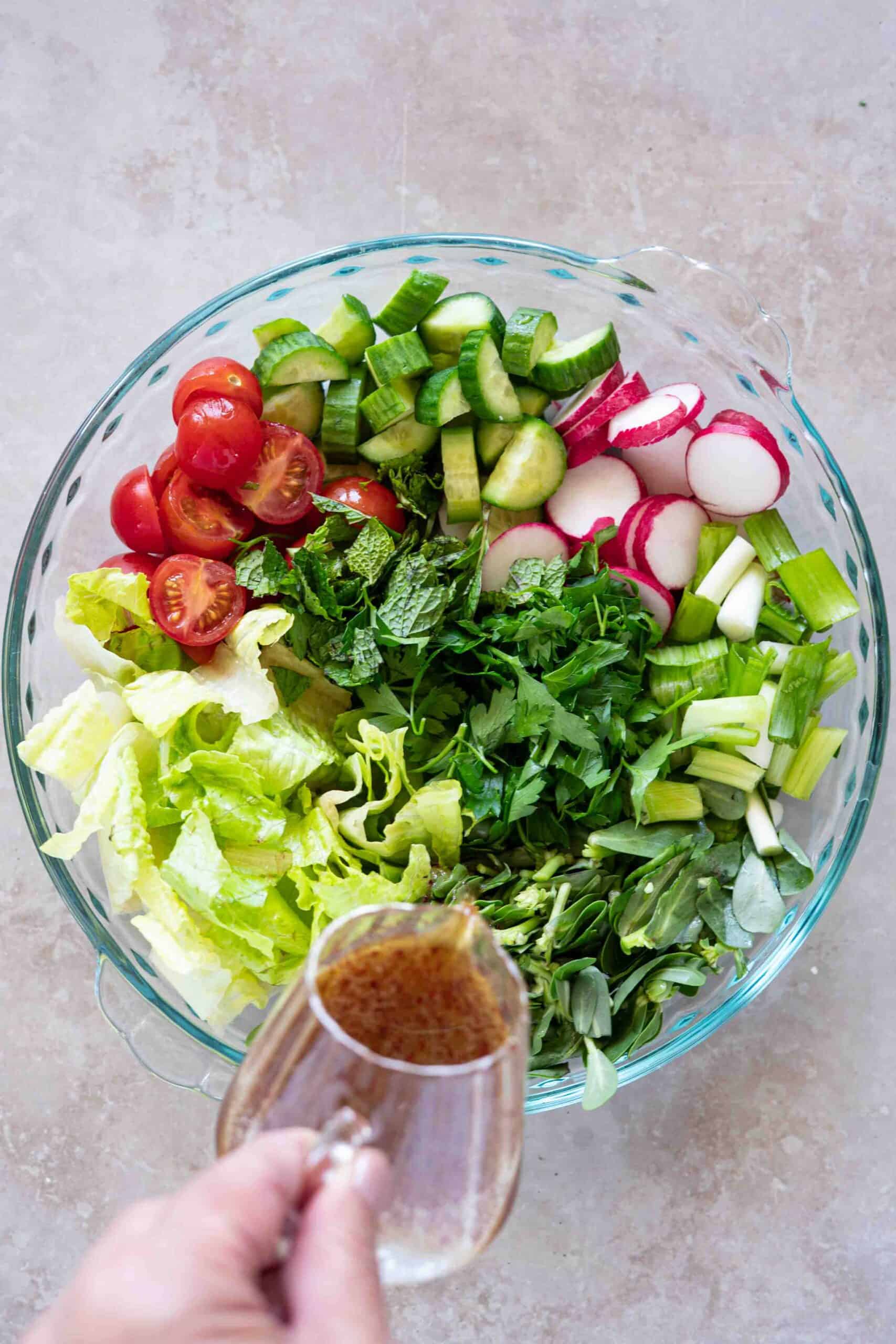
Step 7 | Pour the dressing over the vegetables and toss well.
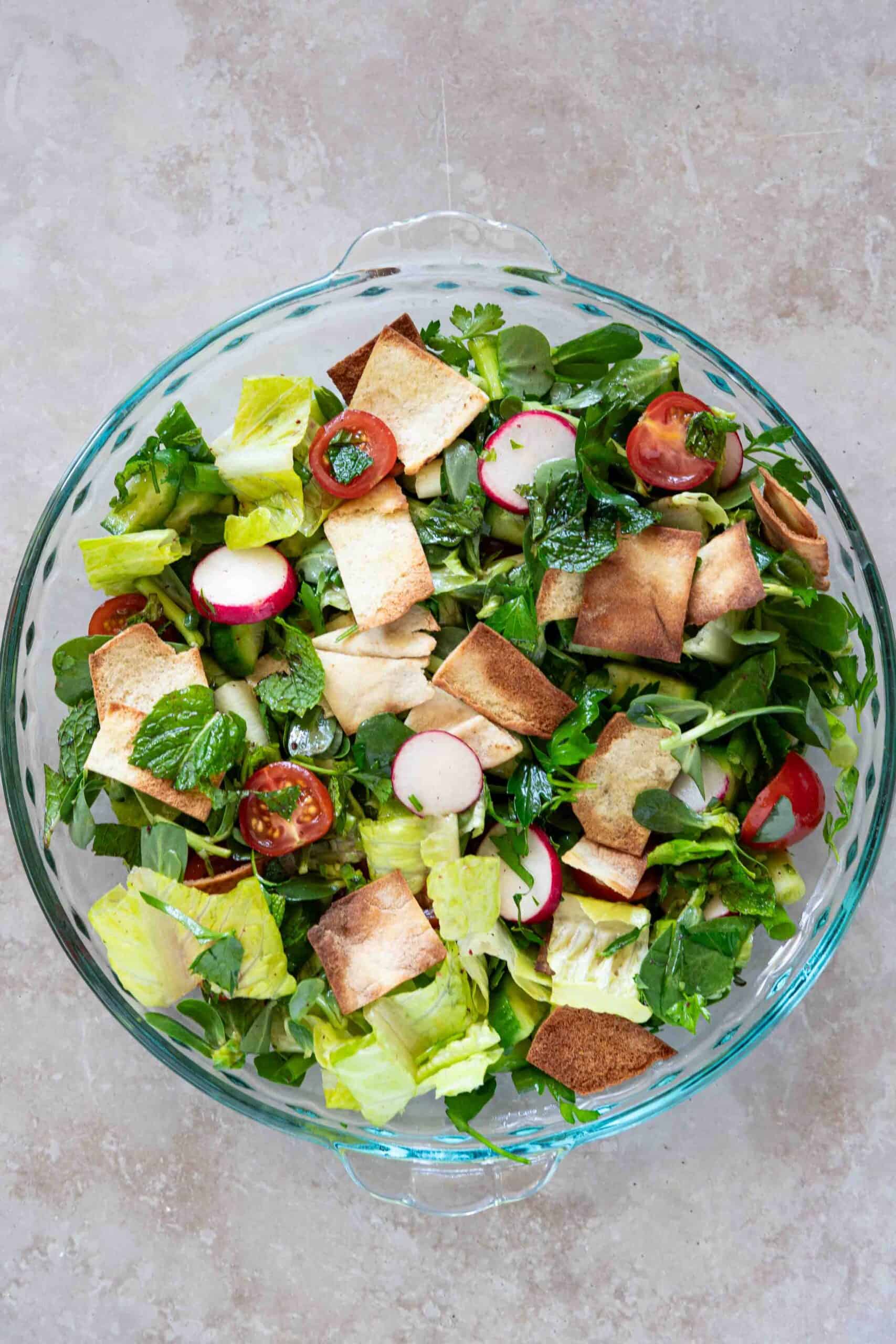
Step 8 | Add the toasted bread just before serving and gently toss again. It’s best to add the bread at the end so it stays crunchy and doesn’t become soggy.
Expert Tips
- Dry your vegetables well: After washing the vegetables and herbs, drain them thoroughly. Excess water can dilute the dressing and make the salad soggy.
- Use very crunchy bread: Toast the Arabic bread until it is deeply golden and crisp. This gives the fattoush its signature crunch.
- Add the Arabic bread at the end: For the best texture, add the toasted bread just before serving so it stays crunchy.
- Don't overdress the salad: Start with some of the dressing, toss well, and add more as needed. You can always add more, but you can't take it out.
- Adjust the lemon and salt: Fattoush should have a bright, tangy flavor. Taste the dressing before adding it to the salad and adjust the lemon juice and salt to your preference.
- Use fresh herbs: Fresh parsley and mint make a big difference in the flavor. Remove the thicker stems before chopping.
- Serve immediately: Fattoush is at its best when the vegetables are fresh and the bread is still crunchy.
- Make it a meal: Add crumbled feta or Arabic white cheese for extra flavor and protein.
Storage
- This dish is served in room temperature, it can be stored in the fridge for up to 5 days.
- Bring out of the fridge and let it sit for 30 minutes, or warm in the microwave to bring to room temperature.
Frequently Asked Questions
Fattoush and tabbouleh are both popular Levantine salads, but they are quite different. Fattoush is made with a variety of larger-chopped vegetables and crispy pieces of flat bread, while tabbouleh is primarily a parsley-based salad with finely chopped herbs, tomatoes, and bulgur.
You can prepare the vegetables and dressing ahead of time, but keep the dressing and toasted bread separate. Toss the salad with the dressing shortly before serving and add the toasted bread at the end so it stays crunchy.
Yes. Pita chips are a convenient alternative to toasted Arabic bread and work especially well when you want to save time.
Click here to subscribe to my newsletter and receive free and new recipes right into your inbox!
If you made authentic fattoush salad I would love it if you could give me a 5-star rating and leave a comment below.
I also would like to hear about your experience making it, snap a picture and tag me on Instagram, Facebook, or Pinterest.
More Delicious Recipes


Authentic Fattoush Salad with Crispy Bread
- Prep Time: 20 minutes
- Total Time: 20 minutes
- Yield: 3
- Category: Side/main dish
- Cuisine: Palestinian/Middle Eastern
- Diet: Vegan
Description
This authentic fattoush recipe features crispy toasted flat Arabic bread, fresh vegetables you likely already have in your refrigerator, and a bright, zesty dressing made with lemon juice, olive oil, and tangy sumac.
Ingredients
- 1 Arabic flat bread, cut into small pieces and toasted.
- 1 head romaine lettuce, washed and chopped
- 1 bunch purslane, washed and chopped
- 3 small to medium Persian cucumbers, chopped
- 1 cup cherry tomatoes, halved
- 2 green onions, trimmed and chopped
- 4-5 radishes, trimmed and chopped
- 1 bunch parsley, stems removed and chopped
- ½ bunch mint, stems removed and chopped
Dressing:
- ½ teaspoon sumac
- Juice of 1 lemon, adjusted to taste
- ¼ cup olive oil
- 1 teaspoon salt, adjusted to taste
- 1 teaspoon pomegranate molasses
Instructions
Prepare the Bread
- Cut the flat Arabic bread into small squares.
- Spread the pieces in a single layer on a baking sheet.
- Toast under the broiler/toaster for 3–5 minutes, or until golden brown and crispy.
- Toss or turn the bread halfway through so it browns evenly on all sides.
Prepare the Vegetables
- Wash all the vegetables thoroughly and drain well.
- Roughly chop the romaine lettuce and purslane.
- Remove the stems from the parsley and mint, then roughly chop the leaves.
- Trim and chop the green onions.
- Cut the cucumbers into small squares,
- Halve the cherry tomatoes.
- Slice the radishes into thin rounds.
Prepare the Dressing
- Combining all the dressing ingredients in a small jar.
- Close the jar tightly and shake well to combine.
Putting it all Together
- Place all the prepared vegetables in a large bowl.
- Pour the dressing over the vegetables and toss well.
- Add the toasted bread just before serving and gently toss again.
- It’s best to add the bread at the end so it stays crunchy and doesn’t become soggy.
Notes
- Dry your vegetables well: After washing the vegetables and herbs, drain them thoroughly. Excess water can dilute the dressing and make the salad soggy.
- Use very crunchy flat bread: Toast the Arabic bread until it is deeply golden and crisp. This gives the fattoush its signature crunch.
- Add the bread at the end: For the best texture, add the toasted bread just before serving so it stays crunchy.
- Don't overdress the salad: Start with some of the dressing, toss well, and add more as needed. You can always add more, but you can't take it out.
- Adjust the lemon and salt: Fattoush should have a bright, tangy flavor. Taste the dressing before adding it to the salad and adjust the lemon juice and salt to your preference.
- Use fresh herbs: Fresh parsley and mint make a big difference in the flavor. Remove the thicker stems before chopping.
- Let the dressing sit: If you have time, prepare the dressing a few minutes ahead of serving. This gives the sumac time to blend with the lemon juice and olive oil.
- Serve immediately: Fattoush is at its best when the vegetables are fresh and the pita is still crunchy.
- Make it a meal: Add crumbled feta or Arabic white cheese for extra flavor and protein, and serve with warm pita on the side.


Val says
This really is a meal on its own! Super tasty! Had it with the Musakhan and Khyar that are also on this site. Lovely and will make again.
Wafa Shami says
It is a meal on its own. Glad you enjoyed. Thanks for your kind words.