
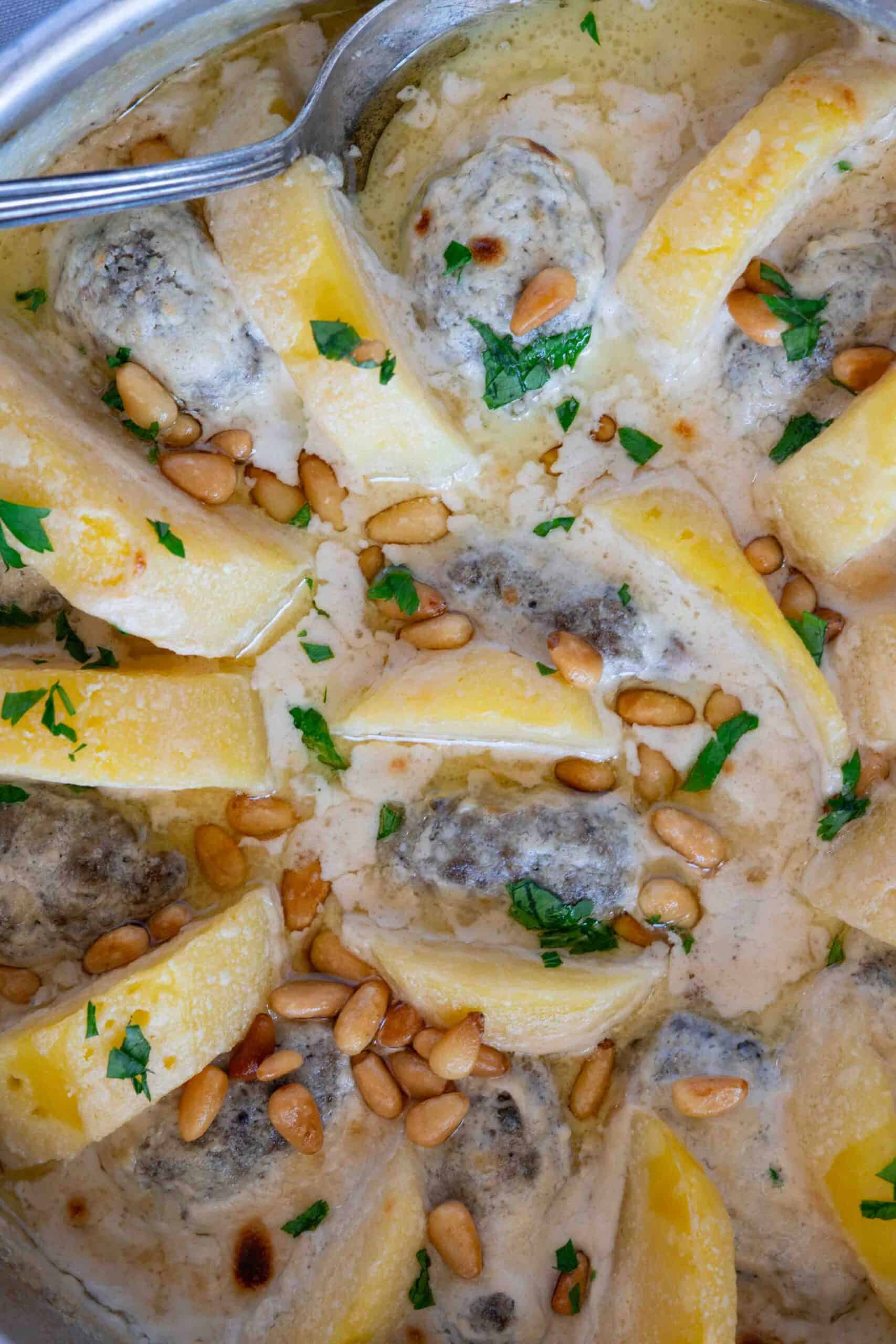
Kafta with tahini sauce is a beloved Palestinian comfort recipe made with seasoned ground beef or lamb, baked with potatoes, then covered in a rich, tangy tahini sauce.
Unlike grilled kaftah or kafta bil seniyeh, this version is baked and finished with a tangy tahini sauce. The sauce adds a rich, nutty, and slightly lemony flavor that makes this Palestinian meatball dish especially delicious.
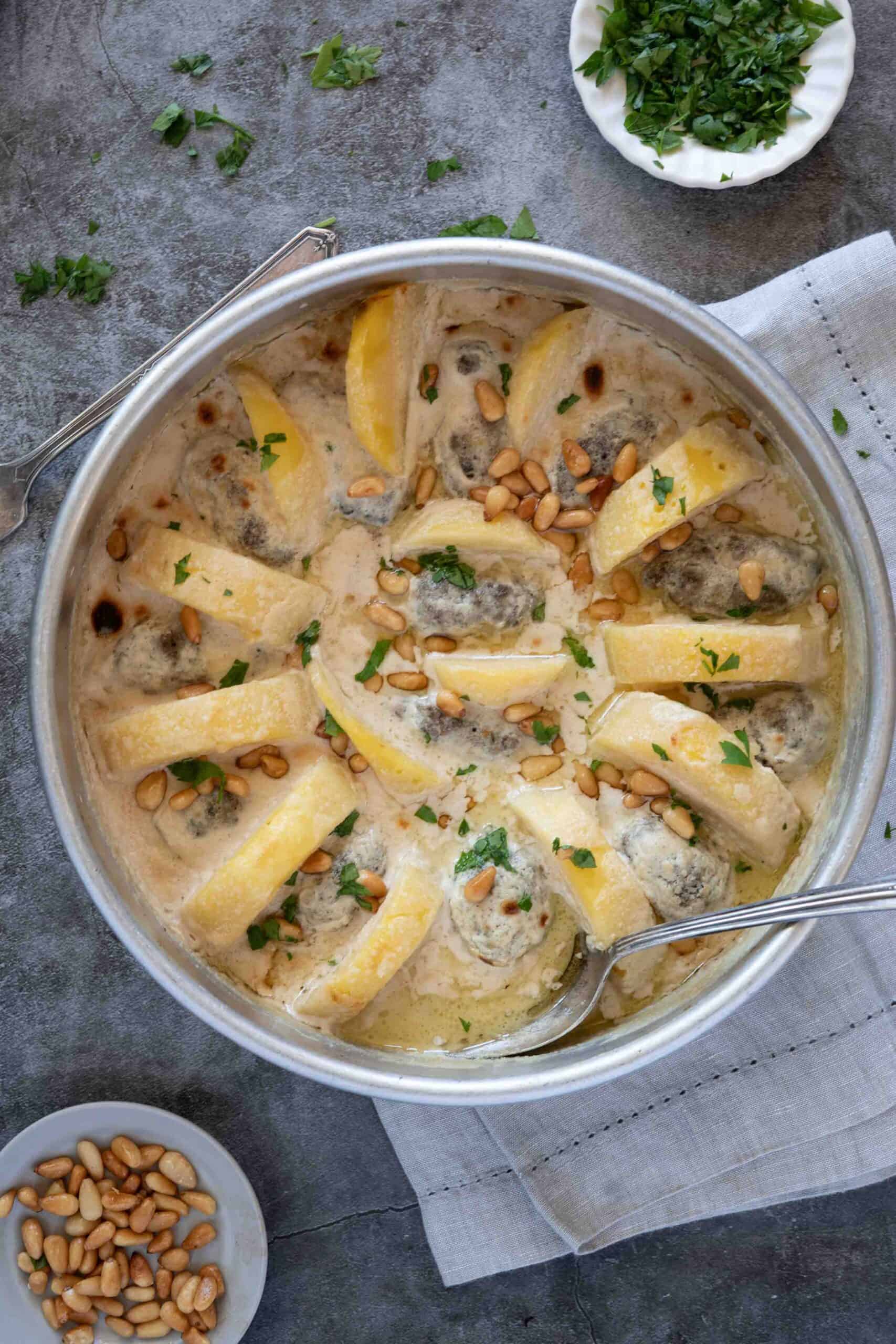
This dish also has a special place in my heart because it was one of my late dad's favorite dishes.
This recipe is an easy quick dinner, with an authentic Middle Eastern flavors with minimal preparation. It can be served with a side vermicelli rice, or fresh bread.
There are many delicious variations of this kafta recipe, the most popular is kafta bil sanieh. Dawood Basha, grilled kafta kabab, or prepared as one of my favorite summer dishes, Kafta bil Warak Dawali, where the kafta is baked with grape leaves.
What You'll Love This Recipe?
- Full of flavor: Fresh parsley, onion, allspice, lemon, garlic, and tahini create layers of flavor.
- Easy to prepare: The meatballs and potatoes bake together in one dish.
- Creamy tahini sauce: The lemon-garlic tahini sauce is the finishing touch that sets this version of kiftah apart.
- A comforting family meal: Serve it with rice or warm bread for a complete meal.
- Perfect for sharing: This recipe makes enough for 3–4 people.
Jump to:
What is Kafta?
Kafta (also spelled kofta, kefta, kufta, or kifta) is a Palestinian/Middle Eastern dish made from ground meat, most commonly beef, lamb, or a mixture of both, combined with finely chopped onions, parsley, and spices. The mixture is shaped into patties, logs, meatballs, or spread in a baking dish, depending on the recipe type.
The word itself comes from a term meaning "to pound" or "to grind," referring to the minced meat used to make it.
Kafta vs. Kofta: "Kafta," "kofta," "kefta," and "kifta" are all variations of the same dish name used across different countries and dialects. You'll find versions throughout the Middle East, and North Africa.
Equipment
This post may contain affiliate links.
- Casserole Dish -
- Food Processor - To Finley chop vegetables, or you can chop by hand.
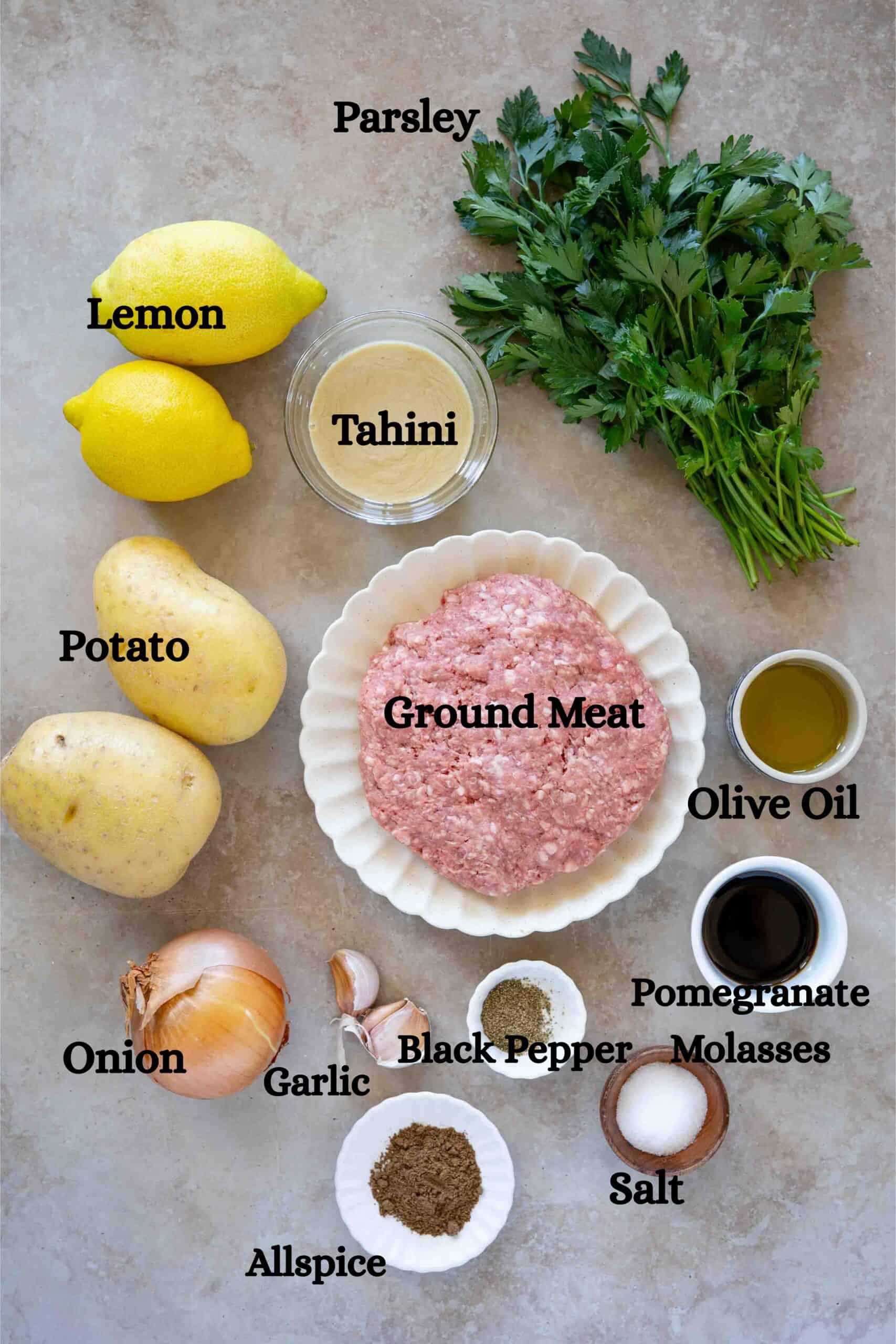
Ingredients
Instructions
Full ingredients, measurements, and instructions are in the recipe card at the bottom of this post.
Preparing the Meat
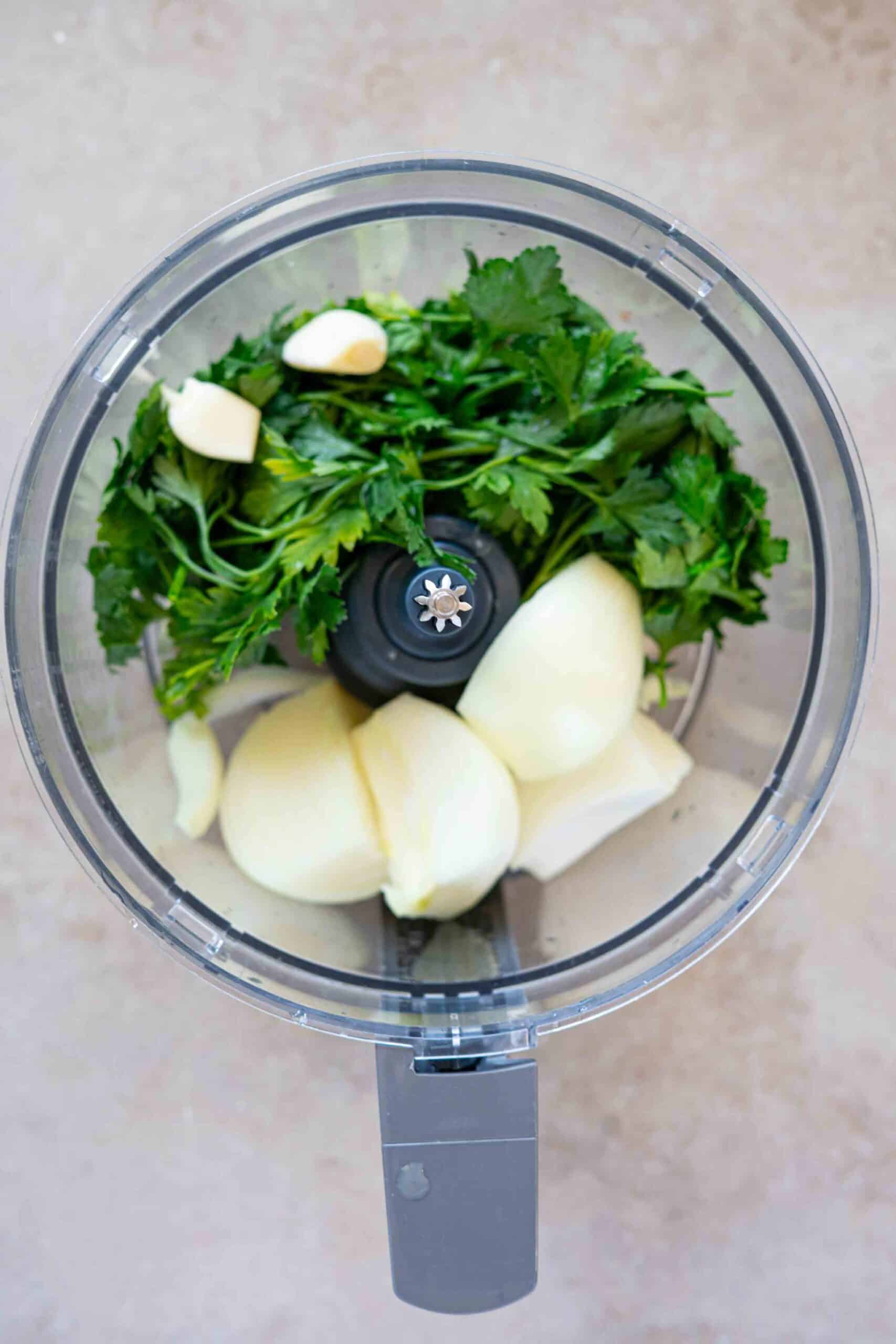
Step 1 | In a food processor combine onion, parsley, and garlic.
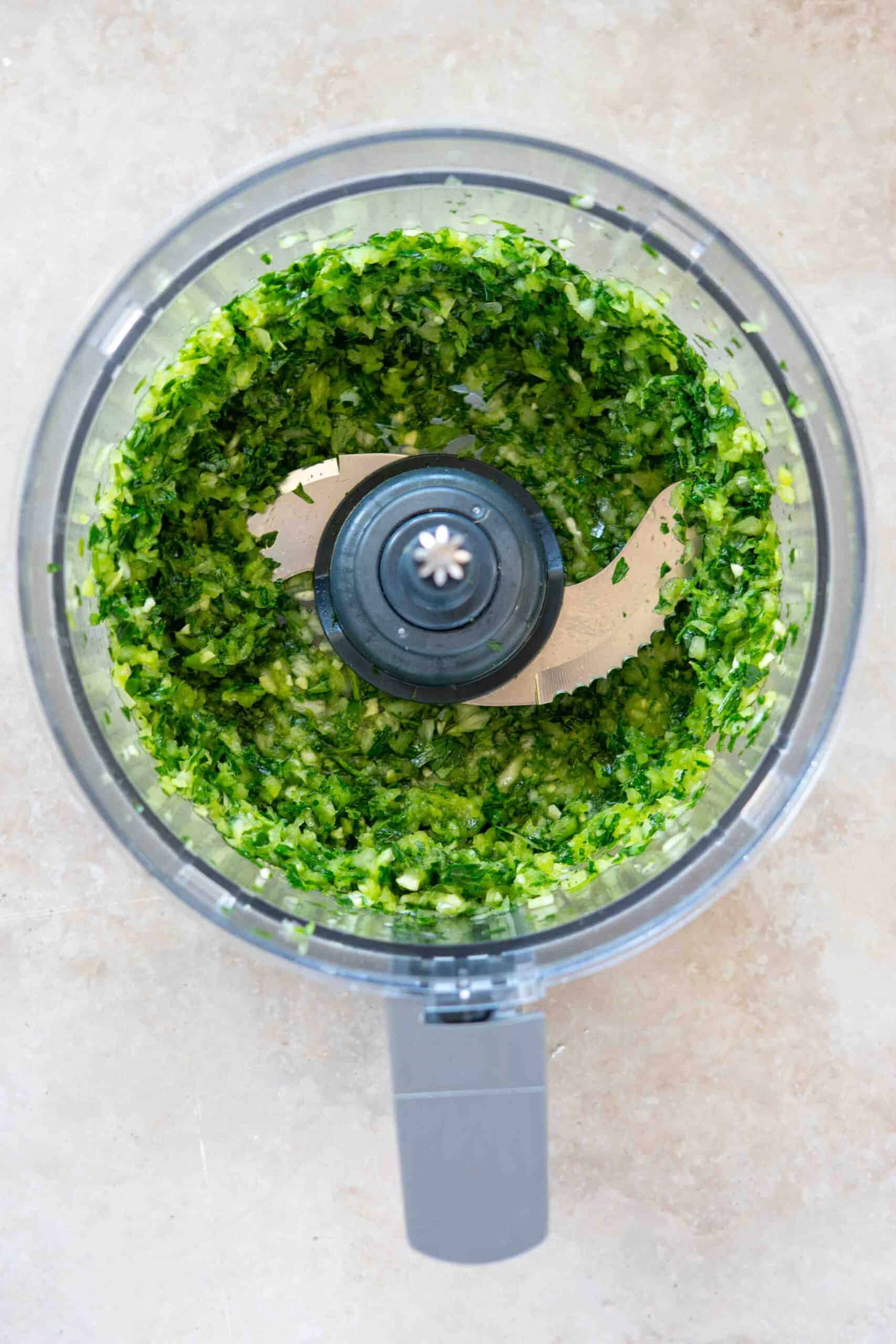
Step 2 | Pulse until the mixture is finely chopped.
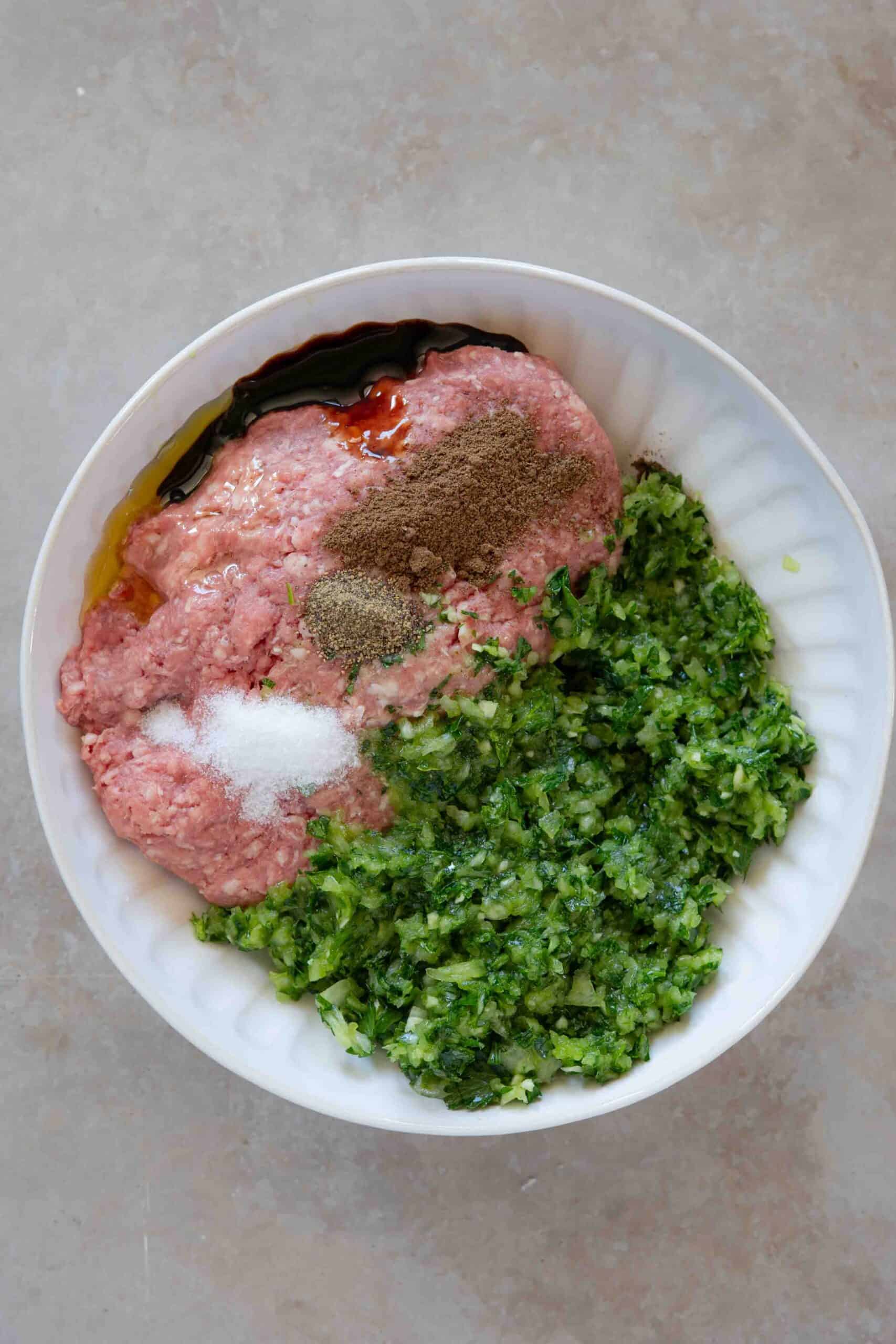
Step 3 | In a bowl, combine the ground meat with the onion-parsley mixture, pomegranate, molasses, olive oil, allspice, salt and pepper.
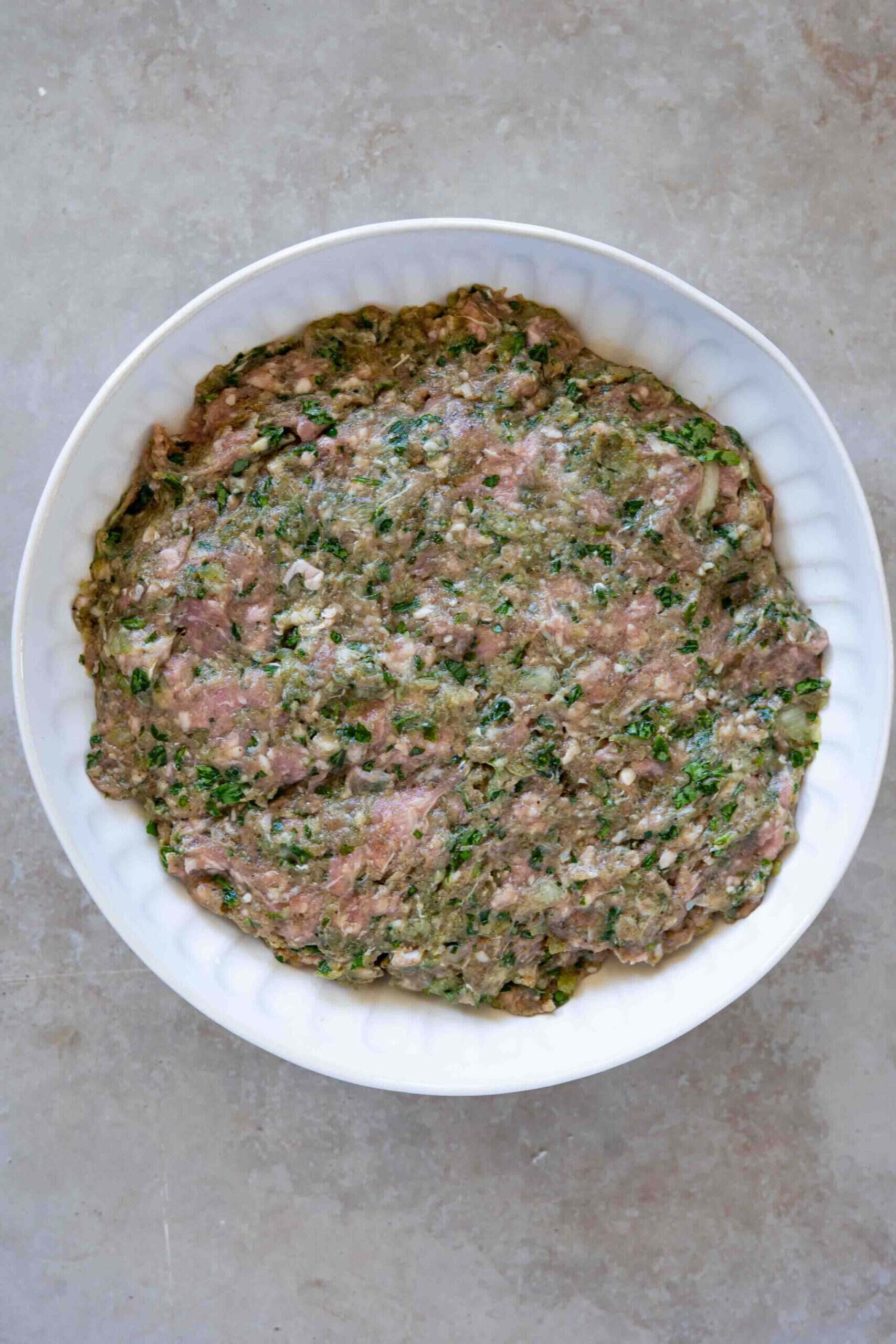
Step 4 | Mix well until all the ingredients are evenly incorporated.
Baking Kafta
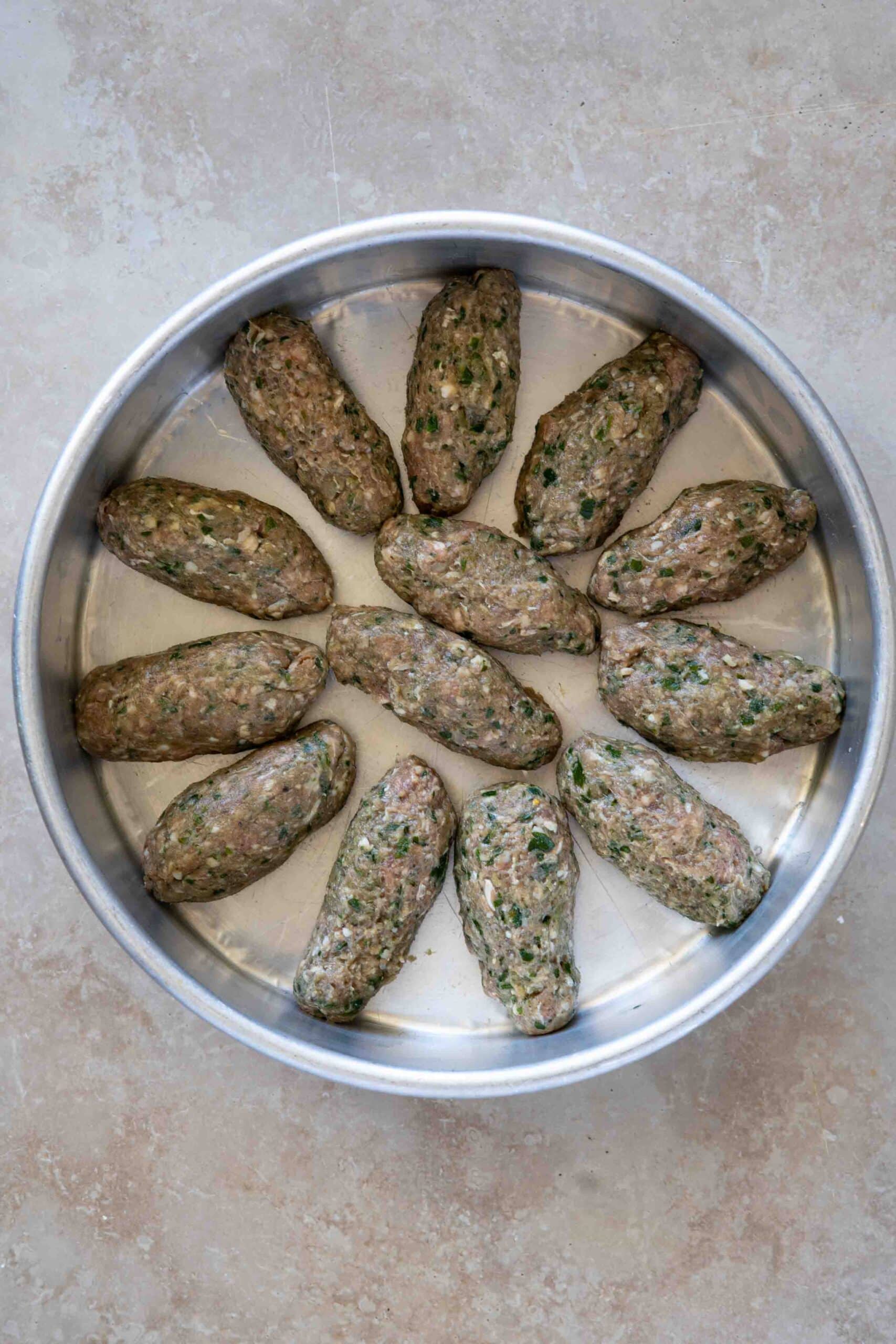
Step 5 | With your hands, shape the kafta mixture into oval patties and arrange them in a baking dish.
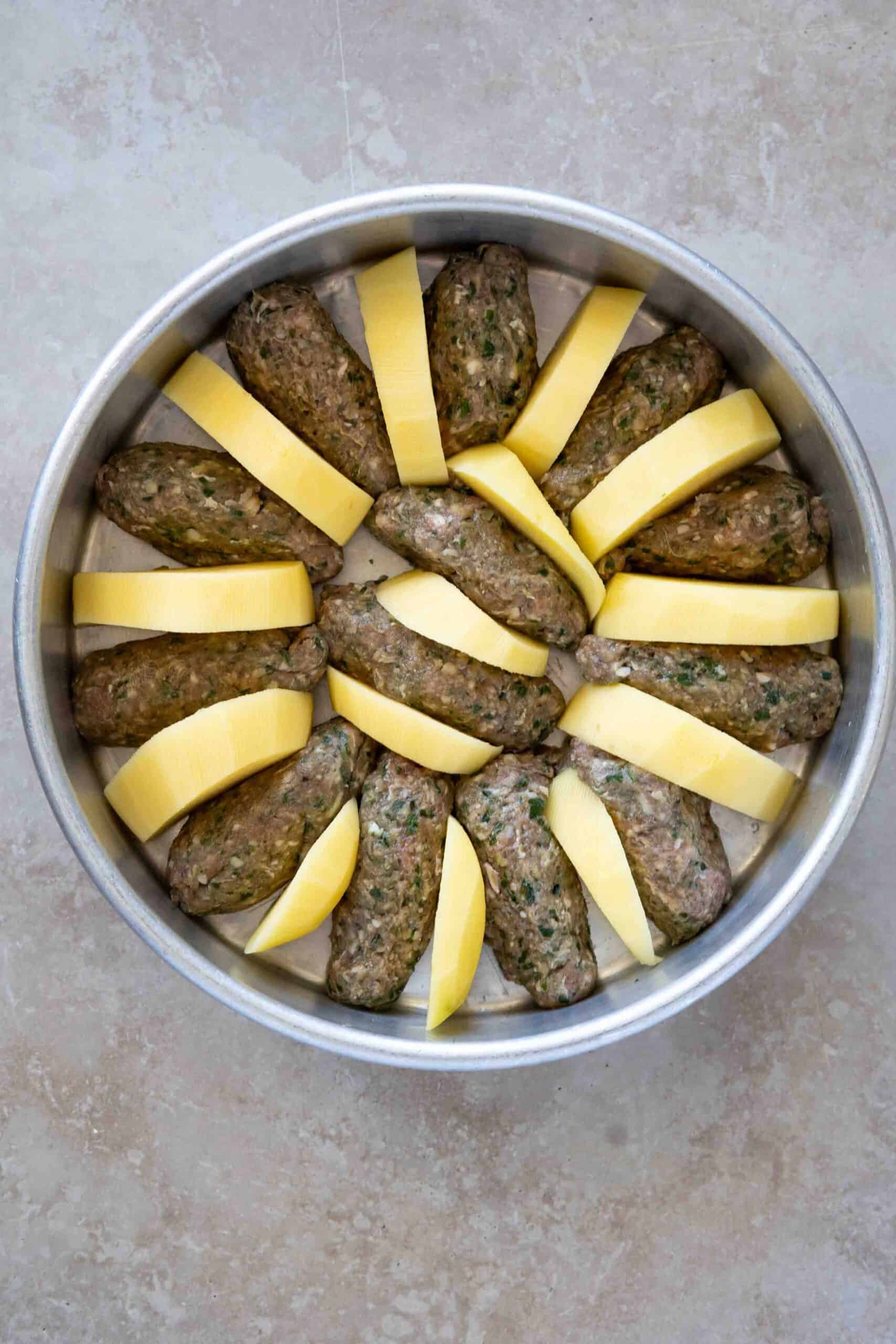
Step 6 | Place slices of peeled potatoes between each piece of kafta.
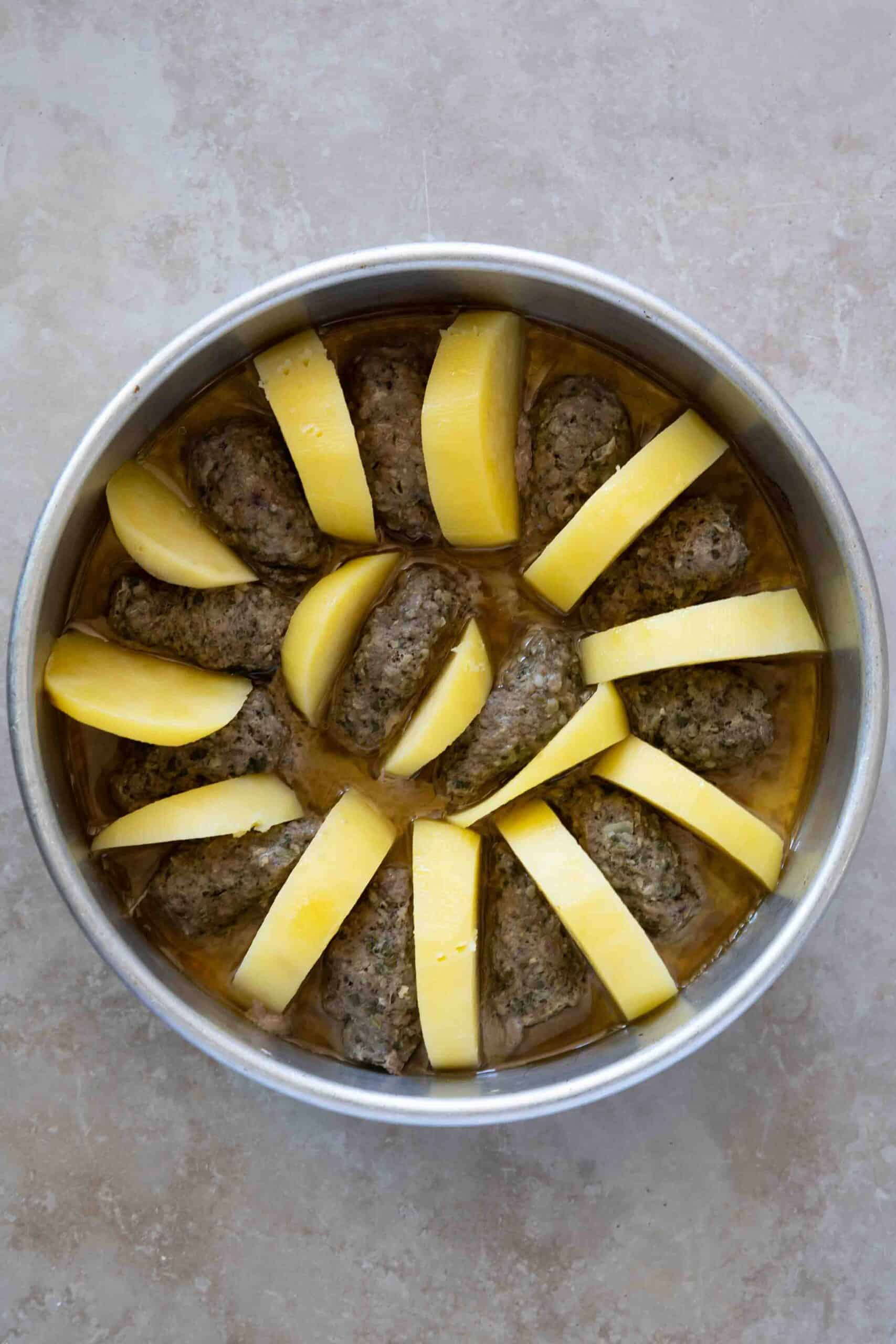
Step 7 | Cover the baking dish with foil and bake for 45-60 minutes, or until the kafta is fully cooked.
Adding Tahini Sauce
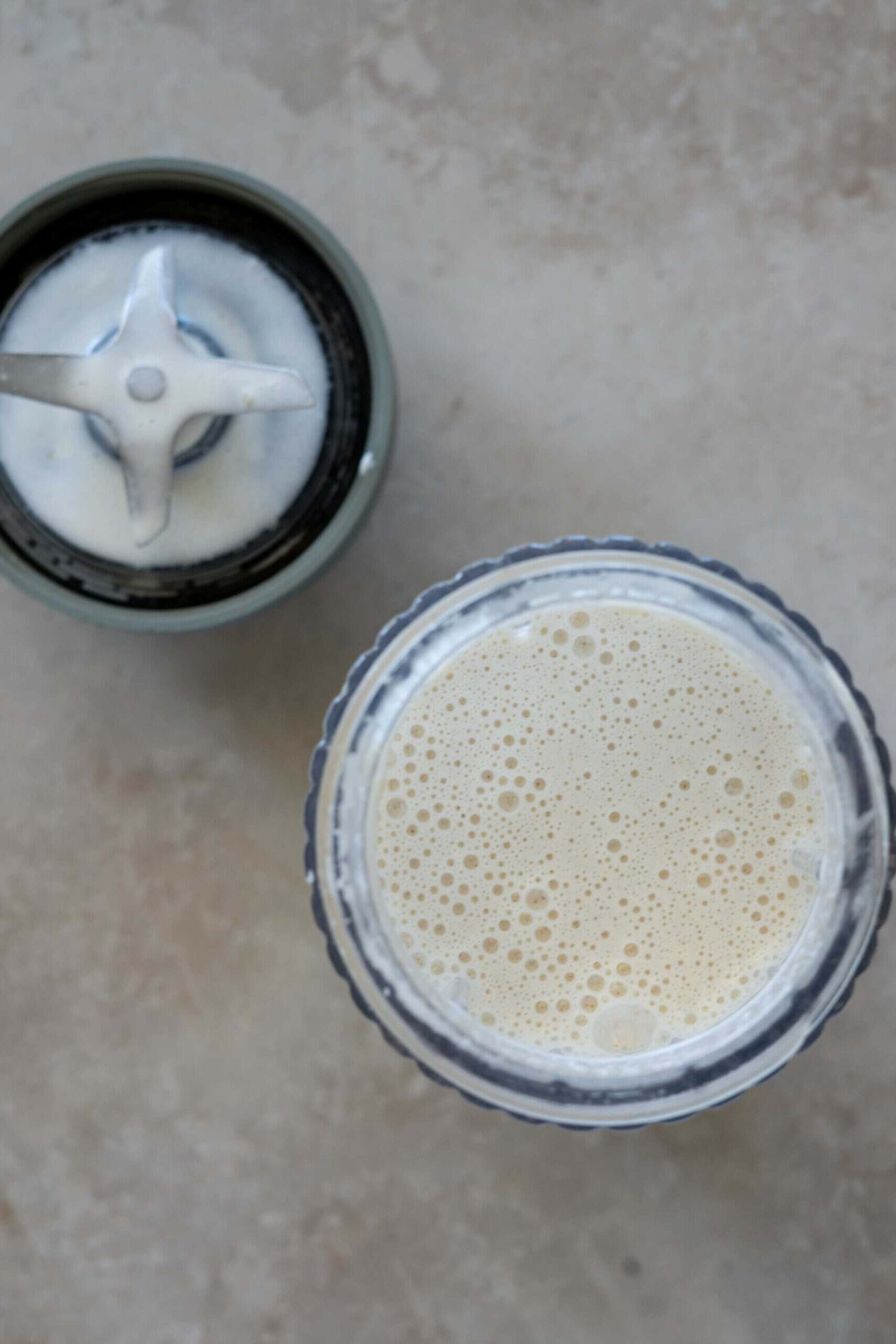
Step 8 | Prepare the tahini sauce by blending the tahini, water, fresh lemon juice, garlic, and salt until smooth and creamy.
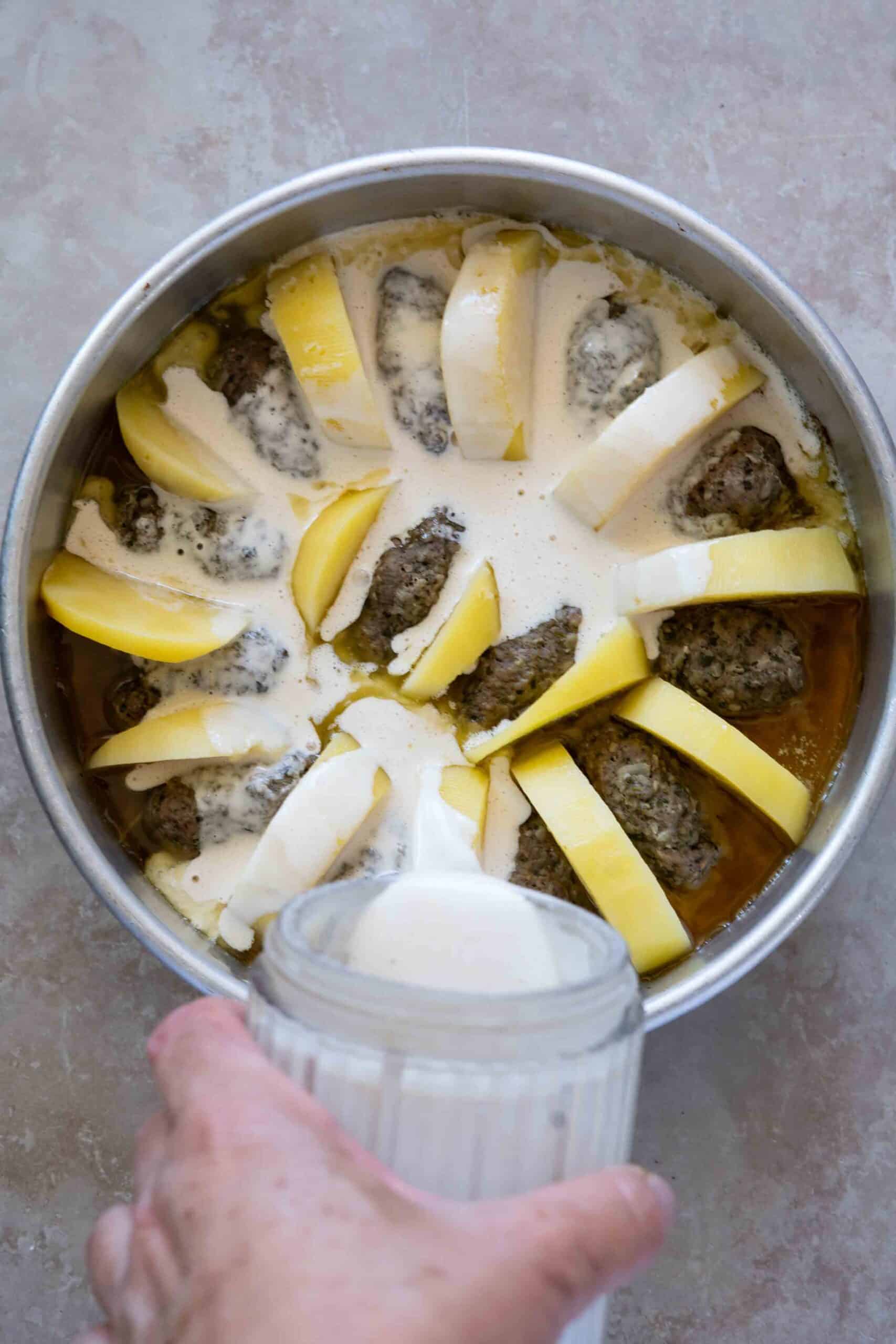
Step 9 | Pour the tahini sauce evenly over the kafta and potatoes.
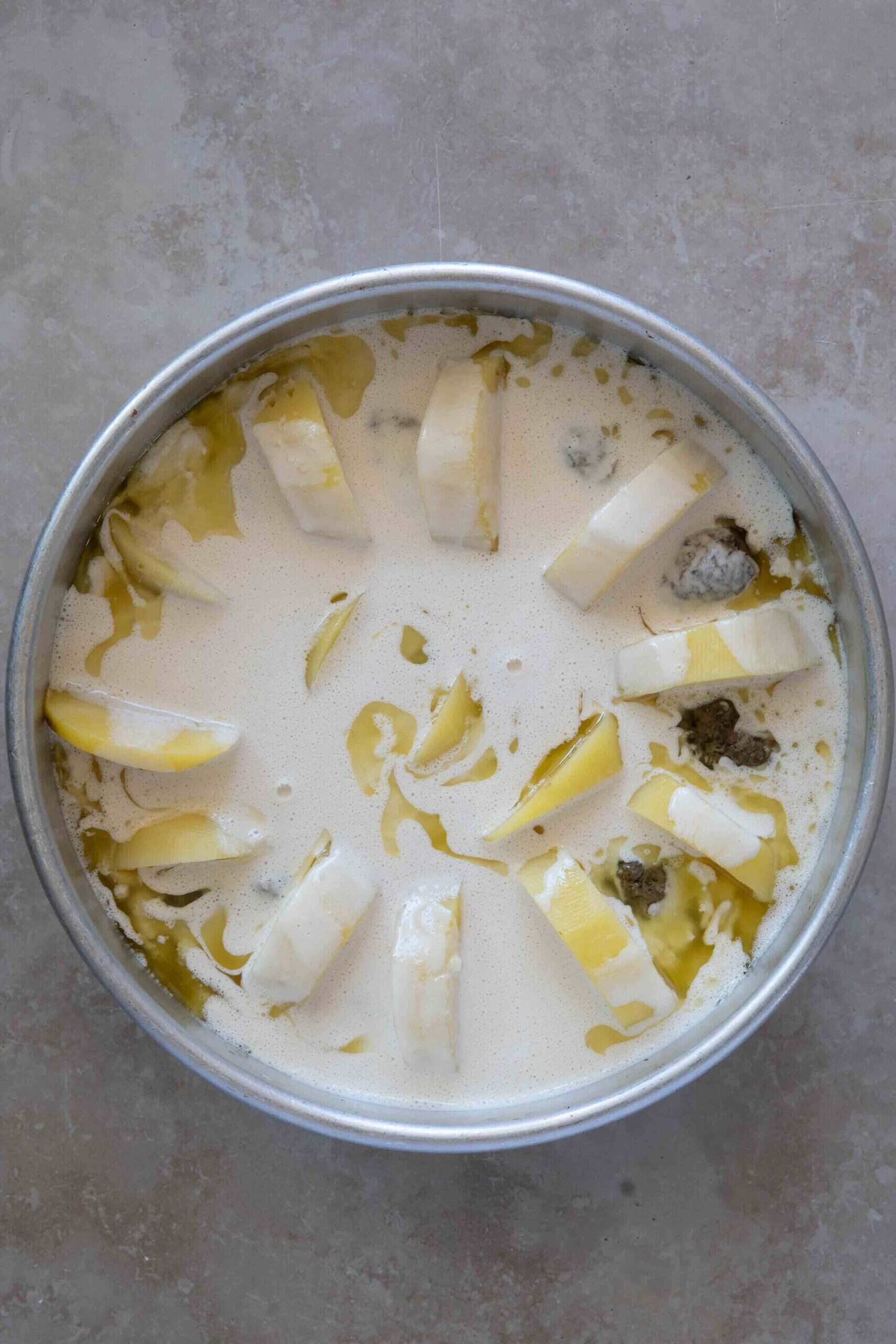
Step 10 | Make sure everything is well coated.
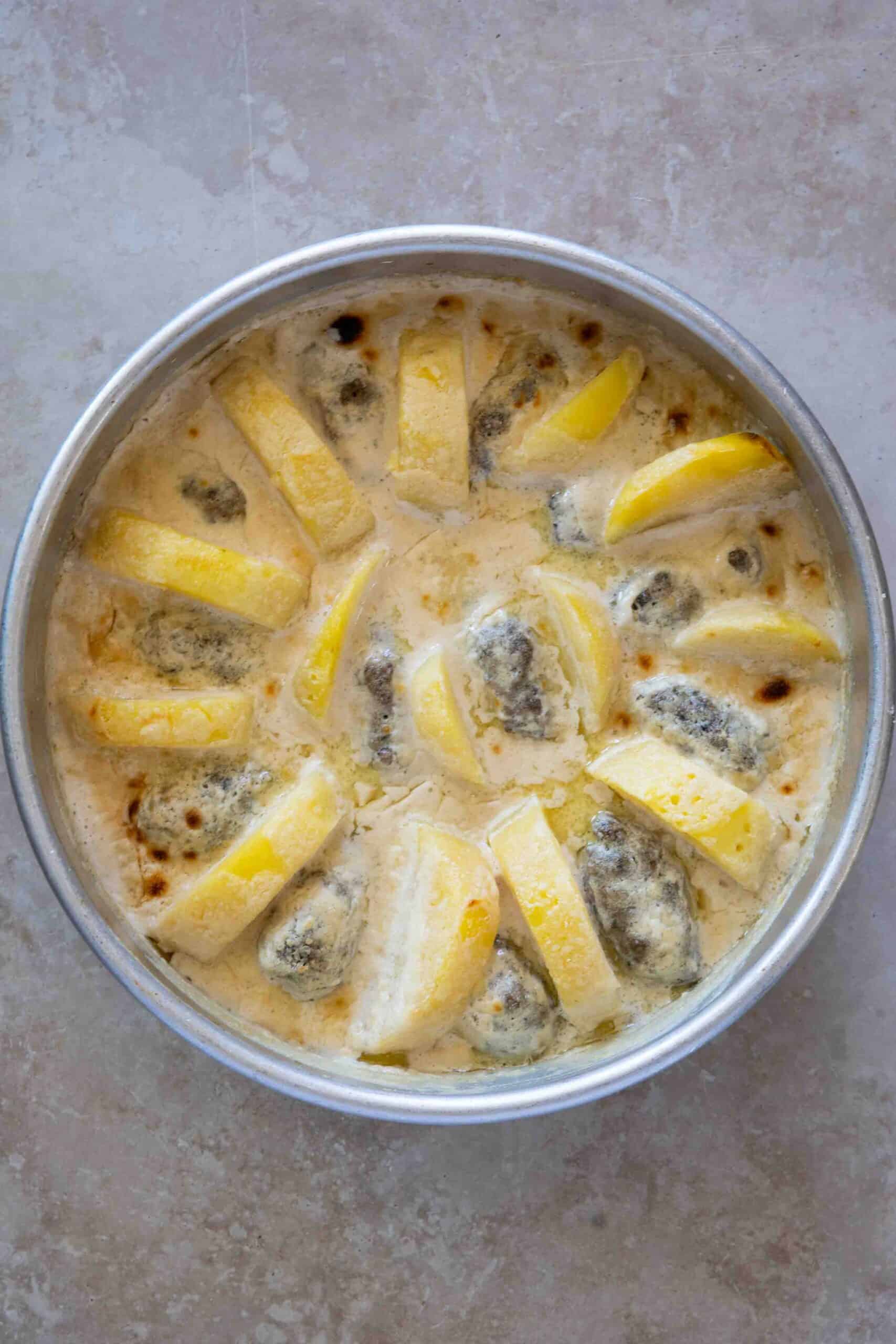
Step 11 | Return the baking dish to the oven uncovered and bake for an additional 15–20 minutes
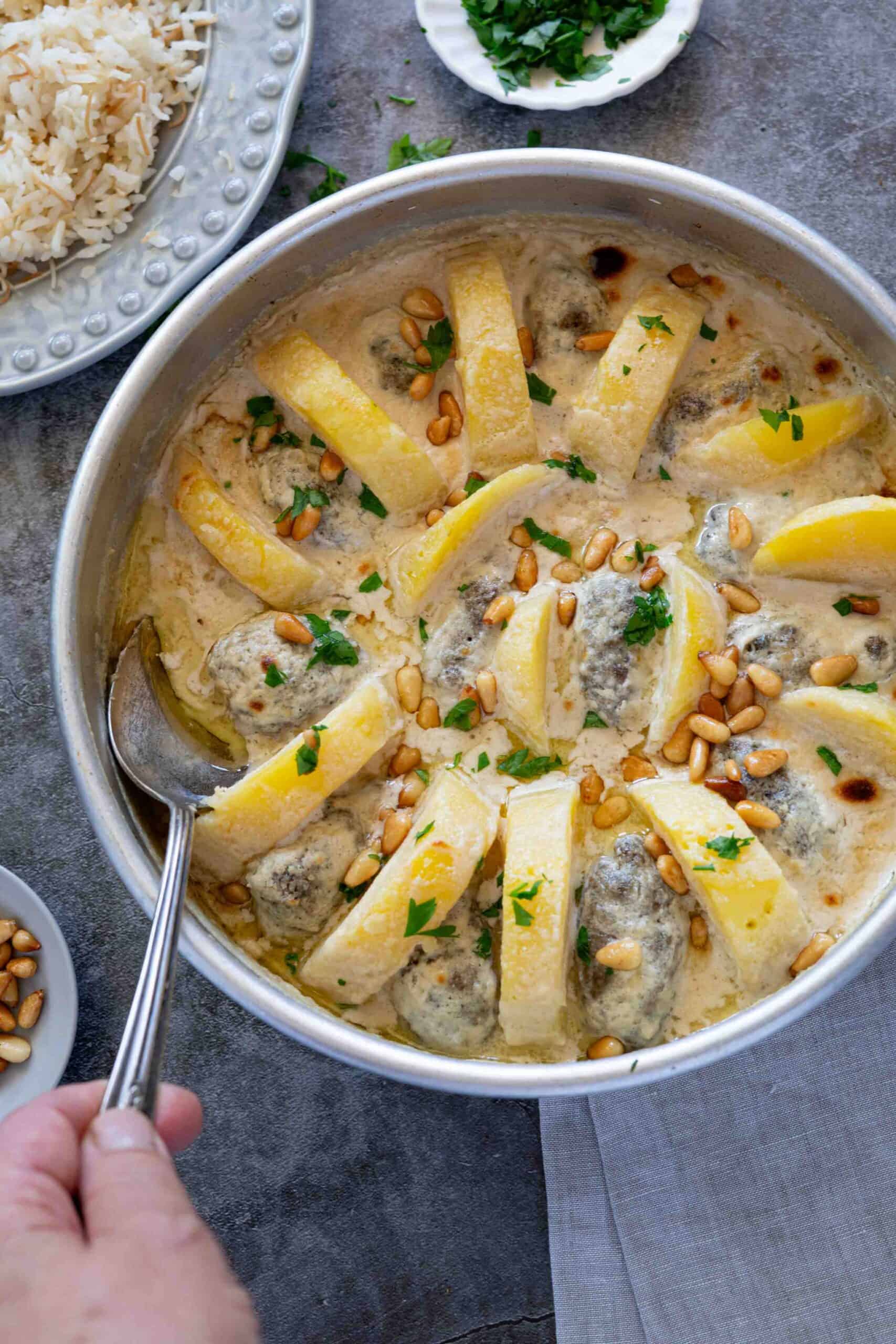
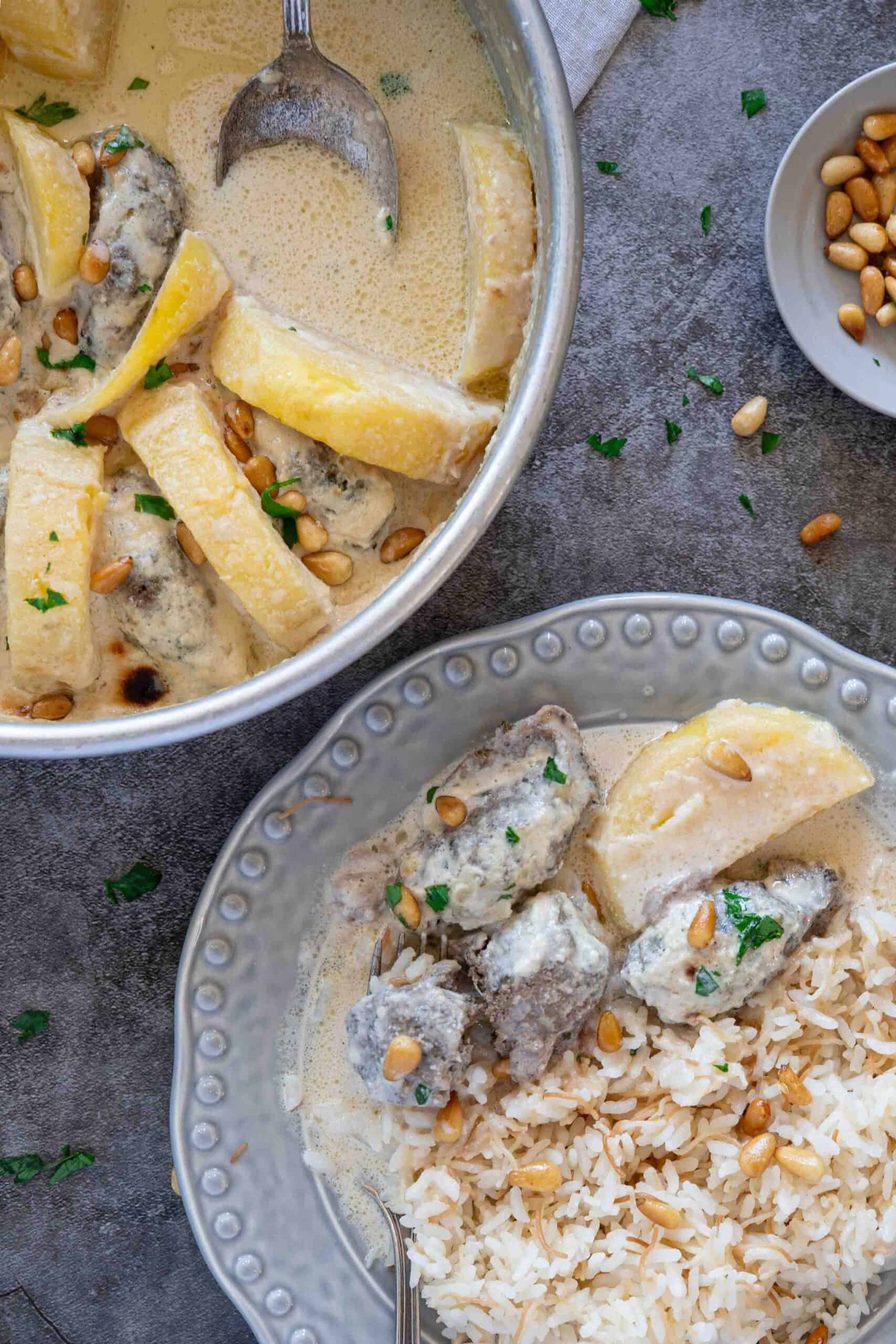
Step 12 | Garnish with toasted pine nuts and a sprinkle of fresh parsley, if desired. Serve hot with a side of vermicelli rice.
Variation and Additions
- Skip shaping the kafta: Instead of forming the meat mixture into individual oval shapes, you can simply spread it evenly in a single layer in a Pyrex baking dish or casserole pan, then layer the potatoes on top.
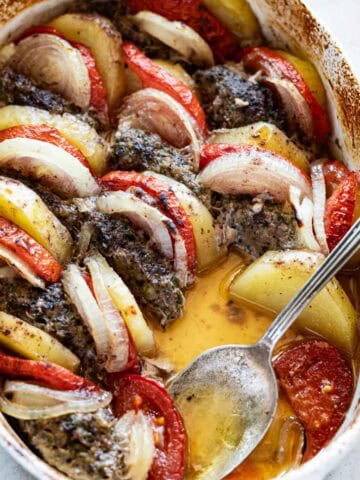
- Layering the kafta: For a more visually appealing presentation, you can arrange the vegetables neatly side by side, as shown here. However, you can also layer them directly on top of each other—the flavor will be just as delicious.
- Add other vegetables: Grilled Eggplants, grilled cauliflower or onions make great additions to this dish and extra flavor and texture.
Pro Tips
- Use meat with some fat: Ground beef that is 80/20 or 85/15 works best, as the fat keeps the kafta juicy and flavorful during baking.
- Add pomegranate molasses for extra flavor: A small amount adds a subtle tangy depth that pairs beautifully with the meat mixture.
- Test for doneness by piercing a potato with a fork: If the fork slides in easily and the potato is tender, the dish is ready.
- Let it rest before serving: Allow the kafta bil sanieh to rest for 5–10 minutes after baking so the juices can redistribute throughout the dish.
- Don't skip the fresh lemon juice, it adds the perfect tanginess and balances the rich flavors of this dish.
- Adjust the tahini consistency. Tahini sauce can thicken as it cools. If it becomes too thick after reheating, stir in a little warm water until it reaches your desired consistency.
- Keep an eye on the broiler. If you want the top to become golden, broil the dish for only a few minutes and watch it carefully.
- The kafta mixture can be made ahead of time by combining the ground meat, parsley, onion, garlic, and seasonings. Divide it into portions, place each portion in a freezer-safe zip-top bag, and freeze for up to 3 months. When you're ready to make the dish, thaw the mixture overnight in the refrigerator, then shape and bake as directed.
Storage
- Store leftover kaftah with tahini sauce in an airtight container in the refrigerator for up to 3–4 days.
- For best results, reheat gently in the oven or microwave until warmed through. The tahini sauce may thicken when chilled, so stir in a splash of warm water before reheating to bring it back to a smooth, creamy consistency.
- Freezing: You can freeze the cooked kiftah for up to 2–3 months. Thaw overnight in the refrigerator and reheat gently before serving.
Frequently Asked Questions?
Tahini sauce naturally thickens as it sits and cools. Simply whisk or stir in a little warm water to loosen it when reheating.
This allows the kafta and potatoes to cook properly and become tender. Adding the tahini sauce too early can slow down the cooking process and prevent the kafta from becoming as tender and flavorful.
No, you don't need a food processor. You can finely chop the vegetables by hand with a knife.
Click here to subscribe to my newsletter and receive free and new recipes right into your inbox!
If you made Kafta with tahini sauce I would love it if you could give me a 5-star rating and leave a comment below.
I also would like to hear about your experience making it, snap a picture and tag me on Instagram, Facebook, or Pinterest.
More Delicious Recipes


Palestinian Kafta with Tahini Sauce (Kofta Meatballs)
- Prep Time: 20 minutes
- Cook Time: 1 hour
- Total Time: 1 hour 20 minutes
- Yield: 3
- Method: Baking
- Cuisine: Palestinian
- Diet: Gluten Free
Description
Kafta with tahini sauce is a beloved Palestinian comfort recipe made with seasoned ground beef or lamb, baked with potatoes, then covered in a rich, tangy tahini sauce.
Ingredients
- 1 pound ground beef or lamb (or half of each)
- 1 bunch fresh parsley, stems removed, washed and well drained.
- 1 sweet onions
- 2-3 garlic cloves
- Salt and pepper, to taste
- 1 teaspoons allspice powder
- 2 tablespoons extra virgin olive oil
- 2 tablespoons pomegranate molasses (optional)
- 2-3 medium size Yukon golden potatoes
Tahini Sauce
- ½ cup of tahini
- 1 cup of water
- 2 cloves garlic
- ½ cup lemon juice (adjust to taste)
- ½ - 1 teaspoon sea salt (adjust to taste)
Instructions
- Prepare the kafta mixture: In a food processor, finely chop the onion, garlic, and parsley. Alternatively, you can finely chop them by hand using a sharp knife.
- Combine with the meat: Add the ground meat to the onion mixture, add salt, pepper, allspice, and pomegranate molasses (if using) and mix well until all the ingredients are evenly incorporated.
- Shape the kafta: With your hands, shape the kafta mixture into oval patties and arrange them in a baking dish.
- Meanwhile, peel the potatoes, then slice them into thin rounds.
-
Cover the baking dish with foil or a lid and bake in a preheated oven of 350°F (175°C) for 45-60 minutes, or until the kafta is fully cooked, and the potatoes are fork-tender.
-
Meanwhile, prepare the tahini sauce by blending the tahini, water, fresh lemon juice, garlic, and salt until smooth and creamy.
-
Adjust the consistency with a little more water if needed—the sauce should be pourable but not too thin.
-
Remove the baking dish from the oven.
-
Pour the tahini sauce evenly over the kafta and potatoes, making sure everything is well coated.
-
Return the baking dish to the oven uncovered and bake for an additional 15–20 minutes, or until the tahini sauce is set, lightly golden, or place under the broiler for 4-5 minutes for a golden color.
-
Let the Kafta bil Tahini rest for 5 minutes before serving. Enjoy with vermicelli rice, warm pita bread, or a fresh salad.
Notes
- Use meat with some fat: Ground beef that is 80/20 or 85/15 works best, as the fat keeps the kafta juicy and flavorful during baking.
- Add pomegranate molasses for extra flavor: A small amount adds a subtle tangy depth that pairs beautifully with the meat mixture.
- Test for doneness by piercing a potato with a fork: If the fork slides in easily and the potato is tender, the dish is ready.
- Let it rest before serving: Allow the kafta bil sanieh to rest for 5–10 minutes after baking so the juices can redistribute throughout the dish.
- Don't skip the fresh lemon juice, it adds the perfect tanginess and balances the rich flavors of this dish.
- Adjust the tahini consistency. Tahini sauce can thicken as it cools. If it becomes too thick after reheating, stir in a little warm water until it reaches your desired consistency.
- Keep an eye on the broiler. If you want the top to become golden, broil the dish for only a few minutes and watch it carefully.
- The kafta mixture can be made ahead of time by combining the ground meat, parsley, onion, garlic, and seasonings. Divide it into portions, place each portion in a freezer-safe zip-top bag, and freeze for up to 3 months.
- When you're ready to make the dish, thaw the mixture overnight in the refrigerator, then shape and bake as directed.


Alex Doemel says
Marhaba! I have had Egyptian Koftah and love it! I didn’t realize Palestine had a version! I will be trying this soon, but I have to know your thoughts.
I was thinking. The tahini sauce requires 1 cup water.
After the kiftah cooks in the oven, the recipe suggests to remove any water caused from the cooking process.
Do you think it would taste good to use the water in the pot as the water for the tahini?
Wafa Shami says
Salam Alex and thank you for the review. I didn't know that either, that's interesting. To answer your question, yes for sure you can do that. Sahtain!
Mae says
Hi. You say to add water to the sauce if it's too thick. But not what to do if it's too thin?
Wafa Shami says
Hi Mae, in that case you can add more tahini. Enjoy!