
Whether you call it makloubeh or maqluba depending on which part of Palestine you're from, one thing is certain—this is a deeply traditional Palestinian dish. It’s made primarily with spiced rice, meat, and vegetables, all layered together in a pot.
The name ma’loubeh literally means “upside down” or “flipped,” because once it’s cooked, the pot is turned over onto a round large serving dish, revealing a beautiful layered masterpiece.
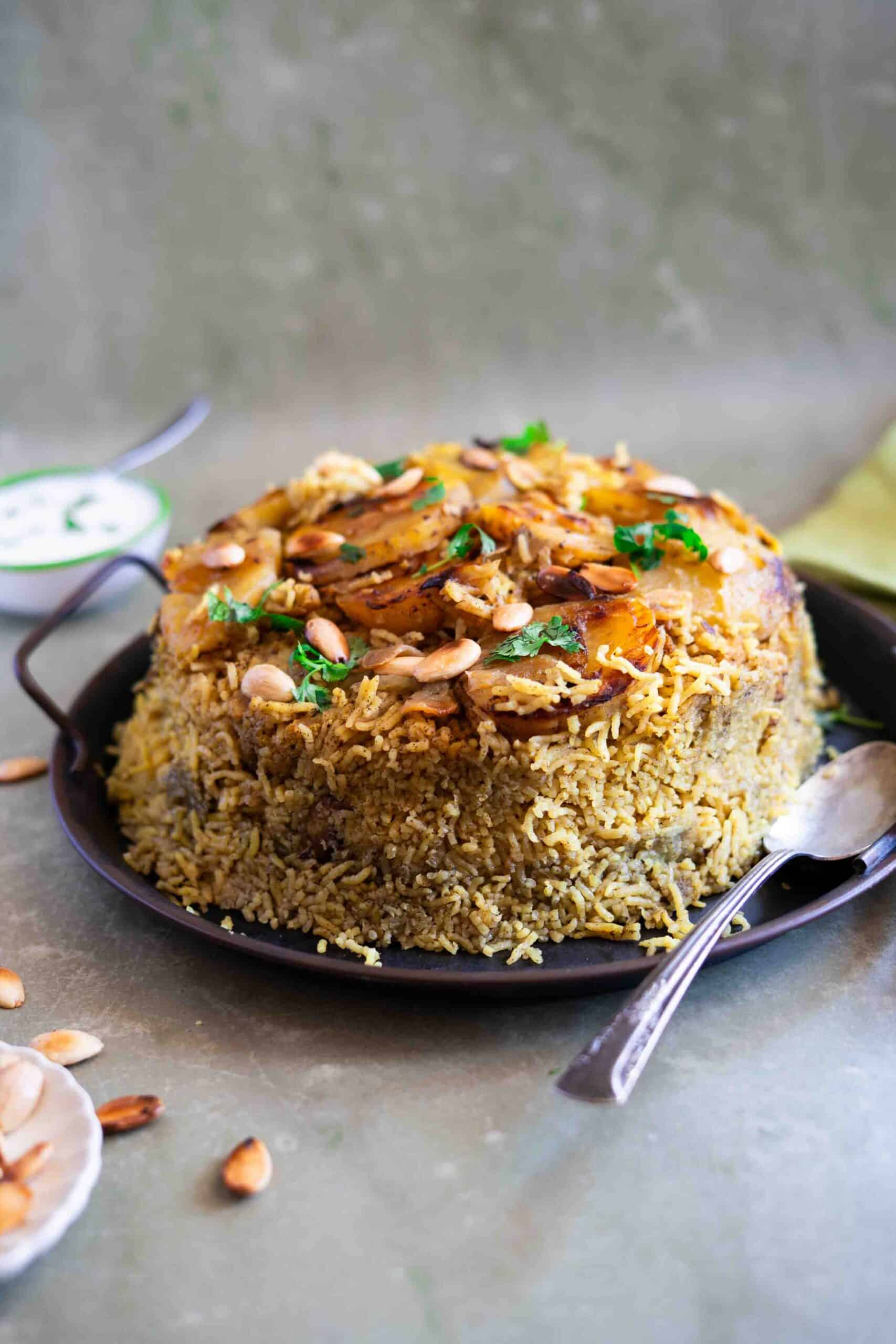
Food is a big part of Palestinian culture—we love to eat, and sharing a meal as a family nourishes more than just the body; it feeds the soul. This dish, in particular, is meant to be served at gatherings. Traditionally presented on a large round tray, it’s flipped and served immediately, making it perfect for enjoying with a group of family and friends. It’s not just a meal, it’s a shared experience.
There are many delicious variations of makloubeh, and each one brings its own charm. The most common vegetables used are eggplant or cauliflower—sometimes both—and some people like to add potatoes for extra heartiness. The dish is traditionally made with chunks of lamb, beef, or chicken, but it can easily be adapted for a vegan diet by skipping the meat and using only vegetables. Chickpeas make a great addition in vegan versions. I’ve made it in all these different ways, and every version turns out wonderfully.
For more traditional Palestinian dishes, check out my musakhan recipe, shish barak, maftoul (Palestinian cousous) or peas stew.
Jump to:
What is Makloubeh?
Makloubeh (also spelled maqlooba, maqlouba, maqluba, or makloubah) is a traditional Palestinian rice dish whose name literally means “upside-down.” It’s made by layering rice, meat (usually lamb, beef, or chicken), and fried or roasted vegetables—typically eggplant, cauliflower, and sometimes potatoes—in a pot. Once everything is cooked together, the pot is flipped upside down onto a large serving tray, creating a beautiful, layered presentation.
Maklubeh is deeply rooted in Palestinian culture and is often made for family gatherings or special occasions. It's rich in flavor thanks to warm spices like allspice, cinnamon, and turmeric, and it's often served with a side of cucumber yogurt, plain yogurt or a Arabic salad.
Equipment
- Pot - To cook chicken, and makloubeh.
- Baking Sheet - For oven roasting cauliflower
- Round Serving Tray - For flipping the pot and presenting the makluobeh beautifully
Ingredients
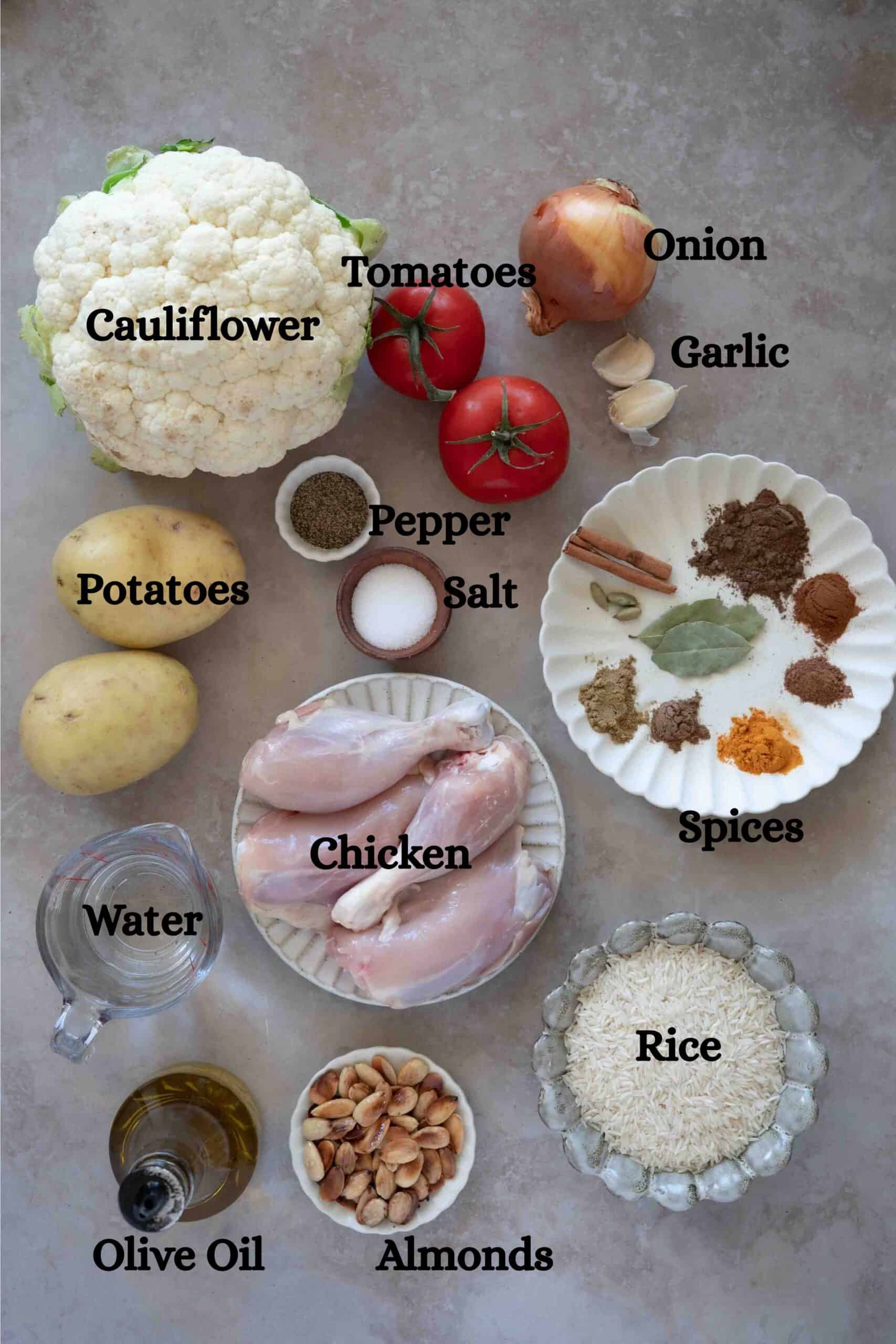
- Chicken – I recommend using bone-in pieces for deeper flavor and richer broth.
- Rice – Basmati rice works best; its long grains hold shape well and absorb the flavors beautifully.
- Cauliflower – Traditionally fried, but for a healthier option, you can oven roast or air-fry the florets until golden.
- Potatoes - I like to use yukon gold potatoes.
- Water - Used to cook the chicken, which creates a homemade broth that’s later used to cook the rice and flavor the entire dish.
- Onions – I like to use sweet white onion for a mellow, rounded flavor.
- Garlic – 2–3 cloves, sliced and sautéed with the onions to add depth and rich flavor to the base of the dish.
- Tomatoes – Any kind works. Slice a few and layer them at the bottom of the pot for an additional flavor.
- Spices – A warm, fragrant blend: Cinnamon powder, Cardamom powder, Nutmeg powder, Turmeric, Allspice
- Bay Leaves, Cinnamon Sticks, Cardamom Pods– Add while cooking the chicken to infuse the broth with flavor.
- Salt and black pepper (to taste).
- Toasted Almonds (optional) - For garnishing.
Instructions
Full ingredients, measurements, and instructions are in the recipe card at the bottom of this post.

Step 1 | Cut the cauliflower into small florets. Toss with olive oil, salt, and cumin until evenly coated. Spread on a baking sheet
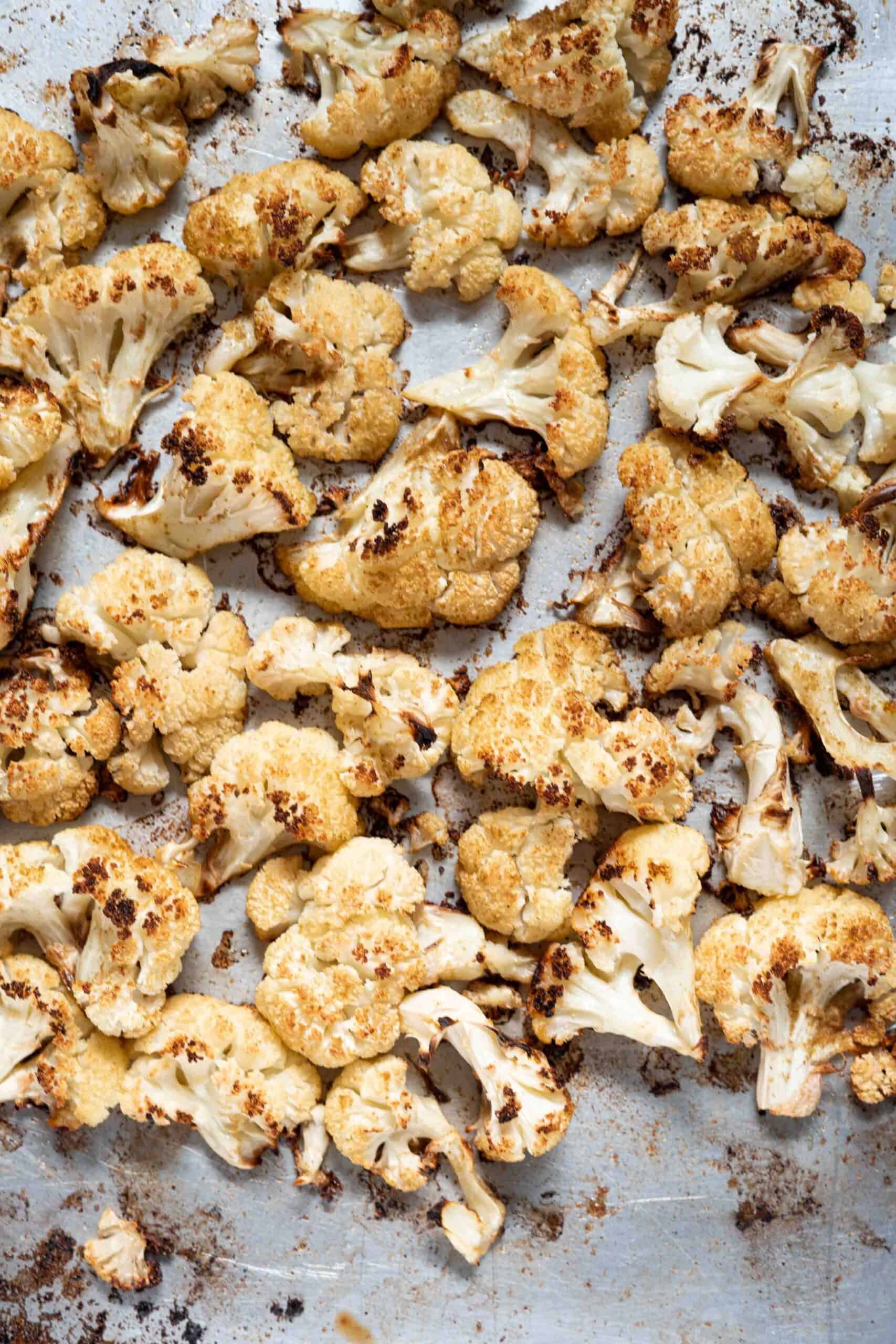
Step 2 | Bake cauliflower florets at 350°F (175°C) for 45-60 minutes, flipping halfway, until golden.
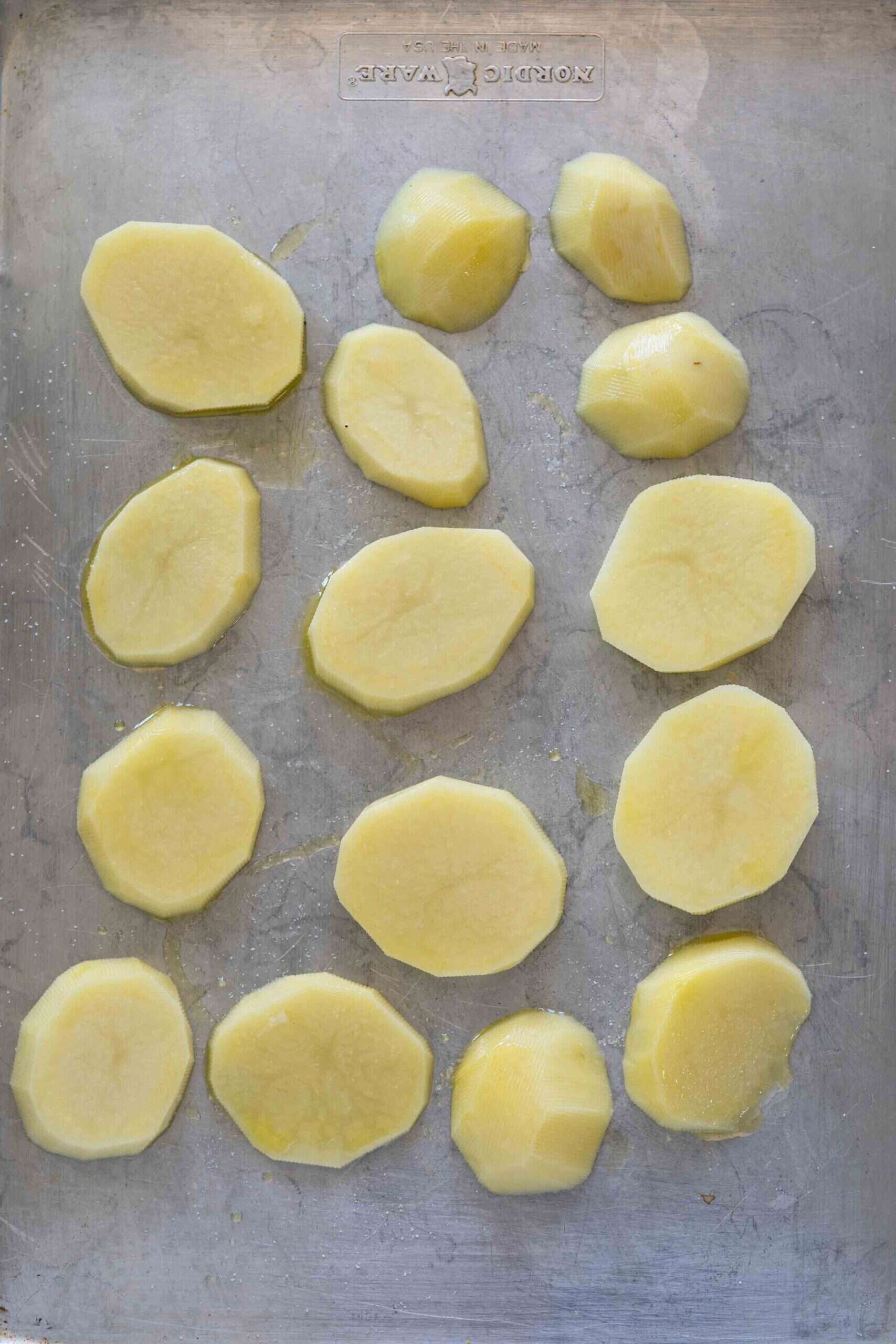
Step 3 | Peel and slice potatoes. Toss with olive oil and salt, until evenly coated. Spread on a baking sheet.

Step 4 | Bake potatoes at 350°F (175°C) for 20-30 minutes, flipping halfway, until golden.

Step 5 | Remove skin from chicken and rub the chicken with spices (nutmeg, cinnamon, allspice). In a large pot and over medium-high heat, heat olive oil. Place chicken, and brown on both sides, about 1-2 minutes on each side.

Step 6 | Cover with water until submerged, add bay leaves, and cardamom pods over water. Once it starts boiling lower it to medium heat, cover and let it cook for 30 minutes. Once done drain and reserve the broth.

Step 7 | Sauté chopped onions and garlic at the bottom of the pot in oil until caramelized.

Step 8 | Rinse the rice thoroughly, then mix well with the spices.
Layering the Pot
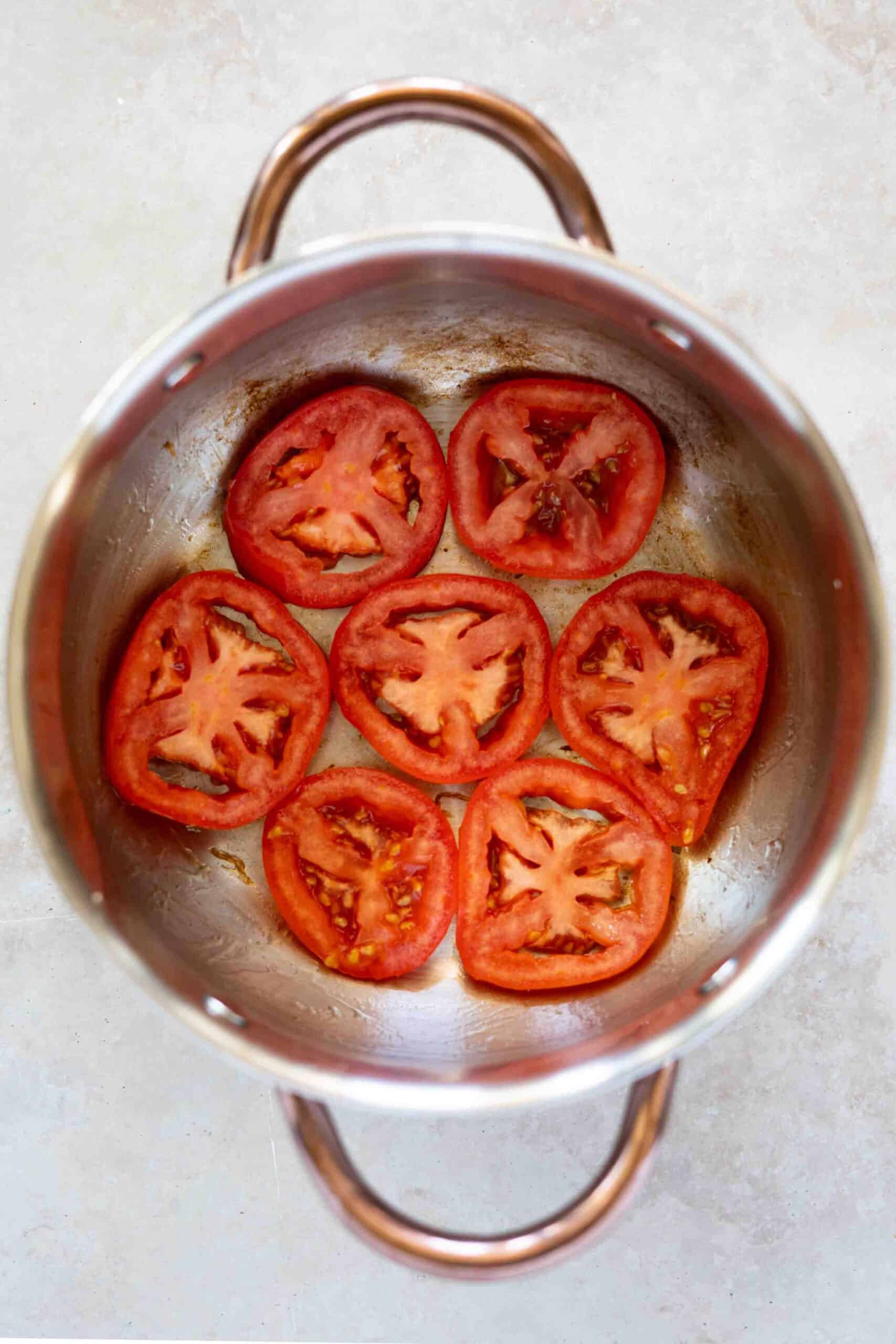
- Layering sliced tomatoes
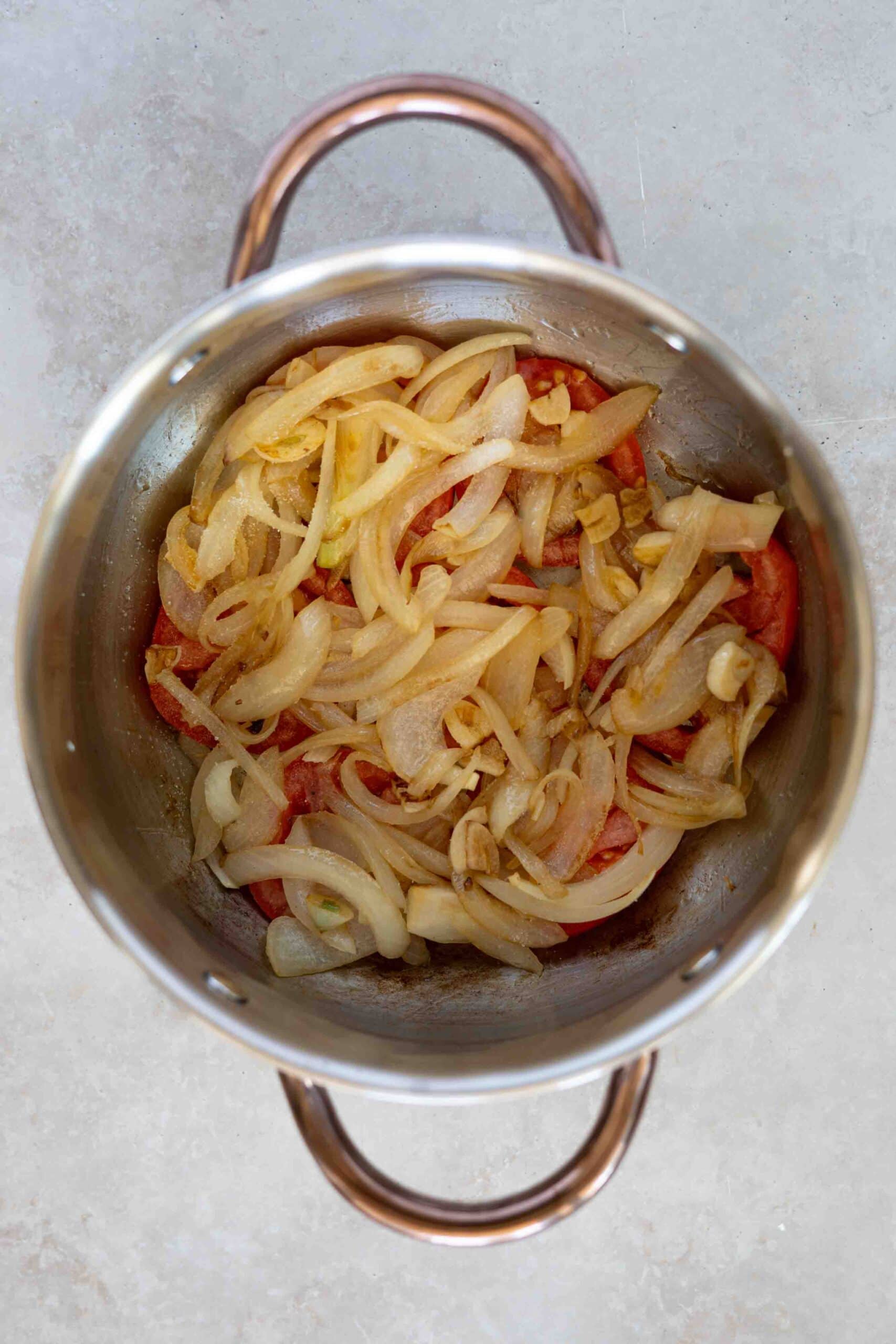
2. Spread caramelized onions and garlic

3. Add roasted potatoes

4. Add the roasted cauliflower

5. Layer cooked chicken
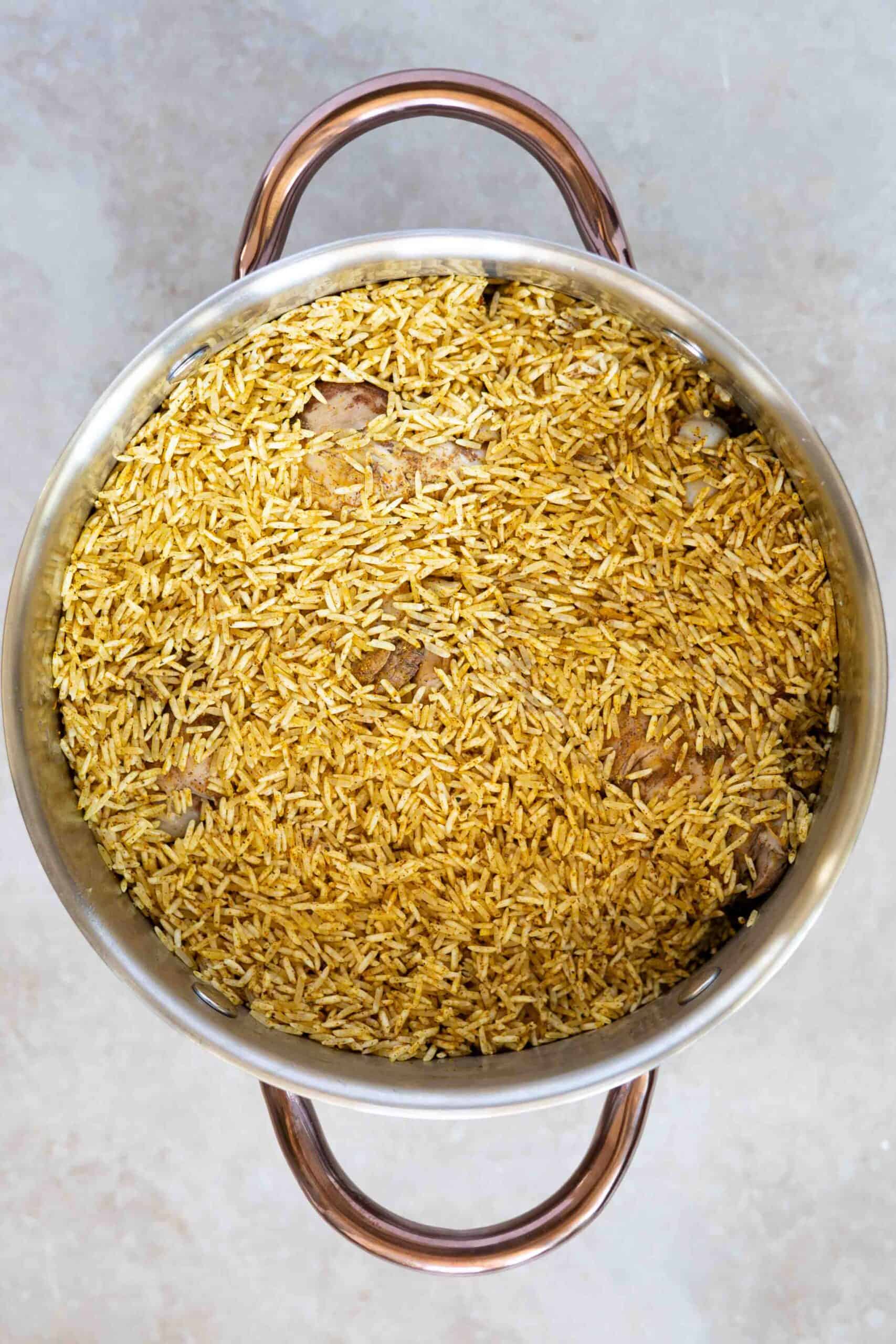
6. Add the spiced rice on top
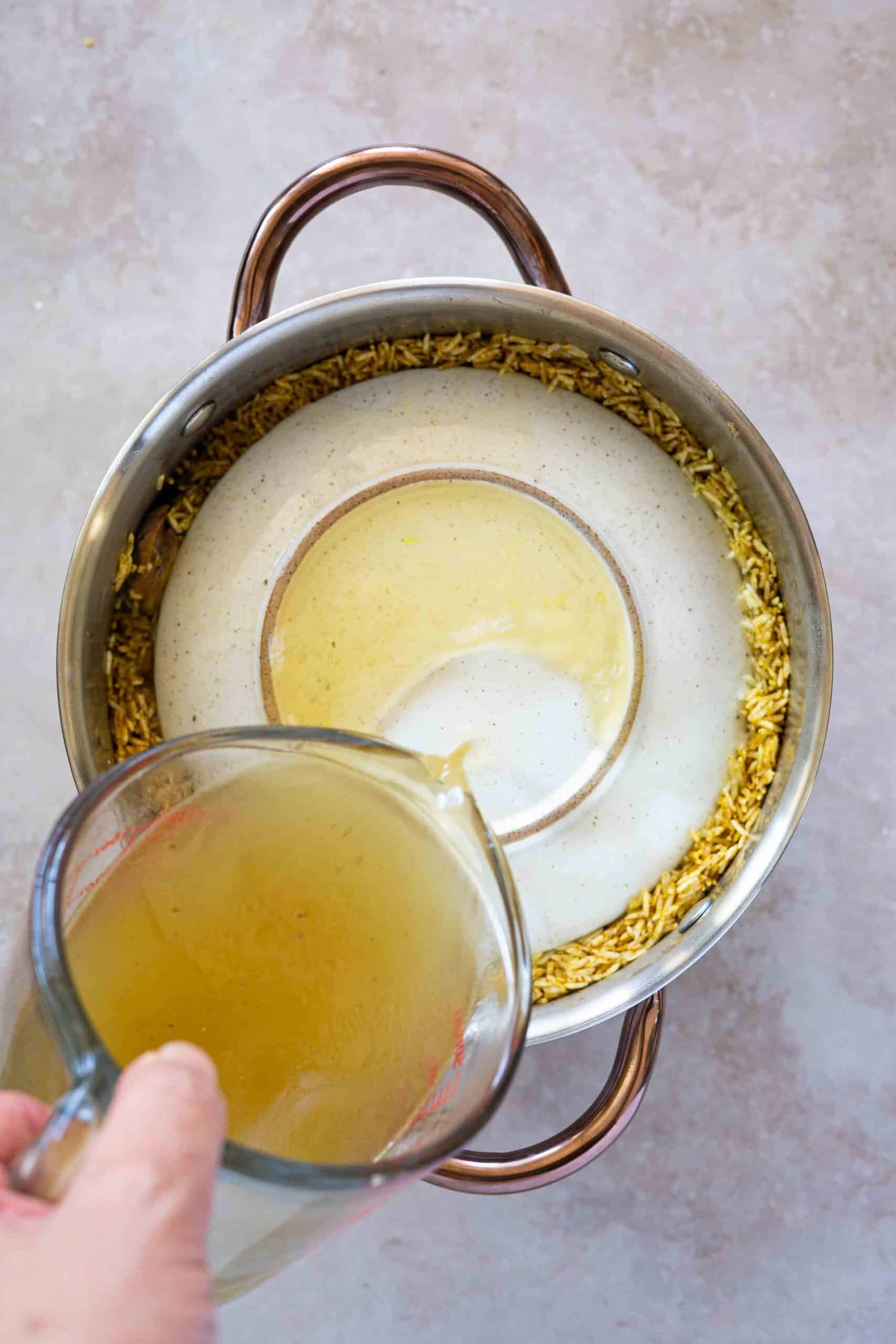
7. Pour chicken broth, place on high heat and once it starts bubbling, cover the lid and lower the heat to medium low. (remove the plate halfway cooking)
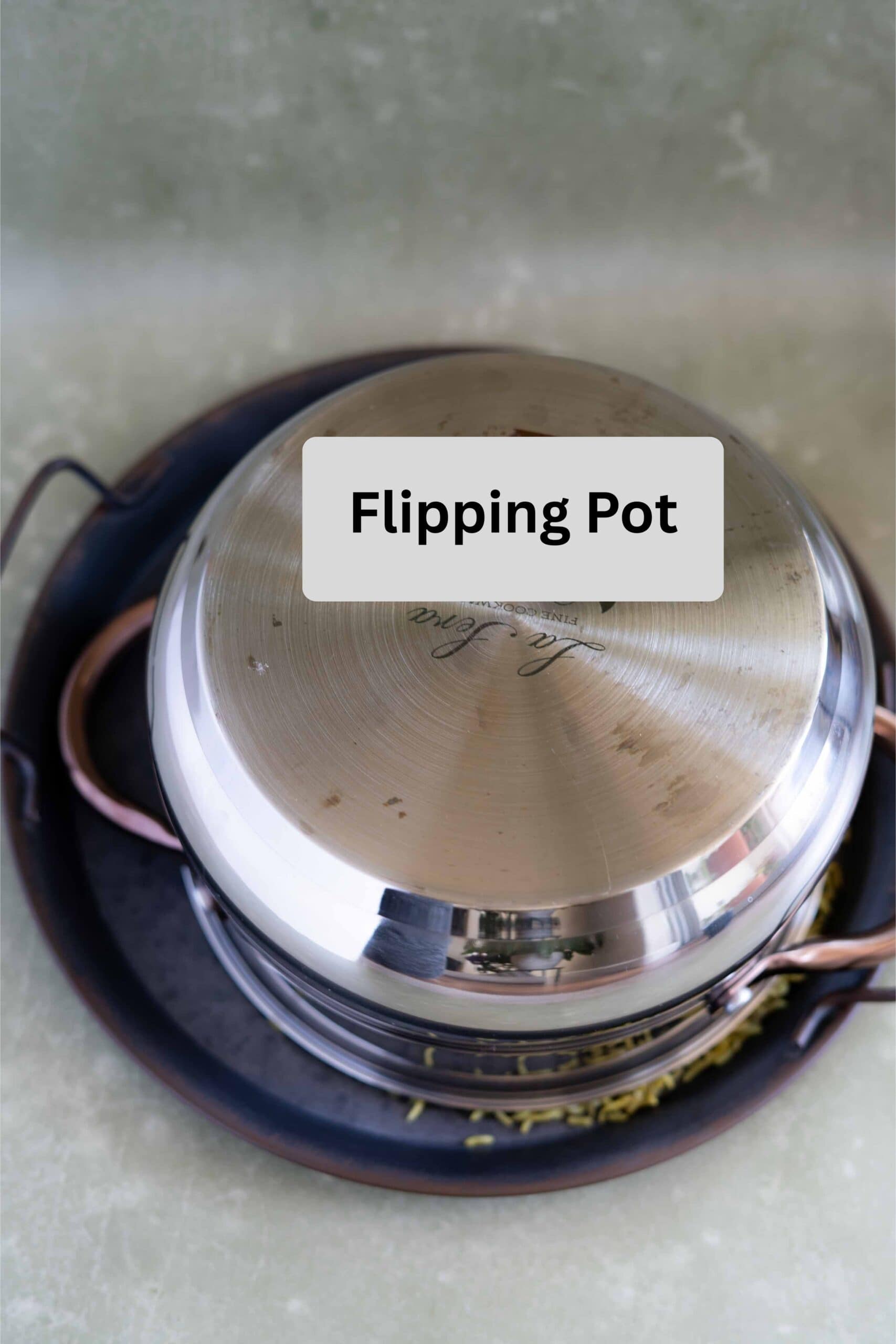
8. Once cooked flip the pot on a large round serving tray.
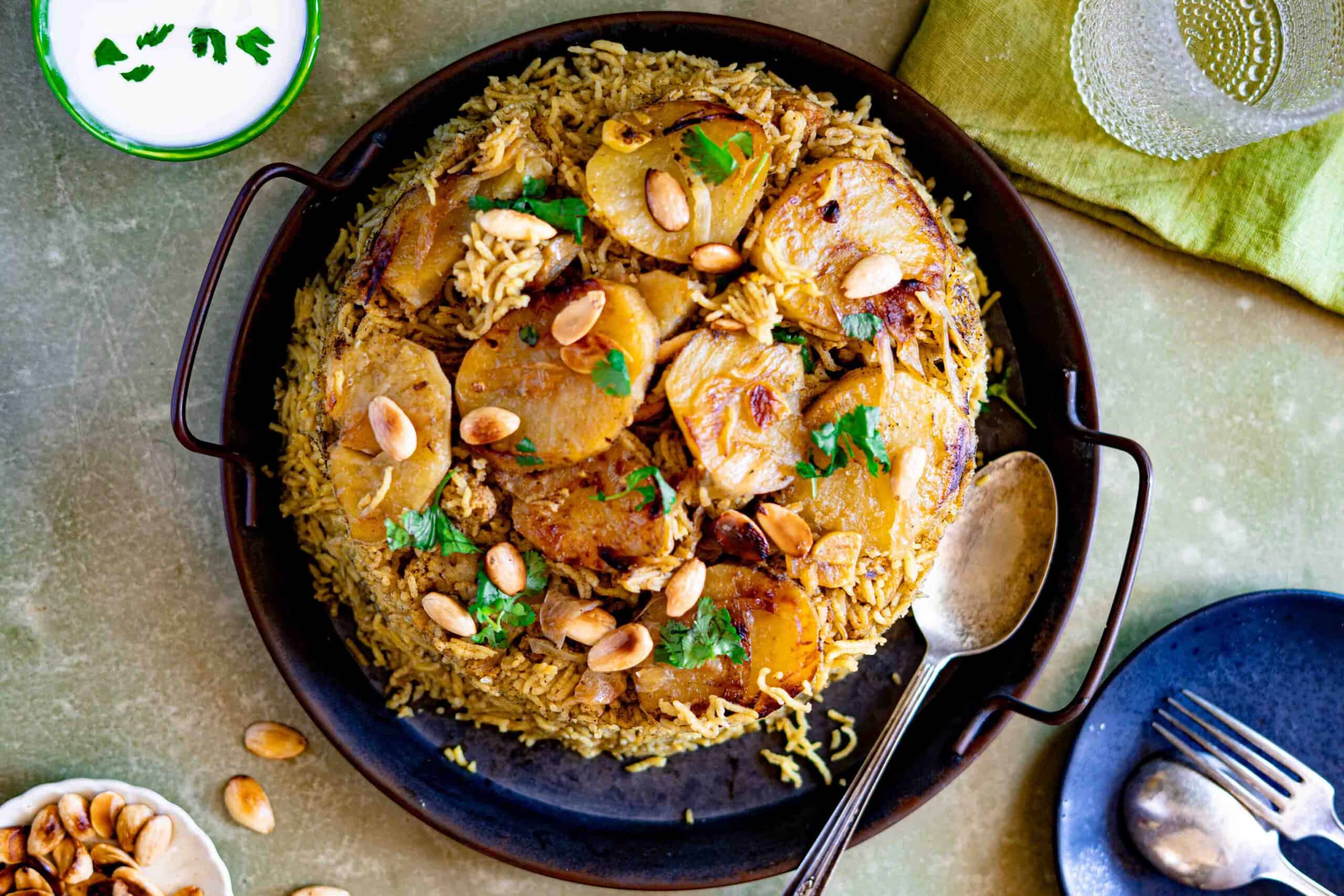
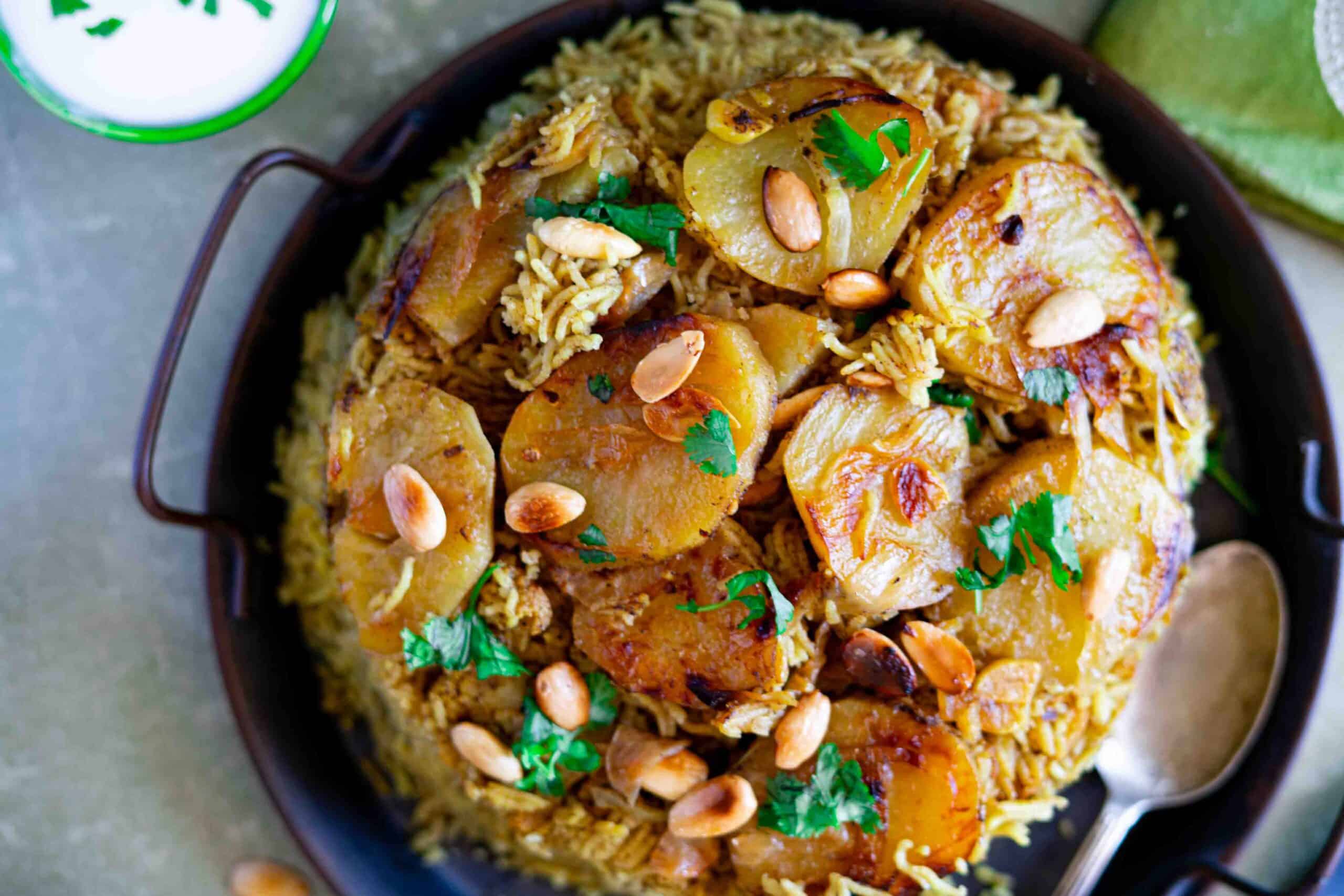
Garnish with toasted almonds or pine nuts (optional).

Makloubeh is a stand alone dish and often served warm with a side of cucumber yogurt, plain yogurt or a Arabic salad.
Variations and Substitutions
Meat Options
- Chicken (bone-in pieces add more flavor)
- Lamb (chunks or shanks)
- Beef (stew cuts or ground beef for a quicker version)
Vegan & Vegetarian Variations
- Omit the meat completely
- Add chickpeas for protein and texture
- Use vegetable broth instead of meat broth
Pro Tips for Perfect Makloubeh
Don’t be intimidated to try this dish! If you’ve made makloubeh before and it didn’t turn out quite right, don’t get discouraged. Like anything new, it takes a bit of practice to master. The more you make it, the more confident you’ll become. Below, I’ve included some troubleshooting tips and helpful advice to guide you through the process and set you up for success.
- Be generous with the spices. If the rice or broth tastes bland, don’t hesitate to adjust—add more spices to deepen the flavor. Makloubeh is meant to be aromatic and warmly spiced, so trust your taste buds as you go.
- Don’t Rush the Simmer - Let the pot simmer on low until the rice is fully cooked and has absorbed the broth. Avoid opening the lid too often.
- If the rice isn’t fully cooked when you open the pot, don’t worry! Simply splash in about ¼ cup of broth or water, cover the pot again, and let it simmer on low heat for another 10 minutes until the rice is fully tender.
- Don’t over-roast the cauliflower or potatoes, as they’ll continue to cook in the pot along with the rest of the ingredients. Aim for a light golden color—they should be tender but not fully soft.
- Use a Nonstick or Heavy-Bottomed Pot - This helps prevent sticking and ensures the "flip" comes out clean and beautiful.
- Season Every Layer - you can more spice between layers, this creates balanced flavor throughout.
- Serve Immediately - Makloubeh is a stand alone dish and often served warm with a side of cucumber yogurt, plain yogurt or a Arabic salad.
Tips for Makloubeh Flip
- Let it Rest Before Flipping - After cooking, let the pot rest (covered) for 10–15 minutes. This helps it firm up, making the flip cleaner.
- Remove the lid and gently press down the top layer of rice with a ladle to compact it.
- Run a knife carefully around the inside edges of the pot to loosen the sides.
- Place your serving tray firmly over the pot, then flip it in one smooth motion.
- Tap the bottom and sides of the pot gently, and let it sit for 1–2 minutes before lifting the pot off to reveal the layers.
- To keep makloubeh warm before serving, you can wrap the pot (lid on and before flipping) in a thick blanket or towel. This helps retain heat and keeps it warm for up to 1 hour.
Storage and Reheating
- Let the makloubeh cool to room temperature before storing to avoid condensation, which can make the rice soggy.
- Transfer leftovers into airtight containers to preserve freshness and prevent the rice from drying out or absorbing fridge odors.
- Store in the fridge within 2 hours of cooking. It stays fresh for up to 4 days when properly refrigerated.
- For longer storage, freeze makloubeh in individual portions using freezer-safe containers or bags. It keeps well for up to 2 months.
- When reheating, add a splash of broth or water to prevent the rice from drying out.
- Microwave: Reheat covered with a damp paper towel in 30-second intervals.
- Stovetop: Heat gently in a skillet with a lid over low heat, adding a bit of water or oil as needed.
- You can wrap it in blanket it to keep it warm before serve for 1 hour.
Frequently Asked Questions
Absolutely! Just swap the chicken for chickpeas and use vegetable stock instead of chicken broth. It’s a delicious vegetarian (or vegan) alternative that still delivers great flavor.
Yes, traditionally, vegetables like cauliflower and eggplant are fried. However, for a lighter version, you can oven roast or air-fry them with excellent results.
Yes! You can prepare all the ingredients ahead of time and assemble the layers when you're ready to cook.
Click here to subscribe to my newsletter and receive free new recipes in your inbox!
If you made makloubeh (maqluba) with chicken and rice I would love it if you could give me a 5-star rating and leave a comment below.
I also would like to hear about your experience making it, snap a picture and tag me on Instagram, Facebook, or Pinterest.
More Delicious Recipes
Print
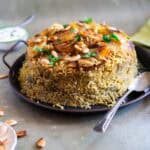
Makloubeh (maqluba) with Chicken and Rice
- Prep Time: 30 minutes
- Cook Time: 45 minutes
- Total Time: 1 hour 15 minutes
- Yield: 4
- Cuisine: Palestinian
Description
Whether you call it makloubeh or maqluba depending on which part of Palestine you're from, one thing is certain—this is a deeply traditional Palestinian dish. It’s made primarily with spiced rice, meat, and vegetables, all layered together in a pot.
The name ma’loubeh literally means “upside down” or “flipped,” because once it’s cooked, the pot is turned over onto a round large serving dish, revealing a beautiful layered masterpiece.
Ingredients
Vegetables
- 1 medium cauliflower, cut into florets
- 1-2 tablespoons olive oil
- Salt and ½ teaspoon cumin powder (for grilling the cauliflower)
- 1-2 tomatoes, sliced
- 1 sweet onion, sliced
- 2-3 garlic cloves, peeled and sliced
Protein
- 4 pieces of chicken (legs, breasts, or a combination) or one whole chicken cut into 4-6 pieces.
- 1-2 tablespoons olive oil
- A pinch each of (⅛ teaspoon): Cinnamon powder, Nutmeg powder, Allspice, and Salt (for seasoning the chicken)
Rice
- 2 cups basmati or Calrose rice (if using Calrose soak in water before cooking for 10-15 minutes)
Liquid & Broth
- 4 cups of tap water (for cooking the chicken and making broth)
- 2 bay leaves
- 2-3 cardamom pods
- 1-2 cinnamon sticks
Spices (for the rice)
- ¼ teaspoon cinnamon powder
- ¼ teaspoon cardamom powder
- ¼ teaspoon nutmeg powder
- ½ teaspoon turmeric
- 1 teaspoon allspice
- Salt and pepper, to taste
- Roasted almonds, for garnishing (optional
Instructions
- Cut the cauliflower into small florets. Toss with olive oil, salt, and cumin until evenly coated. Spread on a baking sheet
- Bake cauliflower florets at 350°F (175°C) for 45-60 minutes, flipping halfway, until golden.
- Peel and slice potatoes. Toss with olive oil and salt, until evenly coated. Spread on a baking sheet.
- Bake potatoes at 350°F (175°C) for 20-30 minutes, flipping halfway, until golden.
Cook the Chicken:
- Remove skin from chicken and rub the chicken with spices (nutmeg, cinnamon, allspice). In a large pot and over medium-high heat, heat olive oil.
- Place chicken, and brown on both sides, about 1-2 minutes on each side
- Cover the chicken with water until fully submerged.
- Add bay leaves, cardamom pods and cinnamon sticks to the water.
- Once the water starts boiling, reduce the heat to medium, cover, and let it cook for about 30 minutes, or until the chicken is tender.
-
As the water comes to a boil, skim off any foam that rises to the top using a spoon—this helps keep the broth clear and clean.
- When done, drain the chicken and reserve the broth to use later for cooking the rice.
Prepare the Rice:
- Rinse the rice thoroughly, then mix it with the spices.
Layer the Dish
- In the same pot used for the chicken, sauté chopped onions and garlic in oil until golden.
- Turn off the heat and begin layering:
- Add a layer of sliced tomatoes over the onions and garlic.
- Next, add the roasted cauliflower.
- Then the roasted potatoes
- Then, layer the cooked chicken.
- Finally, add the spiced rice on top.
- Place a small heatproof plate in the center to help hold while pouring the broth.
- Pour the reserved chicken broth over the mixture until it reaches about ½–¾ inch above the rice.
Cook the Ma’loubeh
- Cover the pot and simmer on low heat for 30–40 minutes, or until the rice is fully cooked.
Rest and Flip:
- Remove from heat and let rest for 10-15 minutes to help the layers hold together.
- Place a large round serving tray over the pot, then carefully and confidently flip the pot over.
- Gently tap the bottom to help release the makloubeh.
- Check notes for extra tips.
Notes
Be generous with the spices. If the rice or broth tastes bland, don’t hesitate to adjust—add more spices to deepen the flavor. Makloubeh is meant to be aromatic and warmly spiced, so trust your taste buds as you go.
Don’t Rush the Simmer - Let the pot simmer on low until the rice is fully cooked and has absorbed the broth. Avoid opening the lid too often.
If the rice isn’t fully cooked when you open the pot, don’t worry! Simply splash in about ¼ cup of broth or water, cover the pot again, and let it simmer on low heat for another 10 minutes until the rice is fully tender.
Don’t over-roast the cauliflower or potatoes, as they’ll continue to cook in the pot along with the rest of the ingredients. Aim for a light golden color—they should be tender but not fully soft.
Use a Nonstick or Heavy-Bottomed Pot - This helps prevent sticking and ensures the "flip" comes out clean and beautiful.
Season Every Layer - you can more spice between layers, this creates balanced flavor throughout.
Serve Immediately - Makloubeh is a stand alone dish and often served warm with a side of cucumber yogurt, plain yogurt or a Arabic salad.
Tips for Makloubeh Flip
Let it Rest Before Flipping - After cooking, let the pot rest (covered) for 10–15 minutes. This helps it firm up, making the flip cleaner.
Remove the lid and gently press down the top layer of rice with a ladle to compact it.
Run a knife carefully around the inside edges of the pot to loosen the sides.
Place your serving tray firmly over the pot, then flip it in one smooth motion.
Tap the bottom and sides of the pot gently, and let it sit for 1–2 minutes before lifting the pot off to reveal the layers.
To keep makloubeh warm before serving, you can wrap the pot (lid on and before flipping) in a thick blanket or towel. This helps retain heat and keeps it warm for up to 1 hour.

Li says
This is definitely now my favorite Ma'loubeh recipe moving forward!! Amazing layers of flavors and I am as well as my family and friends appreciate your version:-)
Wafa Shami says
Hi Li, I'm so glad to hear that, that's awesome. Enjoy -:)
Asa says
Very first Palestinian dish I ever cooked and it stays for sure (I absolutely want to try eggplant one).
I followed recipe exactly, besides I made like 1.5 from original size. I also used not very big pieces of chicken breast to accommodate my little son.
So flavourful! And doesn't leave you bloated or heavy. Such innocent pleasure!
I left it standing with heat off a little longer and it turned upside down and preserved shape perfectly.
Once more, thank you! I will definitely check more recipes!
Wafa Shami says
Hello Asa, thank you so much for the feedback, I'm so glad it worked out. Enjoy other recipes.
Nadine says
Stupid question - is there a way to prep this ahead of time and cook it a day later or two days later? (I'm thinking prepping at home then bringing and finishing at rental house at Thanksgiving!) Would you create all the layers and just set the broth aside - and then do last step of cooking everything? Or would you just do all the roasting and cooking of layers and then put it together and add broth to cook? What would you suggest - if anything?
Wafa Shami says
Hi Nadine, there’s no such thing as a stupid question! 😊
Yes, absolutely, you can prepare all the steps ahead and set everything aside separately. Just make sure to season the chicken well and sauté it before cooking; this helps preserve the flavor while it’s stored in the fridge.
Once it’s cooked, remove the chicken from the broth and store it separately. I recommend layering everything together and adding the broth on the day you plan to cook it. Hope this helps!
Nadine says
Thank you so much!
Wafa Shami says
You are welcome!
Eleanor Clark says
Super tasty recipe thank you! It came out great even the flip
Wafa Shami says
Hello Eleanor, glad to hear that. Thank you for the nice review!
Helen says
I have some questions: is there a reason for cooking all the veg first? Would they just cook in the pot with the rice? I find my veg come out overcooked and mushy. Also, how do you prevent sticking? Everytime I have made maqluba, the tomatoes always stick on the bottom no matter what I do (greasing the bottom, cutting thick slices, lowering the heat, even using parchment paper (that burned instead :)). This last time, I used tomato sauce instead and then put potato slices on top and then the rest of the veggies. The potatoes stayed at the bottom when I lifted the pot instead (though it didn't stick and was easy to scoop out. Thank you!
Wafa Shami says
Hello Helen! Thank you for reaching out, and I’m sorry you’ve had some challenges perfecting your makloubeh.
The reason for cooking the vegetables first—whether by frying, roasting, or air-frying—is that it adds another layer of flavor. If the vegetables are added raw, they can taste more steamed and may lack that extra depth of flavor. I recommend not overcooking them beforehand; try to keep them about halfway cooked.
As for the tomatoes sticking on the bottom of the pot, it’s normal for the tomatoes to stick. One of their purposes is to protect the vegetables and rice while adding just a touch of flavor. If you’ve tried parchment paper and the other tips without success, I highly recommend using a nonstick pot.
Thanks again for the review and I hope these tips are helpful. Happy cooking!