
Pickled cauliflower is a staple in the Palestinian pantry. Beyond their beautiful natural color, derived from beets, they’re easy to make and add vibrant flavor to many dishes.
Then can be a nice addition to my falafel wrap or chicken shawarma sandwich. The crunchy texture and tangy addition of these pink pickles bring so much flavor to many dishes within Palestinian cuisine.
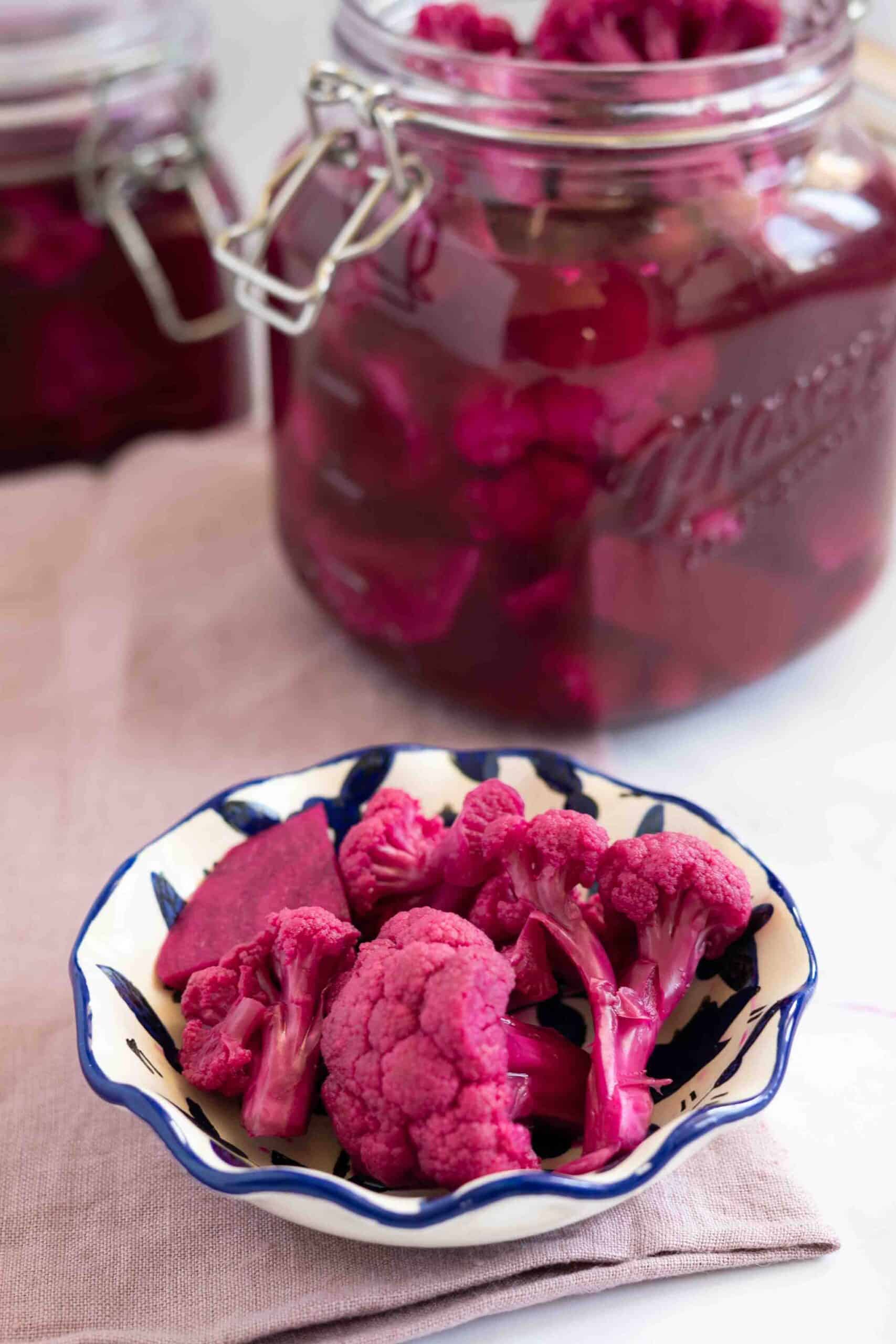
My mother always made different kinds of pickles at home, turnips, cucumbers, and many others. I grew fond of eating homemade pickles and adding them to various dishes and sandwiches.
Jump to:
Why Do We Love Pickled Cauliflower
- Tangy Flavor: The vinegar gives pickled cauliflower a sharp, tangy taste.
- Crispy Texture: Despite being submerged in liquid, pickled cauliflower retain a satisfying crunch, making them a popular addition to many dishes.
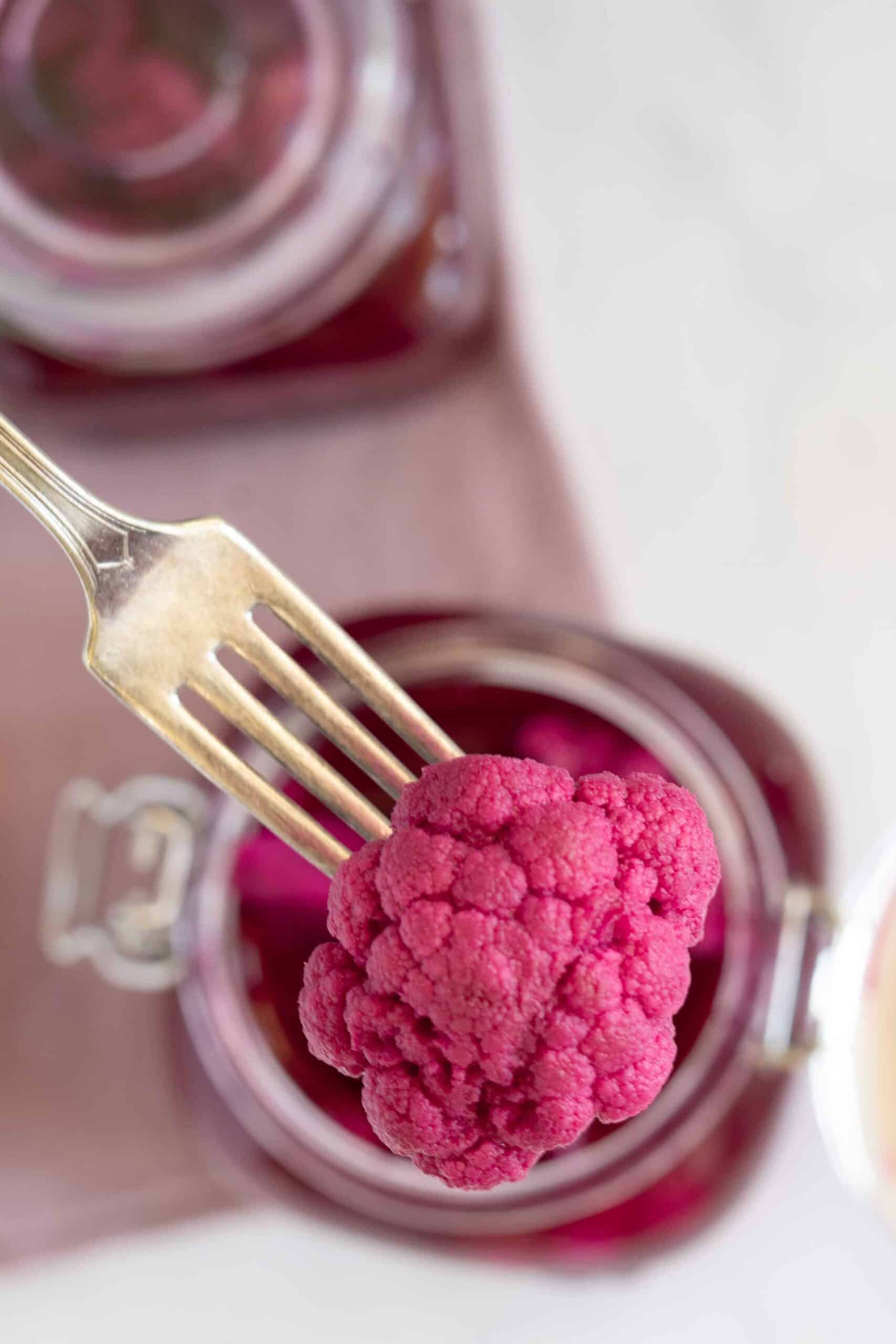
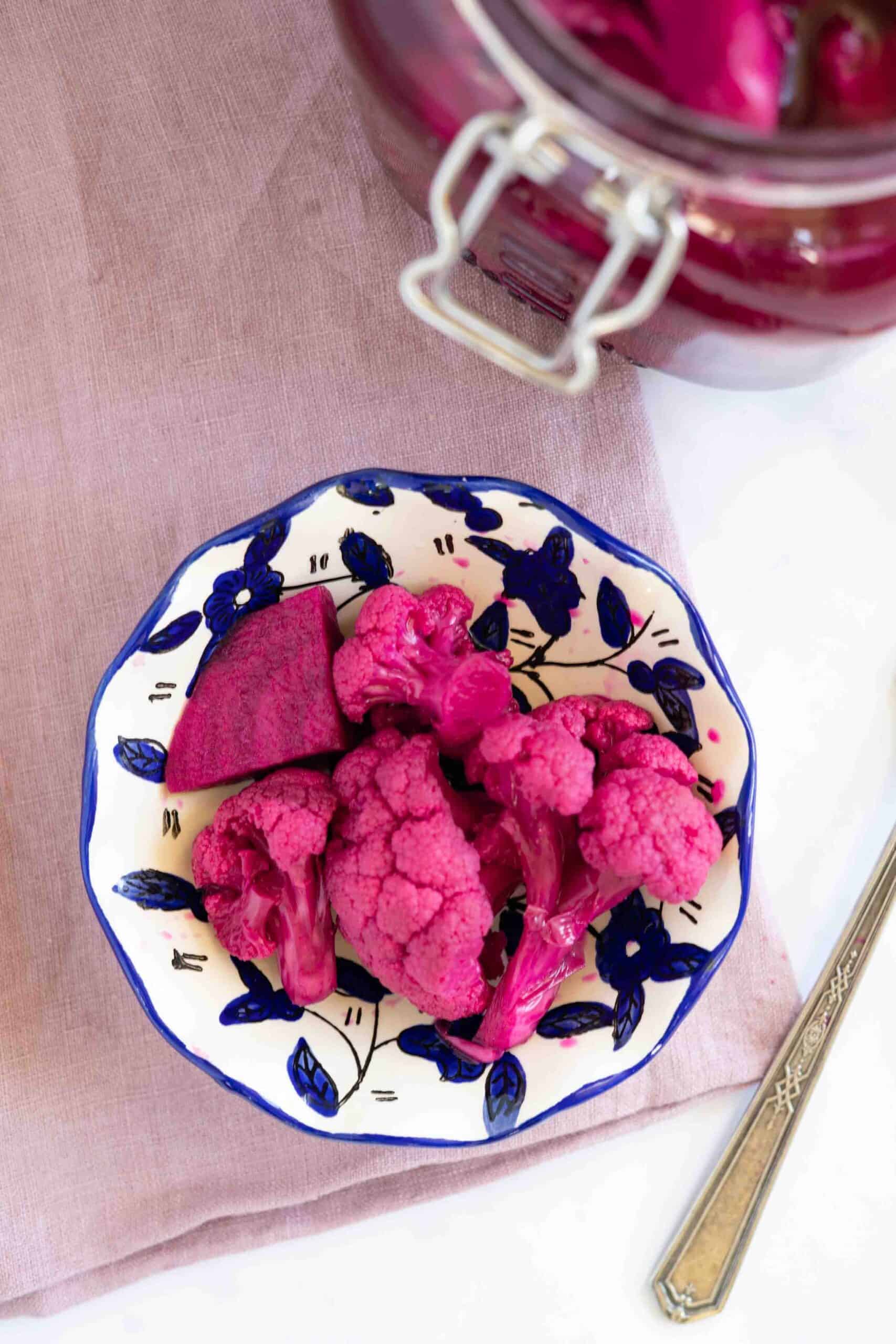
- Vibrant Color: Pickled cauliflower often have a vibrant pink hue from adding beets to the brine. The beets naturally dye the cauliflower, creating a visually appealing condiment.
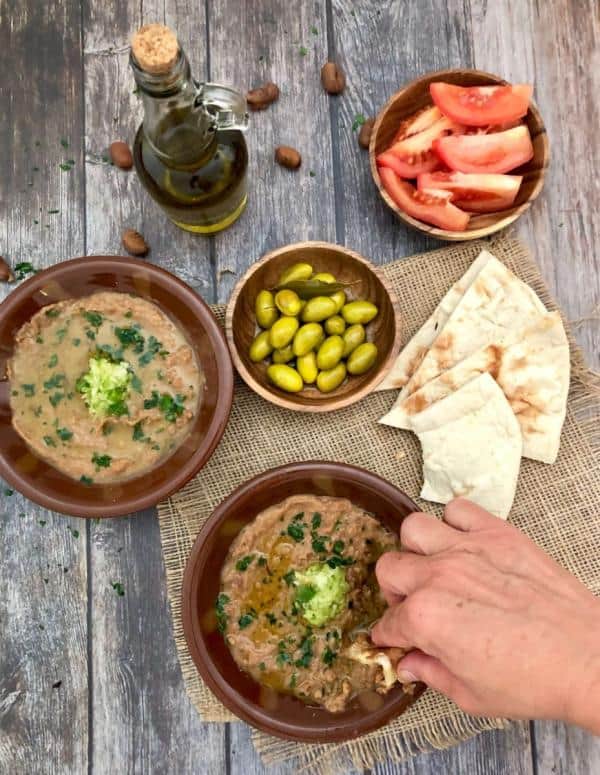
- Versatility: These pickles are commonly used in Palestinian and Middle Eastern cuisines, particularly as a side dish, or in sandwiches like shawarma, falafel, or next to foul mudammas.
- Health Benefits: Like other pickled vegetables, pickled cauliflower can be a source of probiotics if naturally fermented. They are also low in calories and contain fiber, vitamins, and minerals.
Equipment
This post may contain affiliate links
- Cutting Board - This is used to place cauliflower and beets while slicing.
- Sharp Knife - For slicing cauliflower and beets.
- Storage Glass Jars - I recommend glass jars with airtight lids.
Ingredients
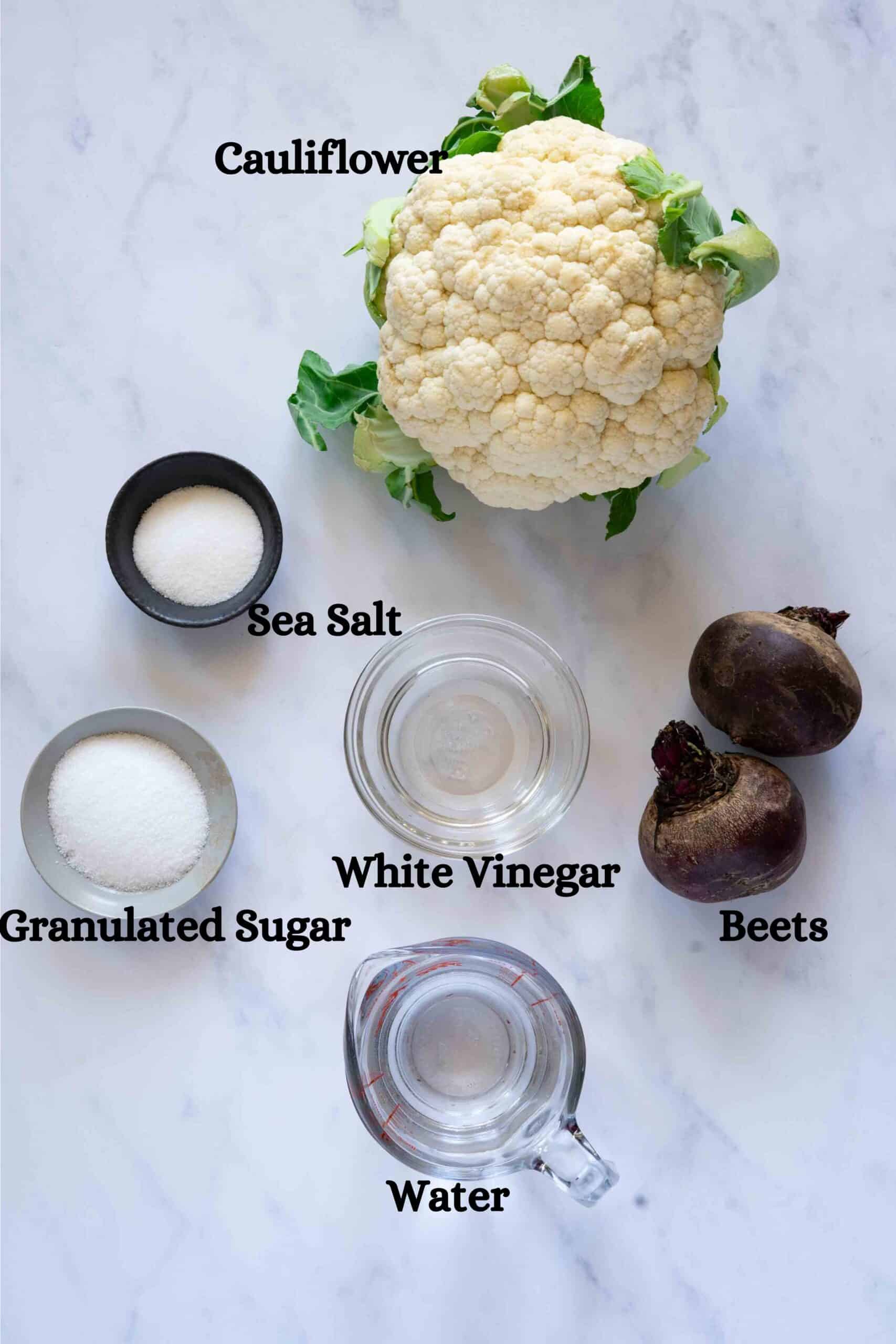
- Cauliflower - Fresh cauliflower can be found at any grocery store or farmers market.
- Red Beets - A small amount is enough to get the pink color.
- Water - I use tap water with this recipe.
- White Vinegar - Vinegar helps maintain the crunchy texture and gives the pickles its tangy flavor. Vinegar is highly acidic, which helps preserve foods and helps in the fermentation process.
- Sea Salt - I use sea salt with this recipe. You can use table salt but keep in mind that table salt is saltier, you may need to adjust the quantity.
- Granulated Sugar - Adding sugar helps in some lacto-fermented pickle recipes, a small amount of sugar can be added to feed the lactic acid bacteria, which helps speed up the fermentation process.
Instructions
Full ingredients, measurements, and instructions are in the recipe card at the bottom of this post.
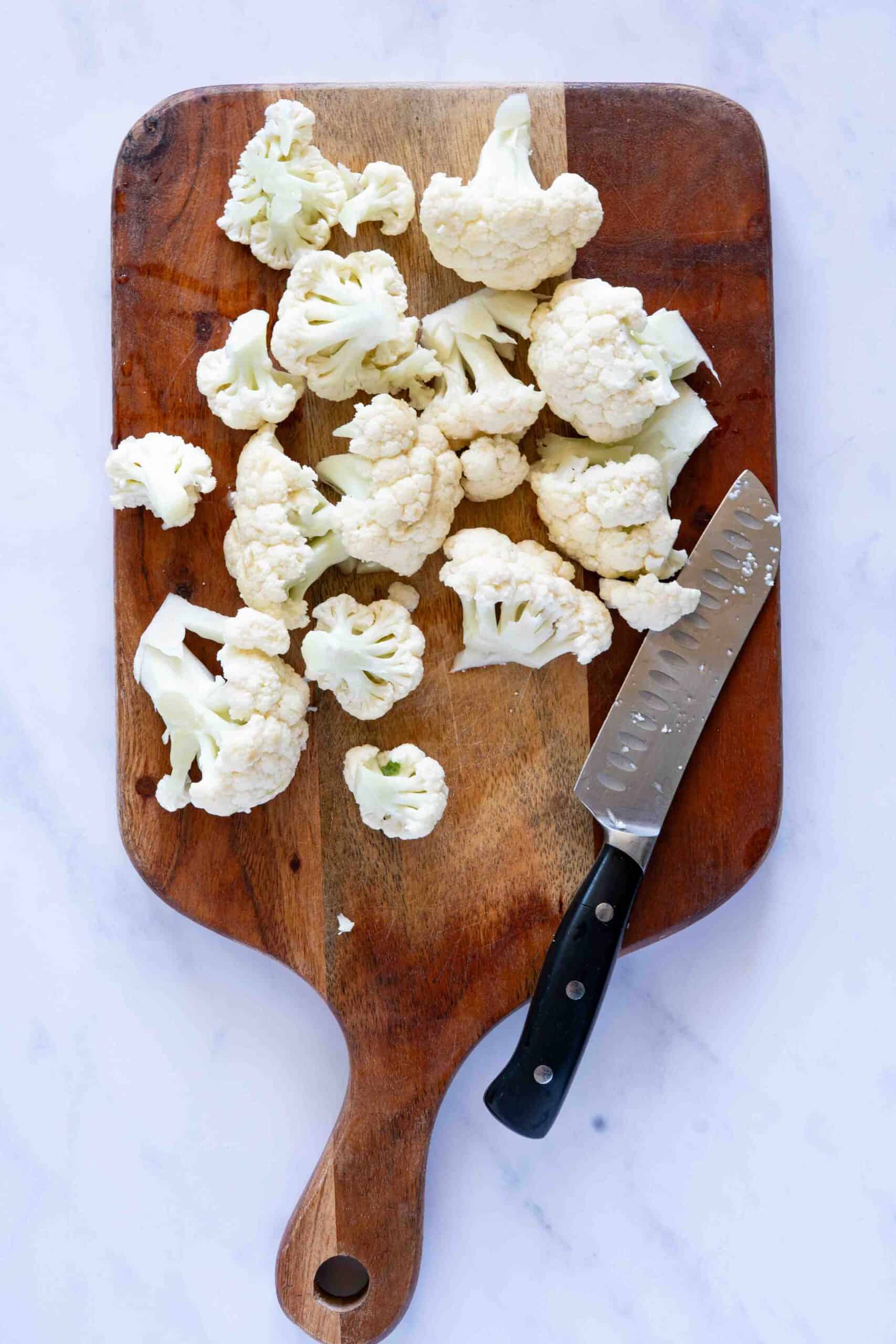
Step 1 | Wash the cauliflower, then use a knife to separate it into small florets.

Step 2 | Wash beet, peel and slice into quarter pieces.
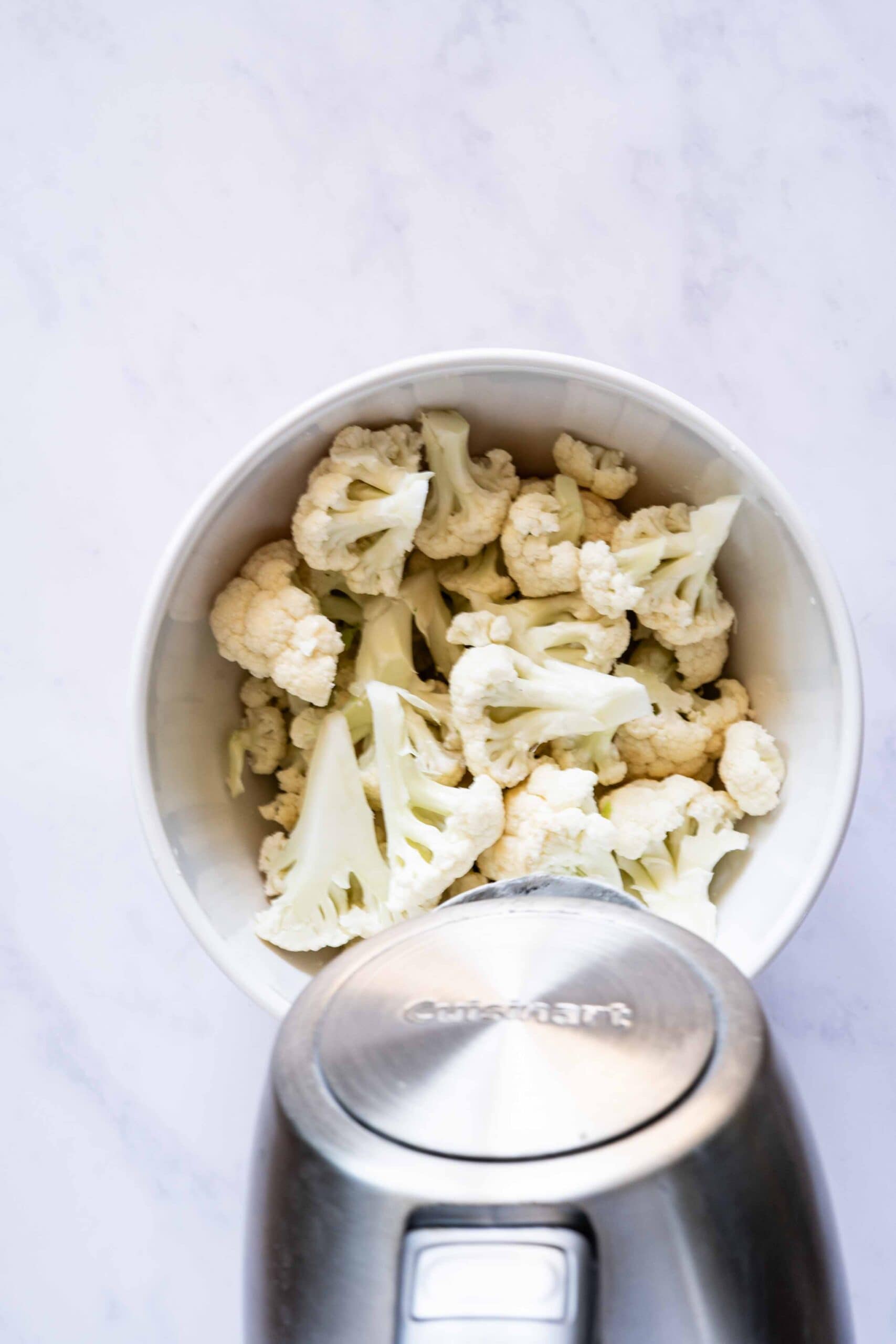
Step 3 | Place florets in a bowl and cover with hot water.
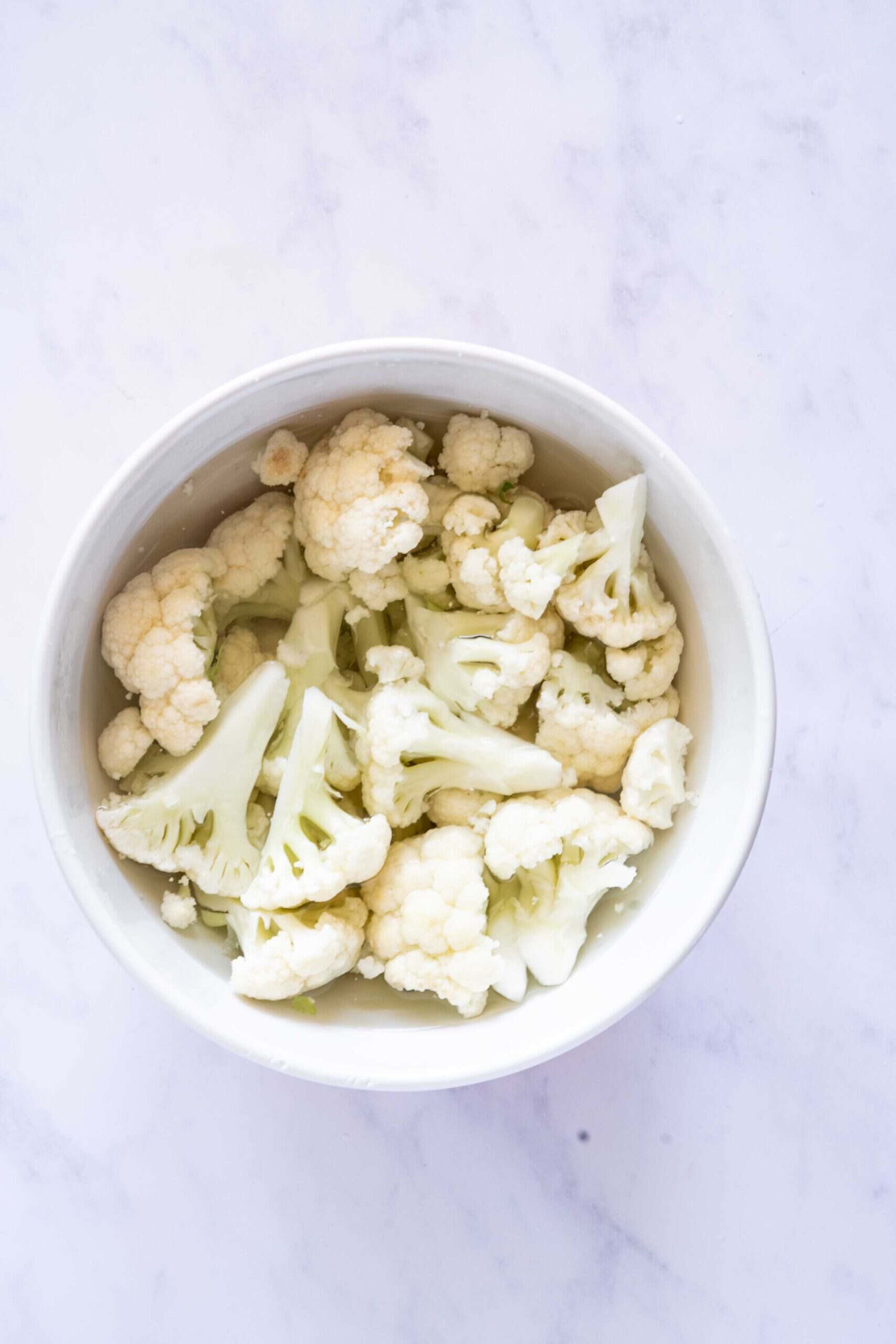
Step 4 | Let them sit in water for 2-3 minutes.
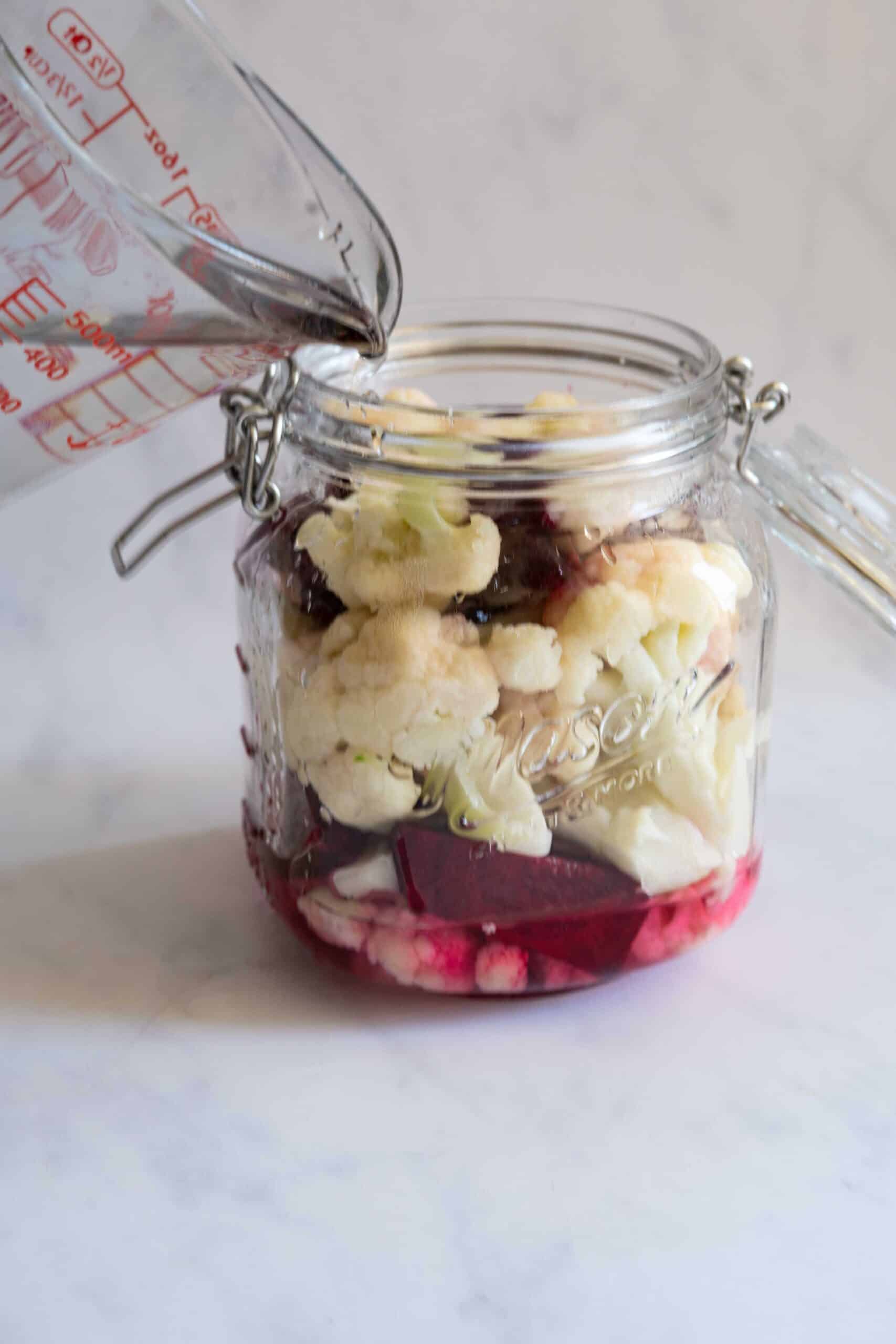
Step 5 | Place florets into a clean wide mouth jar, in between add slices of beets. Mix salt in water then pour in making sure they are fully submerged. Add Vinegar and sugar on top, then seal the jar tightly with a lid.
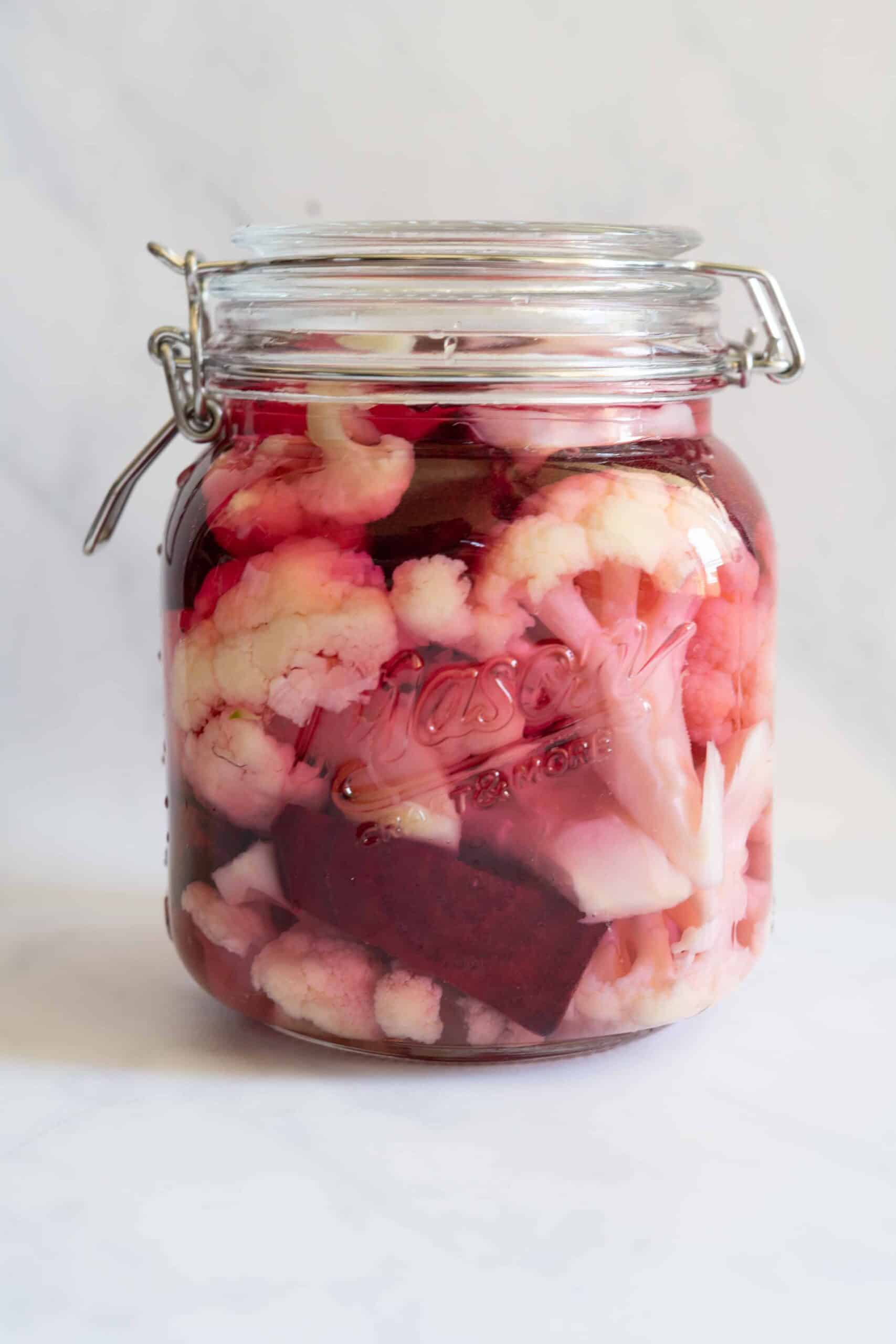
Step 6 | Seal the jar tightly with a lid and shake well to combine the brine, sugar, and vinegar.
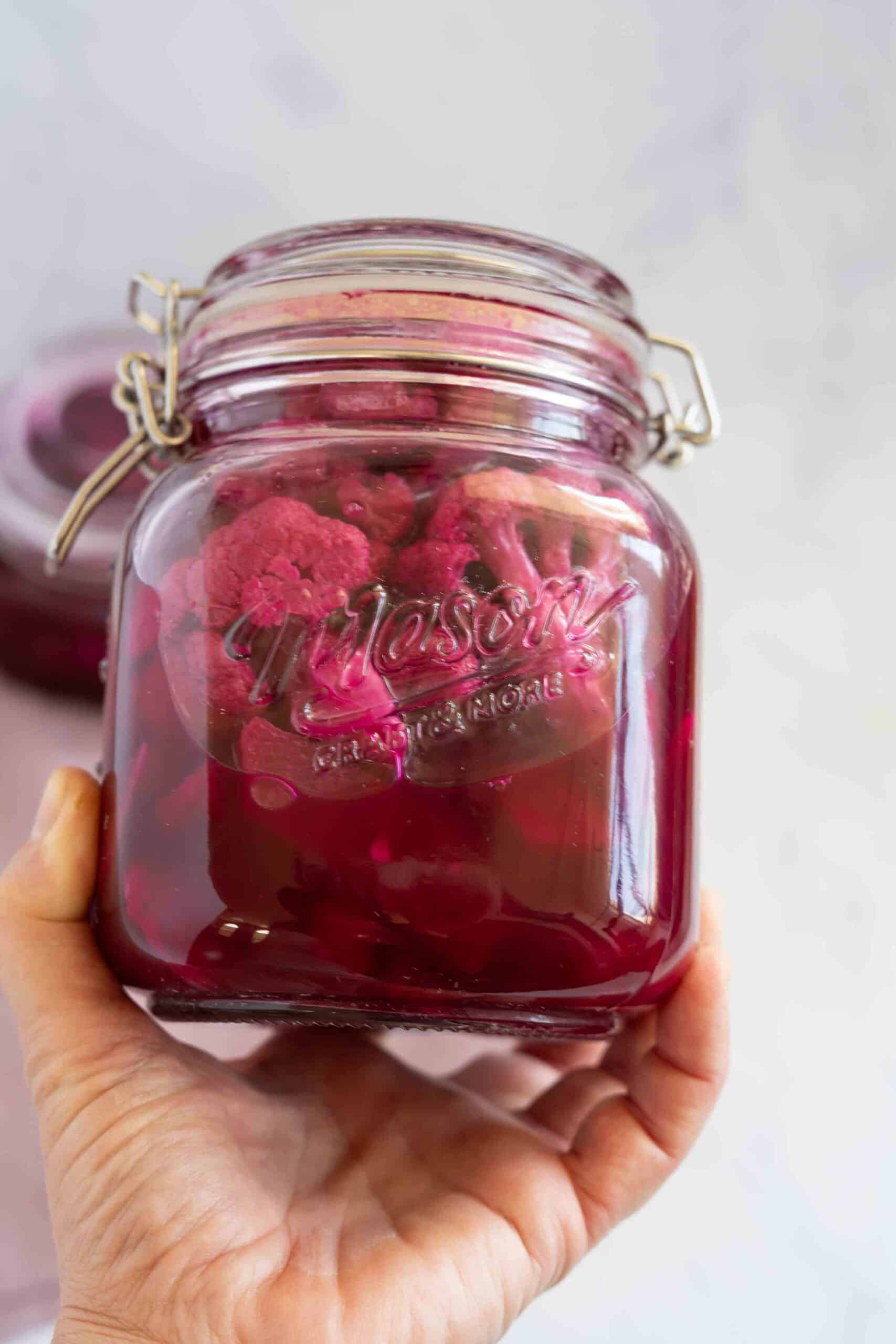
Step 4 | Let it sit at room temperature for 3-5 days.
Variations and Substitutions
- Add sliced jalapeños, or whole chili pepper to the brine for a spicy kick.
- Add crushed garlic cloves and whole black peppercorns to the brine for a bold, savory flavor.
- Swap cauliflower for other root vegetables like radishes, daikon, or carrots for a different texture and taste.
- If you prefer not to use beets or want a different color, you can leave them out or use other vegetables like red cabbage or purple carrots for color variation.
- Experiment with Flavorings: Don’t be afraid to play around with flavorings—garlic, chili flakes, mustard seeds, and bay leaves can all add exciting dimensions to your pickled cauliflower.
Expert Tips
- To expedite the process, leave the jar near a window with the sun hitting, which can speed up the fermentation process.
- When all the cauliflower turn into pink that's an indication that they're ready.
- This salt quantity is for sea salt, be aware that table salt is saltier, therefore adjust the quantity or use the traditional salt testing method provided in the FAQ section, question #2.
- Always start with fresh cauliflower for the best texture.
- Pack the cauliflower and beet slices tightly in the jar, but don’t overfill. Leave a little room at the top for the brine to fully cover the vegetables.
- Always use glass jars for pickling. Plastic can absorb odors and stains, and metal lids should be lined with plastic to prevent corrosion from the vinegar.
Storage and Reheating
- Store any leftover cauliflower stew in an airtight container in the refrigerator for up to 3 days.
- To reheat, warm it gently in a small pan on the stove top or in a plate in the microwave. If the stew has thickened, add 1–2 tablespoons of water or the left over broth to loosen it before heating.
- To freeze: Let the stew cool completely, then transfer it to a freezer-safe container or bag. Freeze for up to 2–3 months. When ready to enjoy, thaw overnight in the fridge and reheat on the stove top until warmed through.
Frequently Asked Questions
While sterilizing jars is essential for long-term canning, it’s not strictly necessary for quick pickles like pickled cauliflower. However, using clean, hot water-washed jars is crucial to prevent contamination.
To guarantee that you are using enough salt follow this old-fashioned method.
Method: In a small bowl, add 3 cups of water and 2 tablespoons of sea salt, then place a clean raw egg (in its shell) into the brine.
Guideline: If the egg floats, your brine has enough salt. If it sinks, you need to add more salt. This test works because salt increases the density of the water, causing the egg to float.
Click here to subscribe to my newsletter and receive free and new recipes right into your inbox!
If you made Palestinian pickled cauliflower I would love it if you could give me a 5-star rating and leave a comment below.
I also would like to hear about your experience making it, snap a picture and tag me on Instagram, Facebook, or Pinterest.
More Delicious Recipes

Palestinian Cauliflower Pickles
- Prep Time: 10-15 minutes
- Total Time: 0 hours
- Yield: Two 16-19 oz jars
- Method: Pickling
- Cuisine: Palestinian/Middle Eastern
- Diet: Vegan
Description
Pickled cauliflower is a staple in the Palestinian pantry. Beyond their beautiful natural color, derived from beets, they’re easy to make and add vibrant flavor to many dishes.
Ingredients
- 1 medium size cauliflower
- 1 medium size beet
- 3-4 cups tap water
- 3-4 tablespoons sea salt.
- 2 tablespoons white vinegar (1 tablespoon per jar)
- 2 teaspoons granulated sugar (1 teaspoon per jar)
Instructions
- Wash the cauliflower, then use a knife to separate it into small florets.
- Place the florets in a large bowl and cover them with hot water until fully submerged. Let them sit for 2–3 minutes, then rinse well.
- Meanwhile, prepare the beets: peel them and slice into pieces about the size of your pinky finger.
- Place the cauliflower florets into a clean, wide-mouth jar, adding beet slices in between.
- Prepare the brine by dissolving 1 tablespoon of sea salt in 1½ cups of water, stirring well.
- Pour the brine over the cauliflower in the jar, making sure all the florets are fully submerged.
- Add 1 tablespoon of white vinegar and 1 teaspoon of granulated sugar to the jar.
- Seal the jar tightly with a lid and shake well to combine the brine, sugar, and vinegar.
- Let it sit at room temperature for 3–5 days.
Notes
- To expedite the process, leave the jar near a window with the sun hitting, which can speed up the fermentation process.
- When all the cauliflower turn into pink that's an indication that they're ready.
- This salt quantity is for sea salt, be aware that table salt is saltier, therefore adjust the quantity or use the traditional salt testing method provided in the FAQ section, question #2.
- Always start with fresh cauliflower for the best texture.
- Pack the cauliflower and beet slices tightly in the jar, but don’t overfill. Leave a little room at the top for the brine to fully cover the vegetables.
- Always use glass jars for pickling. Plastic can absorb odors and stains, and metal lids should be lined with plastic to prevent corrosion from the vinegar.
Matt says
Good stuff!! Will make. I've tried it once and I recently realized it was what I was missing with my hummus, pita and salad
Wafa Shami says
Hi Matt, yes it's the perfect combination-:)